Wood finishes are the oils, waxes, lacquers and polishes applied to the surface of timber furniture, cabinetry and panelling to protect the wood, and to determine its final colour, sheen and texture. The right finish can range from a deep, hand-buffed French polish on a period piece to a flat, factory-even lacquer on a modern kitchen door.
Choosing a finish is as important as choosing the timber itself. At Noba and Stod, the finish we recommend depends on the piece: a hardwax oil for a worktop that needs to shrug off daily use, a sprayed lacquer for a clean, consistent kitchen door, or a traditional wax for a piece meant to age and deepen in colour over the years. We talk clients through the trade-offs at design stage rather than defaulting to one finish for everything.
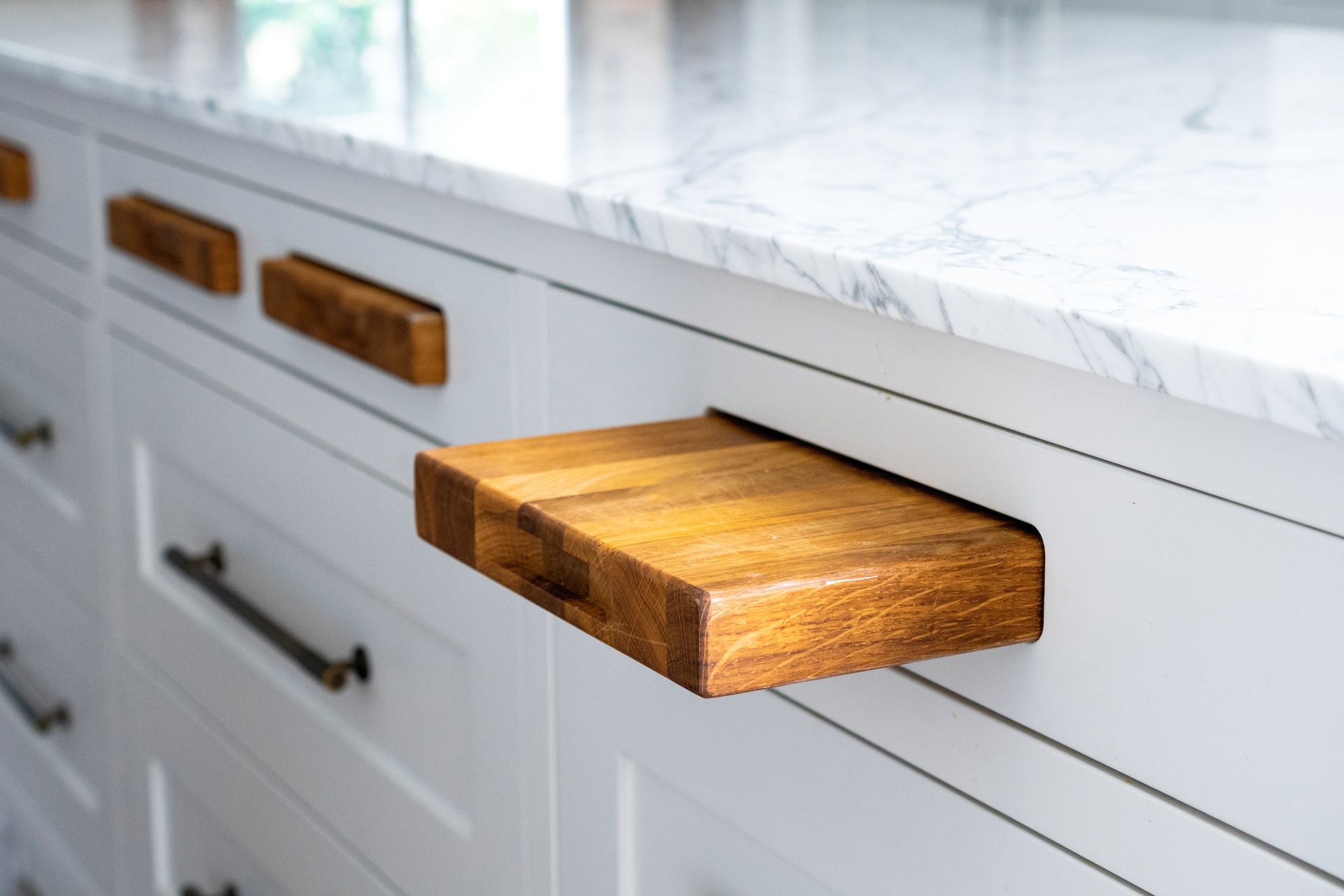
French polish is a traditional, hand-applied shellac finish giving a high-gloss surface, typically used on fine furniture and antiques. Danish oil is a penetrating oil-and-varnish blend that hardens on exposure to air for a durable, low-sheen finish. Hardwax oil is a modern oil-and-wax blend popular on floors and worktops for its durability and easy spot repair. Lacquer is a fast-drying finish that forms a hard, even coat, glossy or matt, commonly sprayed onto kitchen and wardrobe doors. Wax finish is a traditional beeswax-based treatment giving a soft, warm sheen, often used on period furniture.
Types of Wood and Furniture Finishes
Each finish behaves differently and suits different pieces. Here are the finishes we use most often at Noba and Stod, and where each one tends to work best.
French Polish
A traditional, hand-applied shellac finish built up in thin layers to a deep, high-gloss shine. It is slow, skilled work, usually reserved for fine furniture and antique restoration rather than everyday cabinetry.
Danish Oil
A penetrating blend of oil and varnish that soaks into the timber and hardens on exposure to air. It leaves a durable, low-sheen finish that feels close to bare wood and is simple to maintain.
Hardwax Oil
A modern blend of natural oils and wax that sits just below the surface of the timber. It has become a popular choice for floors and worktops because scuffs and marks can often be spot-repaired without refinishing the whole surface.
Lacquer Finish
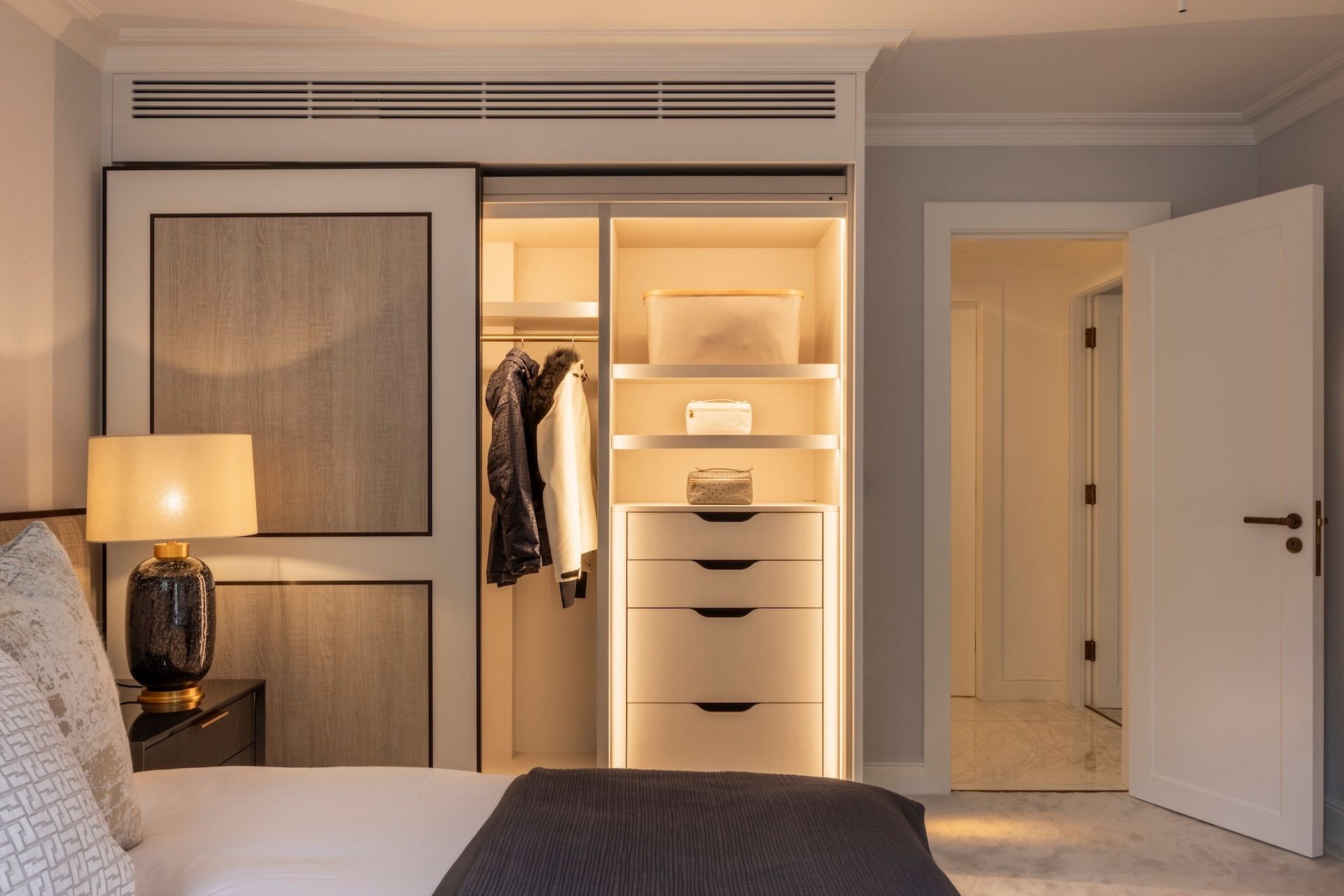
A fast-drying finish that forms a hard, even coat over the timber, in either a glossy or matt sheen. It is a common choice for kitchen and wardrobe doors, where a consistent, wipeable surface matters.
Wax Finish
A traditional beeswax-based treatment that builds a soft, warm sheen with use. It is closely associated with period furniture, needs reapplying over time, but ages gracefully and is easy to touch up by hand.
Spray Lacquer vs Hand-Finished
Lacquer can be applied by hand or sprayed on. A sprayed lacquer gives a very even, factory-quality coat with no brush marks, which is why it is the standard choice on most kitchen and wardrobe doors, where dozens of surfaces need to match exactly. A hand-finished lacquer or oil takes longer and shows more of the character of the timber underneath, which suits a smaller run of furniture or a feature piece where slight natural variation is part of the appeal. We choose between the two depending on the piece and the look a client wants.

Finish in Practice
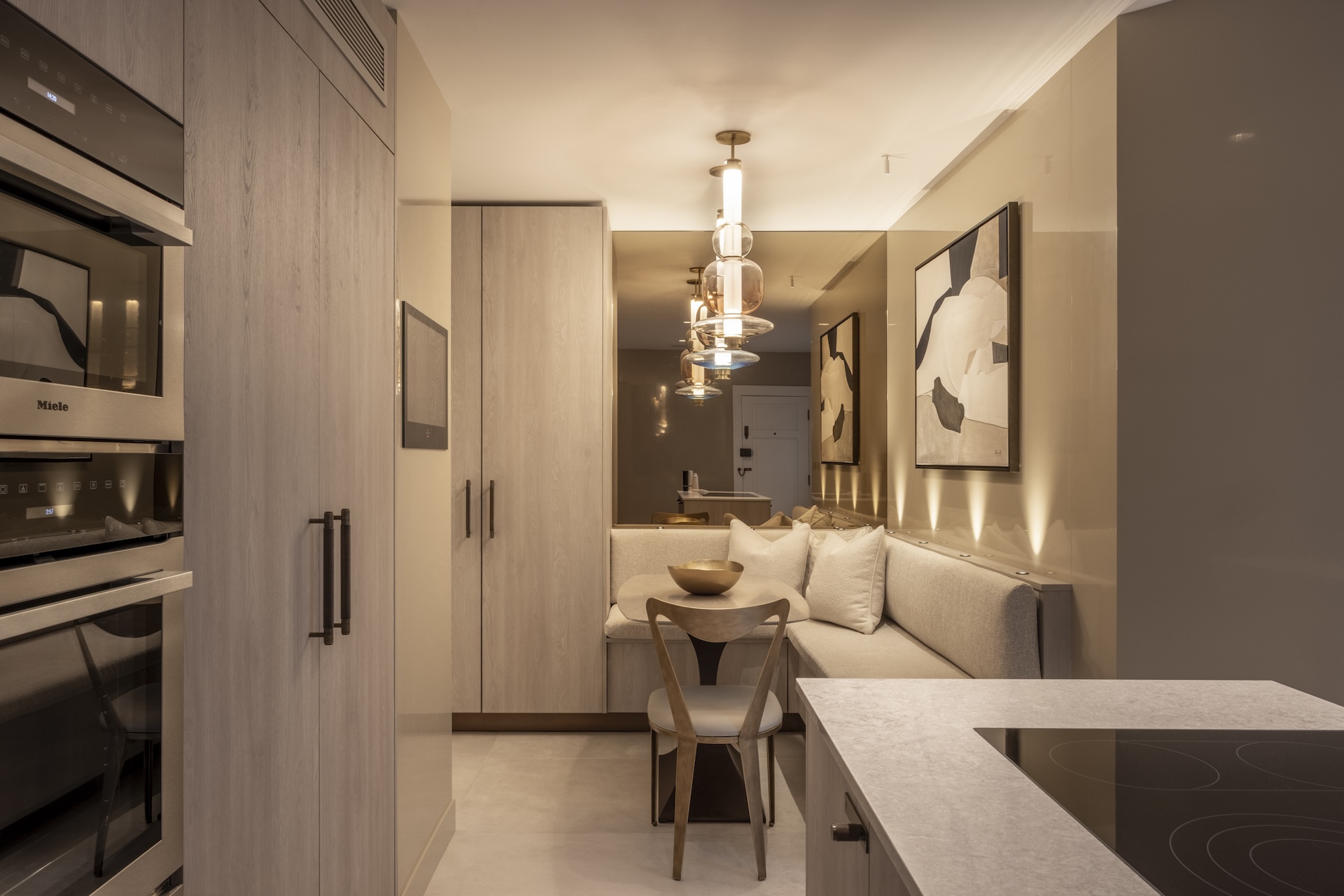
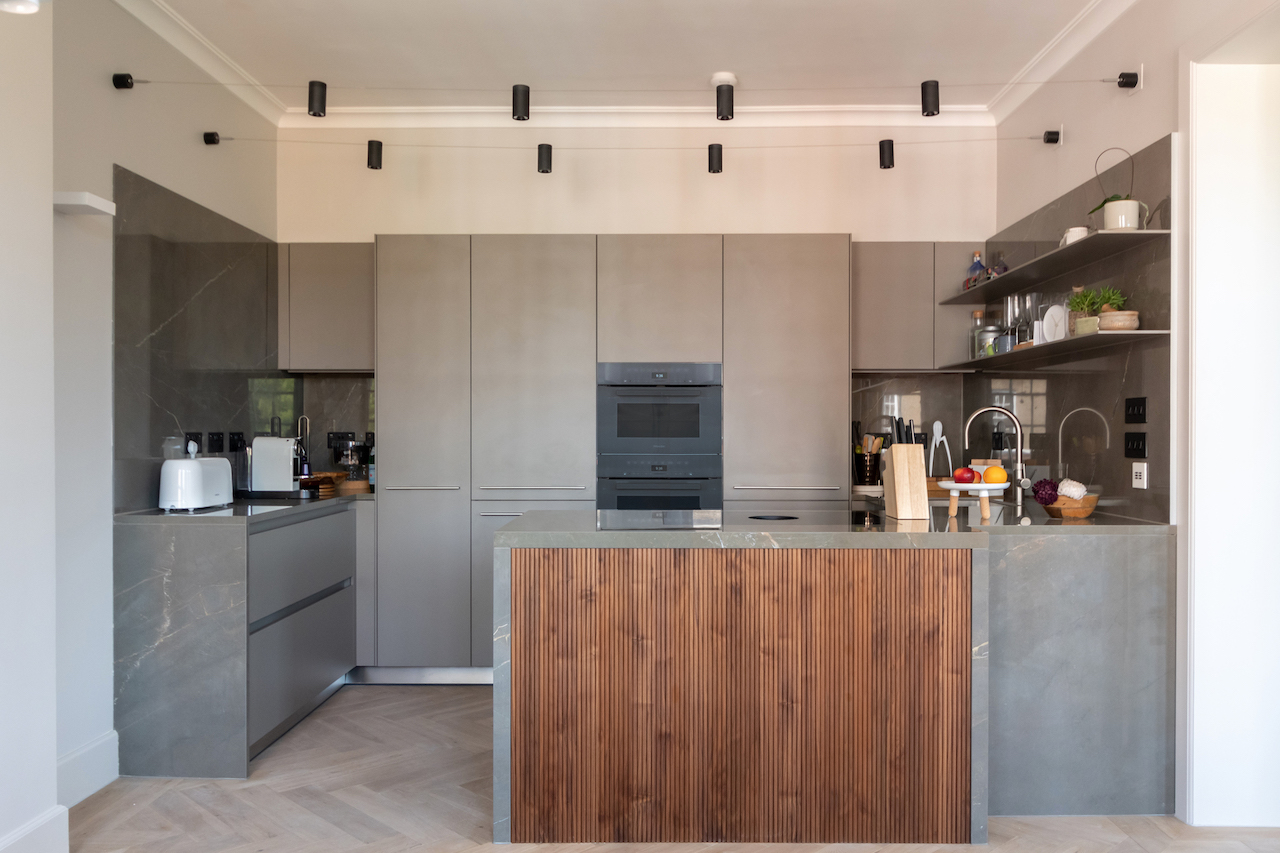
The timber panelling on this kitchen island shows how a finish is chosen to suit both the wood and the room around it, here a warm, low-sheen coat that lets the grain read clearly against the grey lacquered cabinetry either side. Getting this right takes as much judgement as the joinery itself, since the wrong sheen or tone can make an otherwise well-made piece feel out of place.
Sustainable and Reclaimed Timber
The finish is only part of the story, where the timber comes from matters too. FSC-certified timber is sourced from forests that are independently verified as responsibly managed, so the wood is replaced and the forest maintained rather than depleted. Reclaimed timber is salvaged from old buildings, furniture or industrial structures and given a new life in a new piece, often prized for the character, colour and tight grain that only comes with age. Both are options we can discuss at the design stage for clients who want their choice of material to reflect their values as well as the finished look.
Quarter-Sawn Timber
Quarter-sawn timber is cut so the growth rings run roughly perpendicular to the face of the board, rather than running across it. This produces a straighter, more consistent grain pattern and a board that is more dimensionally stable than plain-sawn timber, meaning it moves less with changes in humidity. It costs more to produce, since more of the log is wasted in the cutting, but it is often specified for furniture and panelling where stability and a clean, straight grain matter most.
Related Terms
Finish choice often sits alongside decisions about the timber and joinery beneath it. See Engineered Wood for how manufactured boards compare to solid timber, Cabinetmaking for the wider craft finishes are part of, Types of Wood Joints for how pieces are put together before finishing, and Cabinet and Drawer Hardware for the fittings that complete a finished piece.
Frequently Asked Questions
Which wood finish lasts the longest?
Lacquer and hardwax oil are generally the most durable day-to-day finishes, which is why they are common on kitchen doors and worktops. French polish and wax look beautiful but mark more easily and need more careful upkeep, so they suit furniture that gets gentler use.
Can different pieces in the same project have different finishes?
Yes. It is common to mix finishes within one project, for example a durable lacquer on kitchen doors and a hand-applied oil on an adjoining piece of furniture, as long as the tones are chosen to sit well together.
Planning a project that involves choosing a finish? See our bespoke furniture service, or get in touch to talk it through.