House Renovation Costs at a Glance (2026 London Prices)
House renovation cost in London runs £600-1,000 per m2 for a light refurbishment, £1,200-2,000 per m2 for a standard full renovation and £2,000-3,500 per m2 for a high-end scheme with bespoke joinery and premium finishes. Prime central London period houses cost £3,000-5,000 per m2. All figures exclude VAT.
| Tier | London cost per m2 | 100 m2 house example |
|---|---|---|
| Light refurbishment | £600-1,000 | £60,000-100,000 |
| Standard full renovation | £1,200-2,000 | £120,000-200,000 |
| High-end renovation | £2,000-3,500 | £200,000-350,000 |
| Prime central London and period restoration | £3,000-5,000 | Approx. £300,000-500,000, confirmed after survey |
Last updated: 2026. Prices are a guide and exclude VAT. London projects typically run 30-50% above the UK average.
Scope note: This guide covers whole-property renovation budgets for London flats and houses. Individual elements have their own detailed guides: kitchen renovation costs, fitted wardrobe costs, alcove units and shelving, media walls and our bespoke furniture cost overview. To commission a renovation, see our luxury renovation service.
How Much Does a House Renovation Cost in London?
Most people searching for house renovation cost London figures want a single number. The honest answer to “how much does a house renovation cost” is that scope and specification matter far more than postcode. That is why we price by tier and by floor area rather than quoting one headline number. Measure your gross internal floor area in square metres, choose the tier that matches your ambition, and you have a credible bracket before a single survey is booked.
Light refurbishment: £600-1,000 per m2
Redecoration throughout, new flooring, minor joinery repairs and perhaps a refreshed bathroom, with the existing layout, wiring and plumbing left in place. This is the right tier for a sound property that simply looks tired, and it is usually what people mean when they search for house refurbishment cost rather than renovation cost.
Standard full renovation: £1,200-2,000 per m2
Full rewiring and replumbing, replastering, a new mid-range kitchen and bathroom, new flooring throughout and a complete decoration programme. Most whole-house projects in inner and outer London sit here. It is the tier that turns a dated property into a finished home without changing its footprint.
High-end renovation: £2,000-3,500 per m2
Everything in the standard tier plus bespoke joinery, a premium kitchen, designer bathrooms, lighting design and specified finishes such as natural stone, hardwood and hand-finished paintwork. This is where luxury home renovation cost begins in earnest, and it is the tier most of our clients commission. Our Lowndes Square flat refurbishment shows the standard of finish involved.
Prime central London and period houses: £3,000-5,000 per m2
Full structural work and specialist restoration in Chelsea, Kensington and Belgravia: lime plaster, sash window repair, cornice reinstatement, conservation-grade joinery and the logistics of working on tight, protected streets. Our Victorian house renovation in Chelsea is a good example of what this tier delivers.
For context, the typical renovation cost per square metre UK-wide for a full renovation is £1,200-2,800, so house renovation costs UK-wide sit well below the capital: London runs roughly 30-50% above the UK average. Labour rates, parking and access, waste removal and the age of the housing stock all push the capital upward. If you think in square feet, divide any per m2 rate by roughly 10.8 to get refurbishment costs per square foot.
How Much Does It Cost to Renovate a Flat vs a House?
Flat renovation cost and house renovation cost use the same per m2 method; the difference is floor area, access and how much structure you can touch. Flats bring service charges, lease consent and lift or stair logistics. Houses bring roofs, external walls, party walls and gardens. The worked examples below multiply each tier by three common London property sizes and are approximate.
| Property | Light refurbishment | Standard full renovation | High-end renovation |
|---|---|---|---|
| 70 m2 two bedroom flat | £42,000-70,000 | £84,000-140,000 | £140,000-245,000 |
| 100 m2 three bedroom terrace | £60,000-100,000 | £120,000-200,000 | £200,000-350,000 |
| 150 m2 family house | £90,000-150,000 | £180,000-300,000 | £300,000-525,000 |
A 2 bedroom flat refurbishment cost of £84,000-140,000 at the standard tier surprises many first-time renovators, but a 70 m2 flat still needs a complete kitchen, a complete bathroom, a new consumer unit, a boiler and every wall replastered. Renovation costs for a 3 bedroom house in the UK follow the same logic at 100 m2: £120,000-200,000 for a standard full renovation in London, less outside the capital.
Full house renovation cost at the top of the range is driven by the extras a house permits: reconfigured layouts, moved staircases, new steels and the structural additions covered further down. A flat can rarely grow; a house often can.
What Drives Renovation Costs Up or Down?
Two properties of identical size can land at opposite ends of the same tier. These are the six factors that move the number most.
Property age and condition
Victorian and Edwardian houses hide damp, rotten joists, failed lintels and lath-and-plaster ceilings that only reveal themselves once strip-out begins. A sound 1980s flat hides very little. Condition is the biggest single source of cost variance, which is why a proper survey before pricing matters more than any calculator.
Structural scope
Keeping walls where they are is cheap. Removing them means a structural engineer, steel beams, temporary works and building control sign-off. Every relocated kitchen or bathroom adds drainage and pipe runs. The more the plan changes, the closer you move to the top of your tier.
Specification
The gap between a mid-range and a premium specification is the gap between the standard and high-end tiers. Kitchens alone span £8,000-150,000+ in London, as our kitchen renovation cost guide explains. Bathrooms, flooring, ironmongery, lighting and joinery all scale the same way.
Access and parking in central London
Skips need permits, deliveries need suspended bays, and a fourth-floor flat without a lift means every sheet of plasterboard walks up the stairs. Congestion charging, ULEZ and restricted working hours all add labour time. In prime central postcodes this adds a meaningful share to the build cost before a single finish is chosen.
Party wall and planning
Structural work on a shared wall triggers the Party Wall Act, with surveyors’ fees and notice periods. Extensions and basements need planning permission or a lawful development certificate, plus building regulations approval. Budget for the professional fees and, more importantly, the time.
Listed status and conservation areas
Listed buildings require listed building consent for most alterations and usually demand like-for-like materials: lime mortar, timber sash windows, traditional joinery profiles. Conservation areas restrict external changes. Both push a project towards the prime tier whatever the postcode, because the craft required is simply more expensive.
Where Does the Budget Go?
A full renovation budget splits in a fairly predictable way. The percentages below are typical of a standard or high-end London project and help you sanity-check any quote: if the kitchen and bathrooms are taking half the budget, something else is being under-specified.
| Budget element | Typical share of total | What it includes |
|---|---|---|
| Structure and building work | 20-30% | Strip-out, steels, walls, roofing, damp works, plastering, building control |
| Services | 12-18% | Rewiring, replumbing, heating, boiler, underfloor heating, ventilation |
| Kitchen and bathrooms | 20-30% | Units, worktops, appliances, sanitaryware, tiling, brassware |
| Joinery and fitted furniture | 10-20% | Wardrobes, alcove units, media walls, panelling, doors, staircases |
| Finishes and decoration | 10-15% | Flooring, paint, wallpaper, light fittings, ironmongery |
| Design, surveys and contingency | 10-15% | Architect or designer, structural engineer, party wall, surveys, reserve |
Treat the contingency line as non-negotiable. We recommend holding 10-15% of the build cost in reserve, untouched until the strip-out is complete and the surprises have been counted. Projects that skip it do not cost less; they simply run out of money before the decorating.
How Much Do Loft Conversions, Basements and Extensions Add?
Structural additions sit outside the per m2 renovation tiers because they create new floor area rather than improving existing space. They are priced per project after a survey and structural design, but the London brackets below are a reliable planning guide.
| Addition | Typical London cost | Notes |
|---|---|---|
| Loft conversion | £50,000-90,000 per project | UK-wide range £20,000-95,000 depending on type; dormer and mansard conversions sit at the top |
| Basement conversion | From £1,200 per m2 for an existing cellar to £4,650+ per m2 for new excavation | New-dig London projects commonly total £150,000-220,000 |
| House extension | £2,500-5,000 per m2 | Single storey rear extensions £1,800-3,000 per m2; double storey and wraparound schemes at the upper end |
Adding one of these to a whole-house renovation stretches both budget and programme, but it is often the most cost-effective moment to do it, because the scaffolding, structural engineer and site team are already in place. Our house renovation with basement in Greenwich combined a full refurbishment with a new lower ground floor in a single build.
How Do You Estimate Your Own Renovation Budget?
Searches for a house renovation cost calculator UK are common, but you do not need one. The arithmetic takes four steps and a tape measure.
- Measure the floor area. Add up the gross internal area of every floor you intend to touch, in square metres. Use the EPC or the estate agent’s floor plan if you do not want to measure. A typical London terrace is around 100 m2; a two bedroom flat around 70 m2.
- Choose your tier. Be honest. If you want bespoke joinery, a premium kitchen and lighting design, you are in the high-end tier at £2,000-3,500 per m2, not the standard tier at £1,200-2,000.
- Multiply. 100 m2 at the standard tier gives £120,000-200,000. Quote the range, not a single figure, until a contractor has surveyed the property.
- Add contingency and fees. Hold 10-15% in reserve for the unknowns, and remember that design, surveys and contingency together take 10-15% of the total budget.
Then adjust for the drivers above. Period property in poor condition: move to the top of the bracket. Sound property with the layout unchanged: the bottom. Structural additions: add them separately using the table above. If the resulting number is uncomfortable, the fix is to change the scope, not to hope the quote comes in lower.
How Long Does a Full Renovation Take?
Time on site is only part of the answer. Design, planning, party wall notices and tendering happen before anyone lifts a floorboard, and a good programme allows for them.
| Project type | Time on site | Design and planning beforehand |
|---|---|---|
| Flat refurbishment | 3-6 months | 2-4 months |
| Whole house renovation | 6-12 months | 2-4 months |
| Structural or period restoration | 8-14 months | 2-4 months |
A realistic programme protects the budget. Rushed projects pay for overtime, sequencing errors and remedial work; a well-planned one has the kitchen, joinery and bathroom fittings ordered before strip-out begins, so nothing waits on a lead time.
Why Bespoke Joinery Changes the Numbers
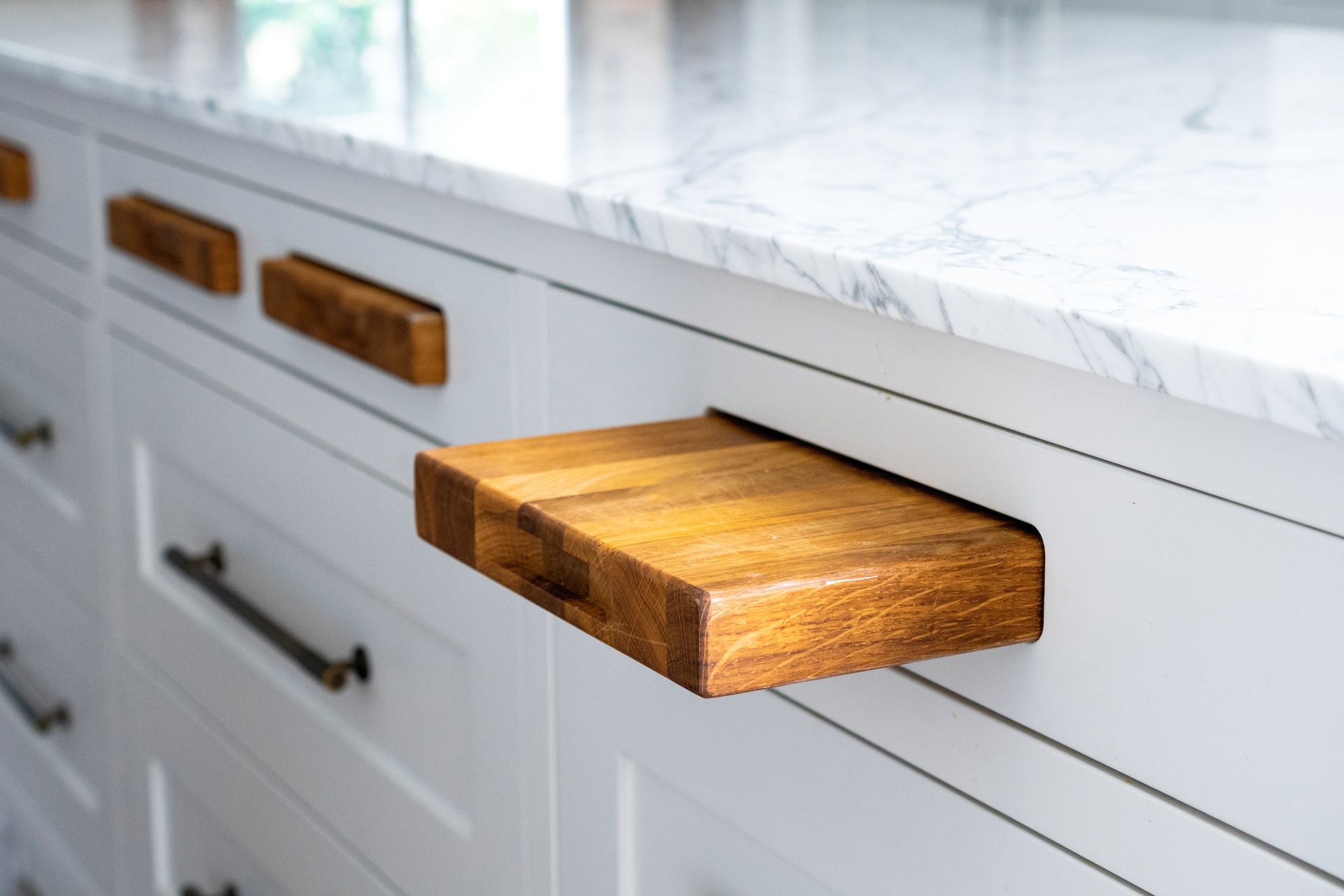
Joinery and fitted furniture take 10-20% of a full renovation budget, and the choice between workshop-made and off-the-shelf is one of the few places where you can see exactly what the extra money buys. Flat-pack and standard modular furniture cost less, and for a rental or a quick resale they are a sensible choice. Workshop-made joinery costs more because it is designed for your walls, drawn to your ceiling height, built from solid timber and veneered panels, and installed by the people who made it.
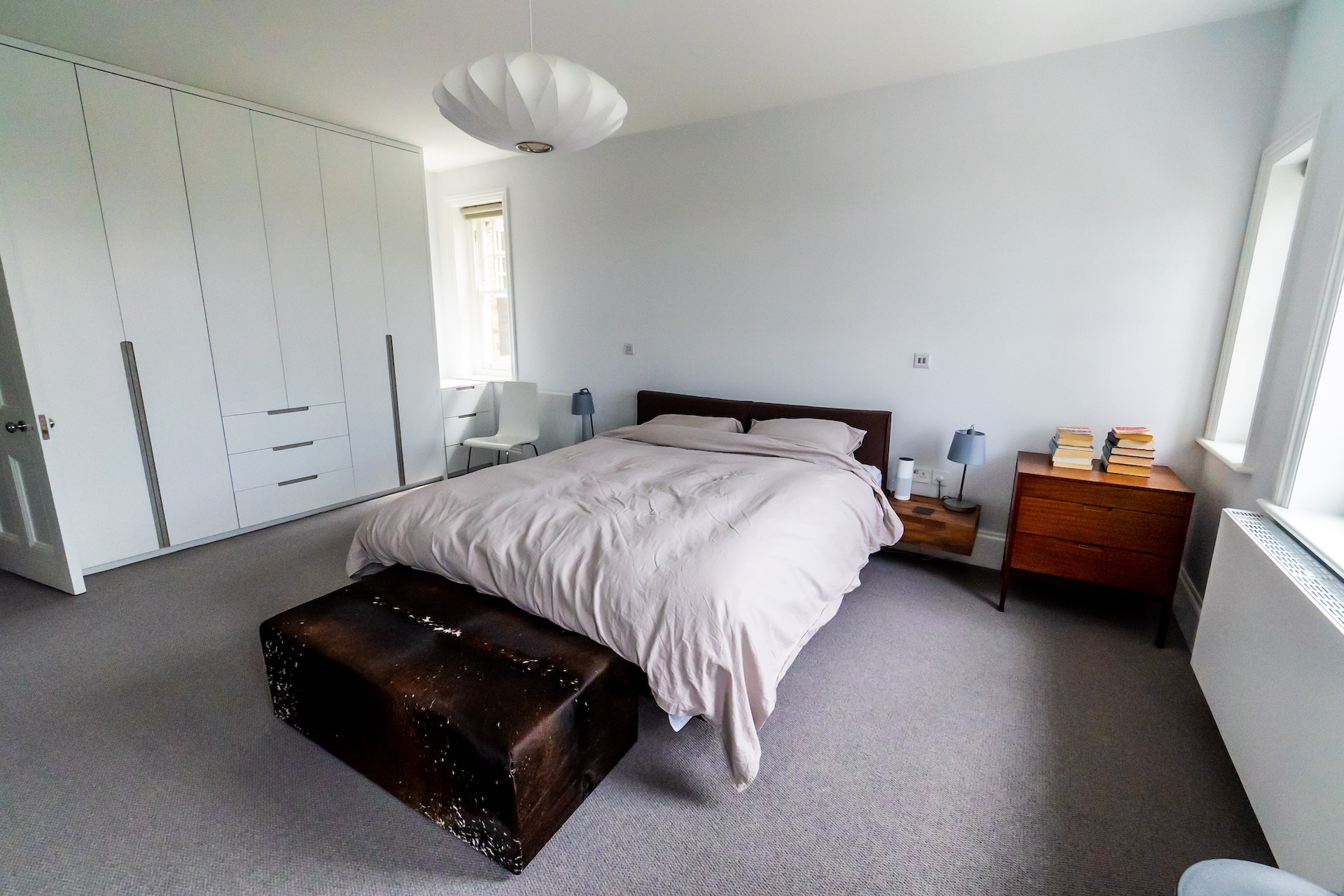
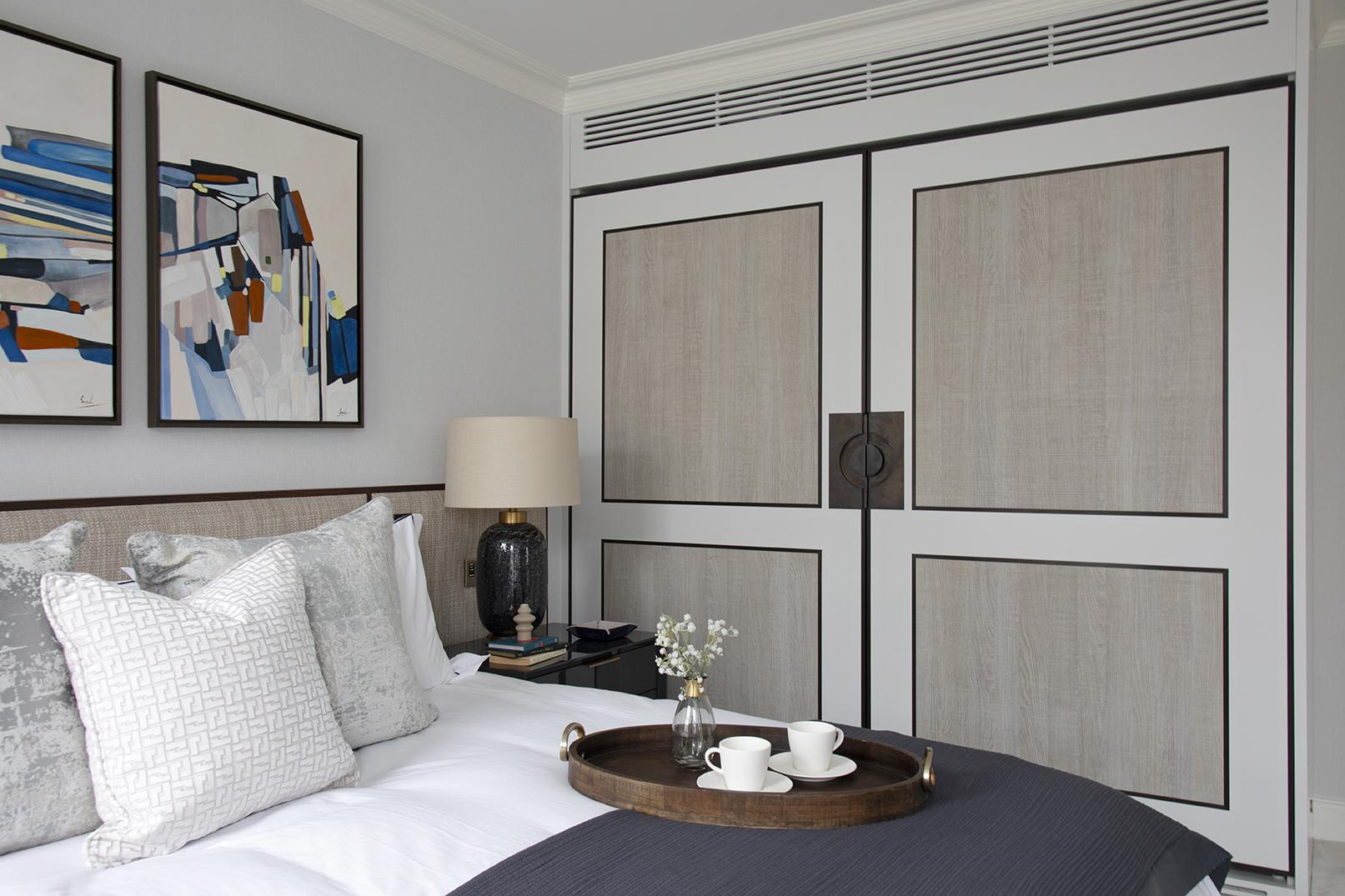
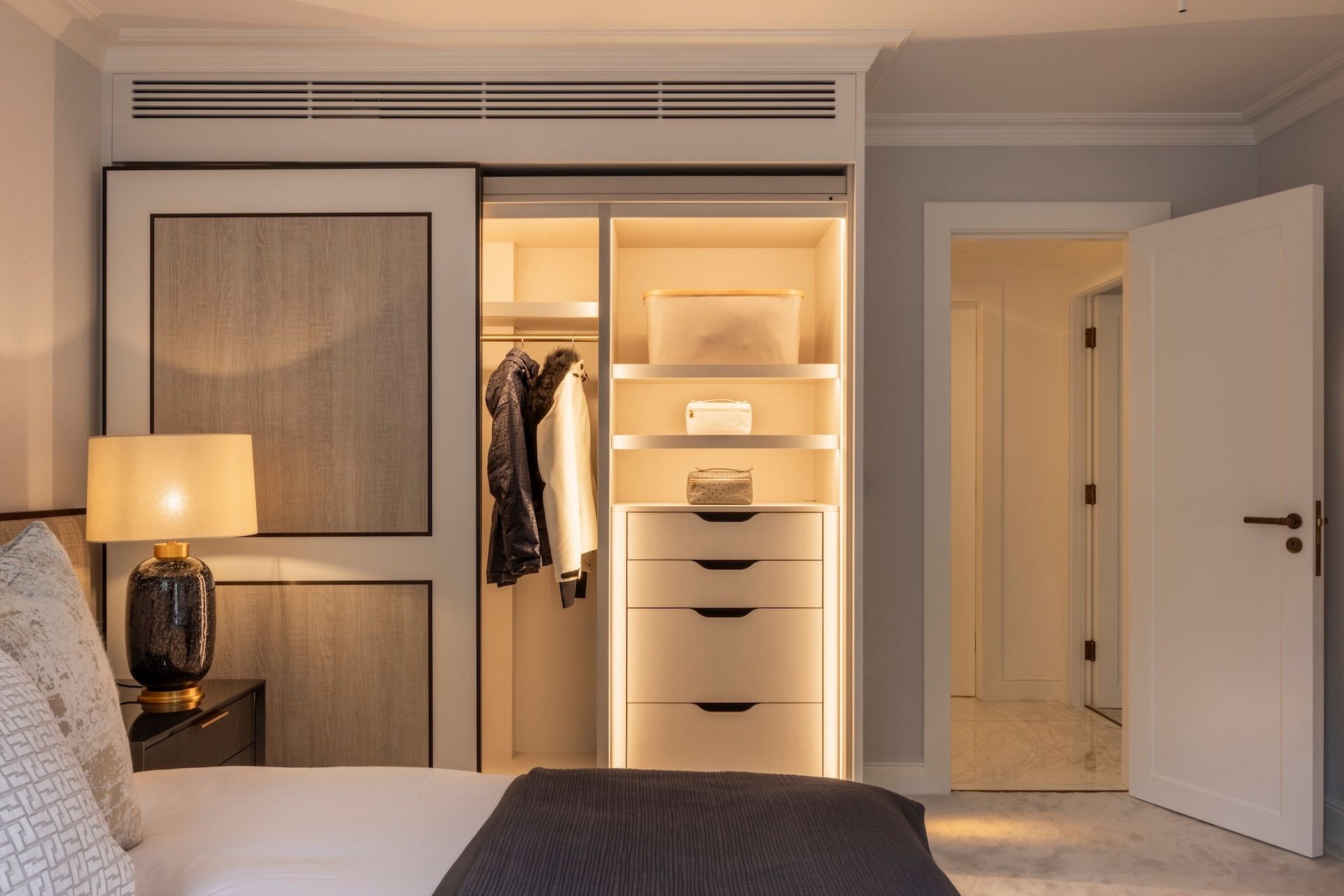
In a luxury home renovation that difference is where the value sits. Fitted wardrobes that run wall to wall and floor to ceiling, alcove units that mirror a Victorian chimney breast, a media wall that hides every cable, a kitchen whose drawers close silently: these are the elements guests notice and buyers pay for. As a guide, fitted wardrobes start from £1,500, a pair of alcove units costs £2,500-4,500, media walls start from £2,500 and radiator covers from £350. Our bespoke furniture cost guide covers the rest.
There is a practical saving too. When the joinery is made by the same studio that runs the renovation, wardrobes, panelling and kitchens are designed alongside the electrical and plumbing first fix rather than bolted on afterwards, which removes the reworking that pushes lesser projects over budget. That is how we work on every project: one dedicated team coordinating qualified electricians, plumbers and structural engineers, with the joinery made in our own workshop. See our bespoke joinery service for how it fits into a renovation.
Frequently Asked Questions
How much does a full house renovation cost in the UK?
A typical full renovation in the UK costs £1,200-2,800 per m2 excluding VAT, so a 100 m2 three bedroom house needs a six-figure budget for anything beyond a light refurbishment. London runs roughly 30-50% above the UK average, with standard full renovations at £1,200-2,000 per m2 and high-end schemes at £2,000-3,500 per m2.
Is it cheaper to renovate or move?
Usually renovating, once stamp duty, agent fees, legal costs and removals are weighed against a standard renovation at £1,200-2,000 per m2. Moving also rarely delivers a home finished to your taste. The exceptions are a property that needs structural work you cannot fund, or one that will never suit your family however it is reconfigured.
How much should I budget for contingency?
Hold 10-15% of the build cost as contingency, and treat the higher end as the sensible figure for a period property or anything with structural scope. Contingency is not for upgrades; it covers rotten joists, unexpected drainage runs and similar discoveries. If it is unspent at completion, it becomes the budget for the garden or the final piece of furniture.
Do I need an architect for a house renovation?
Not always. A light refurbishment or a standard renovation that keeps the layout needs a good contractor and possibly an interior designer. Once you move walls, extend, convert a loft or basement, or alter a listed building, you need an architect or architectural designer plus a structural engineer, and their fees sit within the 10-15% design and surveys allowance.
How much does a 2 bedroom flat refurbishment cost?
For a typical 70 m2 two bedroom flat in London, budget roughly £42,000-70,000 for a light refurbishment, £84,000-140,000 for a standard full renovation with new kitchen, bathroom, wiring and plumbing, and £140,000-245,000 for a high-end refurbishment with bespoke joinery and premium finishes. All figures exclude VAT and assume the layout stays broadly the same.
Does a renovation add value?
A well-executed renovation usually adds value, and structural additions such as lofts and extensions add the most because they create floor area. High-end finishes and bespoke joinery add value in prime postcodes where buyers expect them. The honest caveat is that a renovation costed above the ceiling value of the street will not be recovered on sale, so check local comparables first.
Plan Your London Renovation with a Free Design Consultation
Every renovation we take on starts with a free design consultation: we visit the property, talk through the scope and the tier that suits it, and give you a realistic budget bracket before any design fees are incurred. To arrange a visit, use our contact page or call 0207 118 9889.