Wood joints are the different methods used to connect two pieces of timber together, ranging from a simple glued butt joint to an interlocking dovetail joint, and the specific type chosen affects how strong, durable and visually refined the finished piece of furniture or fitted joinery will be.
Every cabinet, drawer, door frame and run of panelling Noba and Stod makes is, underneath the finish, a collection of joints. The joint is what actually holds a piece of furniture together over years of daily use, so the choice of joint is never just a construction detail, it is a decision about how long something will last and how it will look while doing so.
Some joints are chosen because they are fast and reliable for parts nobody will ever see, such as the inside of a carcass. Others are chosen precisely because they are visible, a row of dovetails on a drawer front is as much a signature of quality as it is a structural solution. Understanding the difference helps when discussing a project, whether that is a fitted wardrobe, a bespoke kitchen or a run of alcove cabinetry.
There are around a dozen wood joints in common use in bespoke joinery and furniture-making. Simple joints such as the butt, lap and dowel joint are quick to produce and are typically reinforced with glue, screws or fittings, making them well suited to carcass work and volume production. Interlocking joints such as the finger, box, bridle, mortise and tenon, and dovetail joint rely on the shape of the timber itself for strength, and are used where a joint needs to resist being pulled apart, such as in drawer fronts, door frames and structural framing. The right joint depends on the load the piece will carry, how visible the joint will be, and the material being used.

Where joints show up in finished work
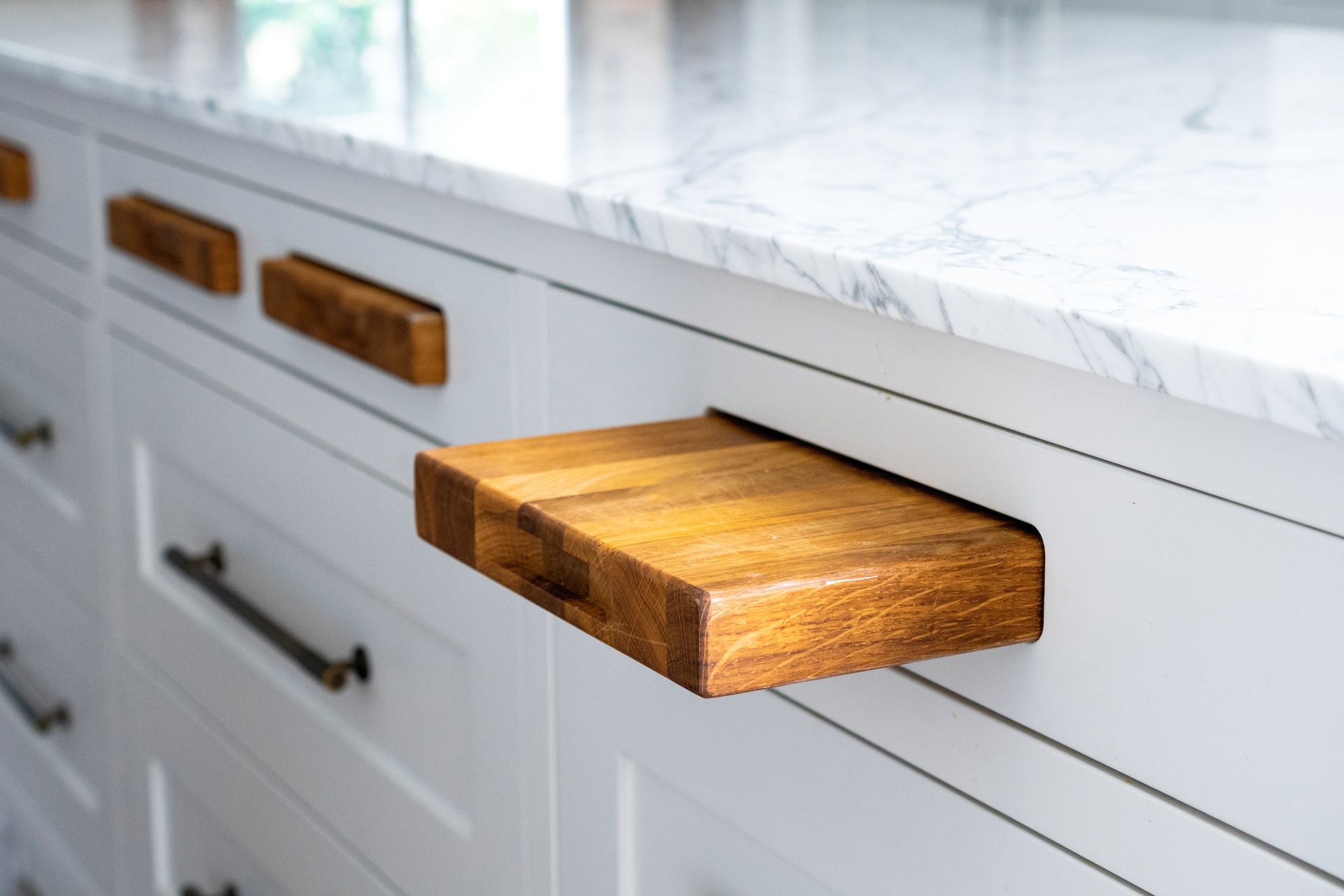
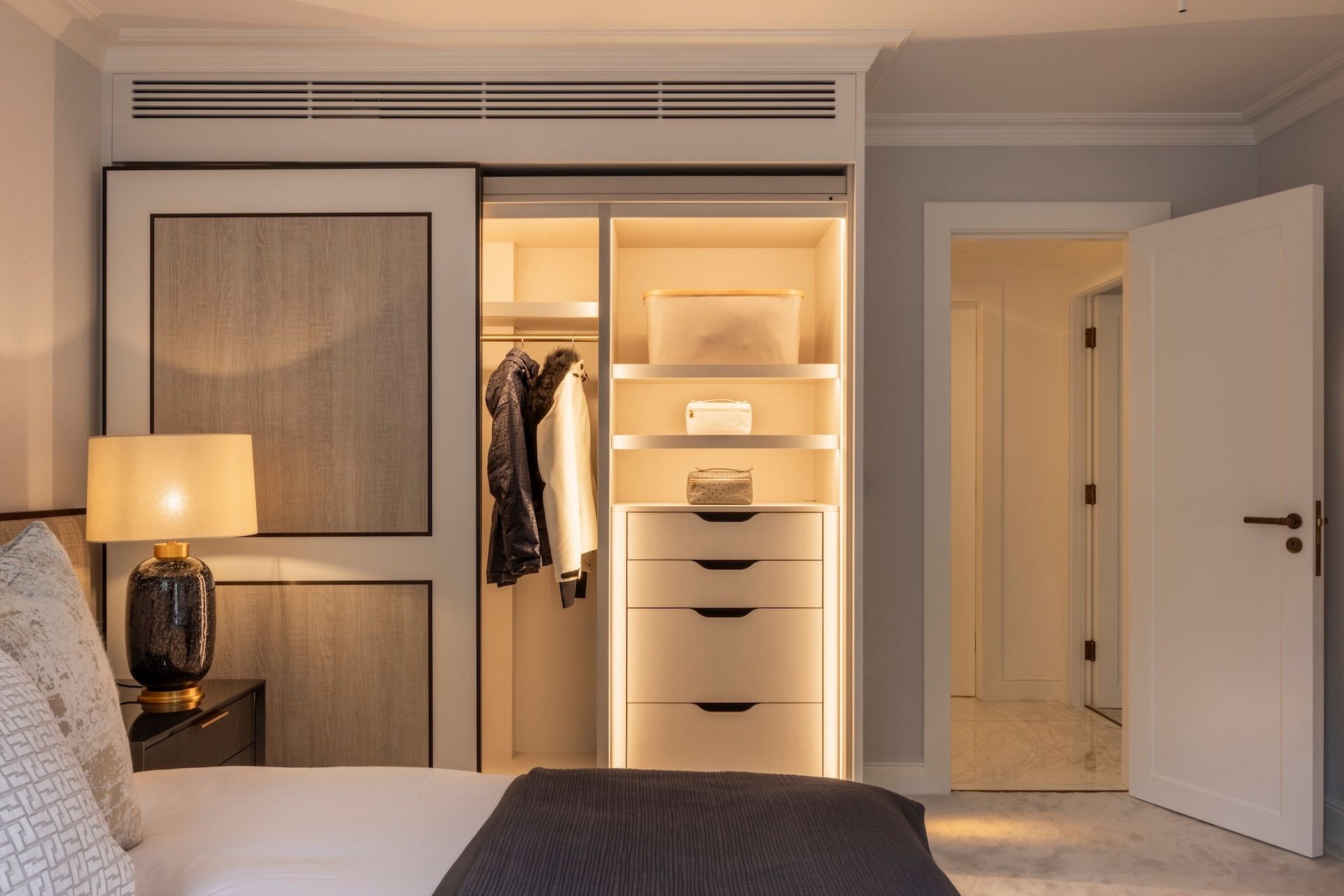
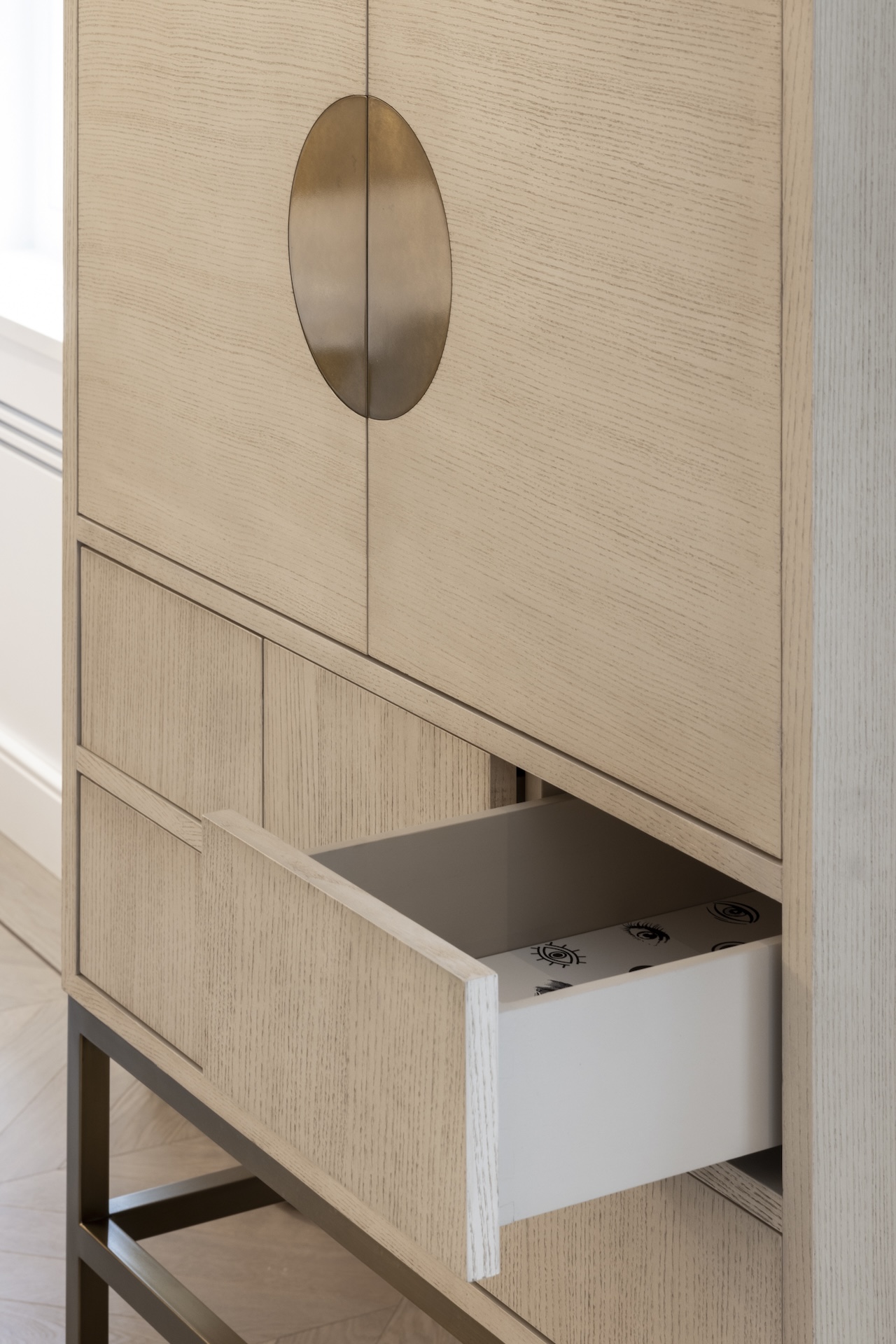
In a finished piece, most joints disappear entirely into the carcass or frame, doing their job unseen. A drawer is the exception. Open a well-made drawer and the joinery at the corners is usually on show, whether that is a neat dovetail or a cleaner box joint, and it is one of the clearest signs of how a piece was actually built. This is why drawer construction is often used as shorthand for build quality across a whole project, from a single fitted wardrobe drawer bank to a full run of kitchen cabinetry.
The main types of wood joints
Butt joint
The simplest joint, where two square-cut pieces of timber meet edge to edge or end to end and are reinforced with glue, screws or fixings. Fast to produce but relatively weak on its own, so it tends to be used for parts of a carcass that carry light loads or are backed up by panelling.
Lap joint
One piece overlaps another, either at the ends or along the edges, and the two are glued or fixed together. Straightforward to cut and reasonably strong, so it appears often in basic framing and simple carcass work where speed matters more than a hidden joint line.
Dowel joint
Round wooden pegs are glued into matching drilled holes in each piece of timber, aligning and reinforcing the joint without any visible fixings. Because it can be machined accurately and repeatably, the dowel joint is common in volume cabinet production, including flat-pack and semi-bespoke furniture.
Biscuit joint
A compressed, oval wooden “biscuit” is glued into matching crescent-shaped slots cut into each piece, swelling slightly as the glue is absorbed to lock the joint tight. It is quick, keeps both surfaces perfectly flush, and is widely used to align and reinforce panelling and carcass panels during assembly.
Finger joint
Interlocking rectangular “fingers” are cut into the ends of two pieces of timber and glued together, spreading the load across a much larger glued surface than a simple butt joint. It is mainly used to join short lengths of timber end to end into one longer, continuous piece.
Box joint
A close relative of the finger joint, using interlocking square fingers cut across the width of two boards that meet at a corner. The result is a strong, symmetrical joint that is a popular alternative to the dovetail for drawer and box construction, particularly where a slightly more geometric, contemporary look is wanted.
Bridle joint
A stronger relative of the lap joint, where a slot cut into one piece receives a matching tongue cut into the other, gripping the timber on three sides rather than just overlapping it. It holds up well under racking and twisting forces, which makes it a good choice for door and frame corners.
Scarf joint
Two lengths of timber are cut with matching angled or stepped faces and glued together to extend a single run of timber, spreading the joint over a long surface so it stays strong and is almost invisible once finished. Useful anywhere a continuous run of moulding, skirting or structural timber is longer than the material available in one piece.
Housing joint
A groove, or housing, is cut across one piece of timber so that a second piece slots directly into it. This gives a positive, self-locating fit that carries weight well, which is why it is the standard way of fitting fixed shelves into the sides of a cabinet or bookcase.
Rule joint
A hinged joint with matching curved, moulded profiles cut into the edges of two panels, designed so the hinge is concealed and the two surfaces appear to flow into one another when open. It is the traditional joint used on drop-leaf and gate-leg tables, where the leaf needs to fold flush against the fixed top.
Mortise and tenon joint
A projecting tongue, the tenon, is shaped on the end of one piece of timber to fit snugly into a matching slot, the mortise, cut into the other. One of the oldest and strongest structural joints in woodworking, used wherever a frame needs to resist being pulled or twisted apart, such as door frames, table legs and staircases.
Dovetail joint
Interlocking wedge-shaped tails and pins are cut so that the two pieces mechanically resist being pulled straight apart, quite apart from whatever glue is used. Traditionally the mark of a well-made drawer, the dovetail joint is still the benchmark for high-quality drawer construction in fine furniture and fitted cabinetry.
How Noba and Stod chooses joints by application
None of these joints is inherently “better” than another, each one is a tool suited to a particular job, and part of good joinery is knowing which one to reach for. On a drawer box where strength, smooth running and longevity matter over decades of daily use, a dovetail or box joint is usually the right call, since the interlocking shape keeps the corners tight long after glue alone might have loosened. On panelling and carcass assembly, where the priority is a perfectly flush, invisible join rather than resisting a pulling force, a biscuit or dowel joint does the job efficiently without adding bulk. Structural elements such as door frames and staircases lean on mortise and tenon or bridle joints, because they need to resist twisting and racking over the life of the piece, not just hold a flat surface together.
This is one dedicated team’s decision to make on each project, weighing the visible finish a client wants against the load a joint will actually carry, and against the practicalities of the timber and materials in use, whether that is solid hardwood, engineered wood or a veneered panel. Good joinery is rarely about choosing the most impressive-looking joint for every situation, it is about matching the joint to what the piece is actually being asked to do.
Related Terms
Wood joints sit at the technical core of most bespoke work, so it is worth reading alongside Joinery for the wider discipline, Cabinetmaking for how joints come together into finished carcasses, and Cabinet and Drawer Hardware for the fittings that often work alongside a joint, such as runners and hinges.
Frequently Asked Questions
What is the strongest wood joint?
For resisting a straight pulling force, the dovetail joint is generally considered the strongest, which is why it remains the standard for drawer fronts. For resisting twisting and racking in a frame, the mortise and tenon joint is the traditional benchmark.
What is the easiest wood joint to make?
The butt joint is the simplest, two square-cut pieces glued and fixed together with no interlocking shape, though it is also one of the weaker joints on its own without reinforcement.
Do all drawers use dovetail joints?
No. Many well-made drawers use box joints or dowelled construction instead, both of which are strong and reliable. The dovetail joint is traditional and highly regarded, but it is one of several sound options rather than the only correct one.
Planning a project that involves this? See our bespoke joinery service, or get in touch to talk it through.