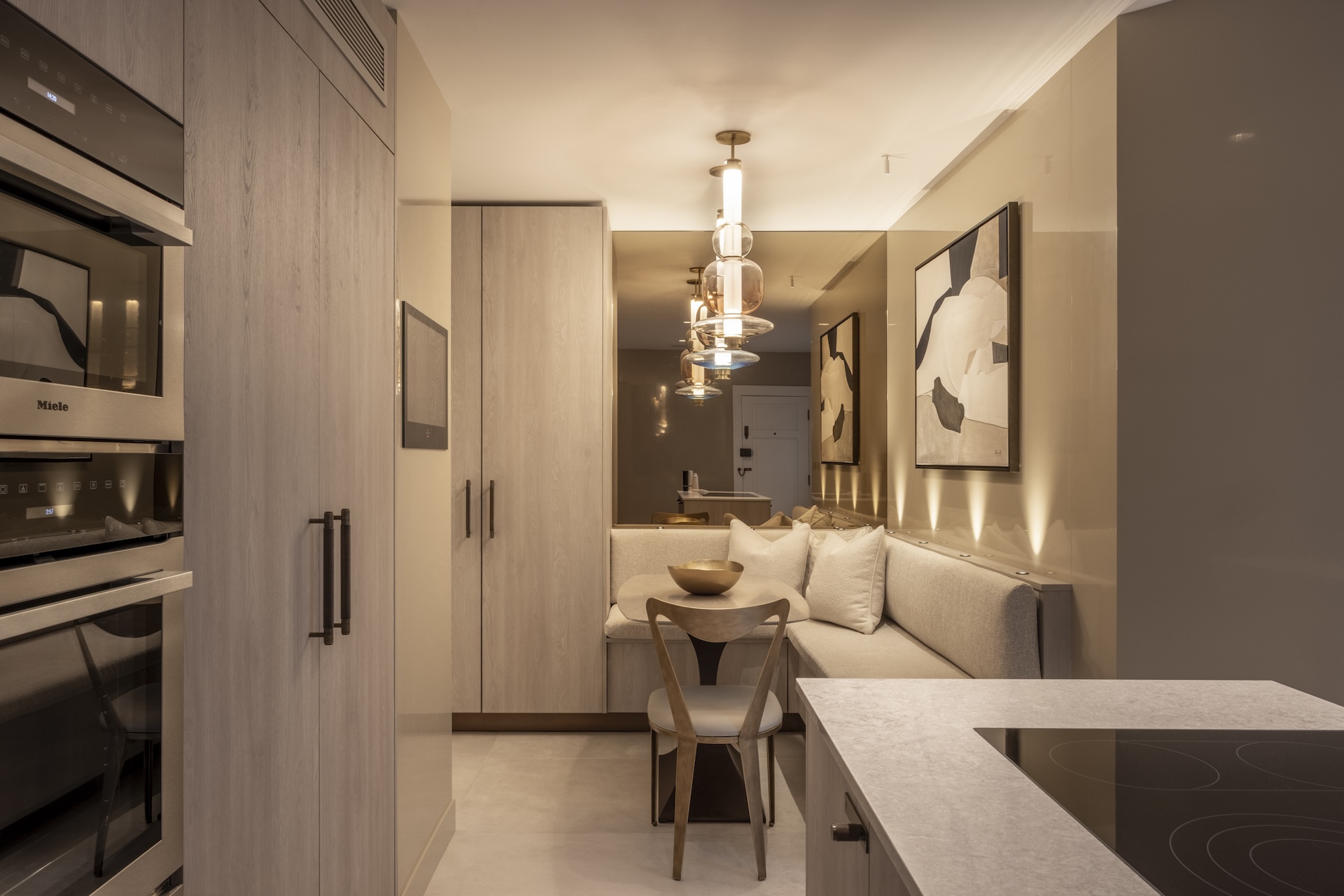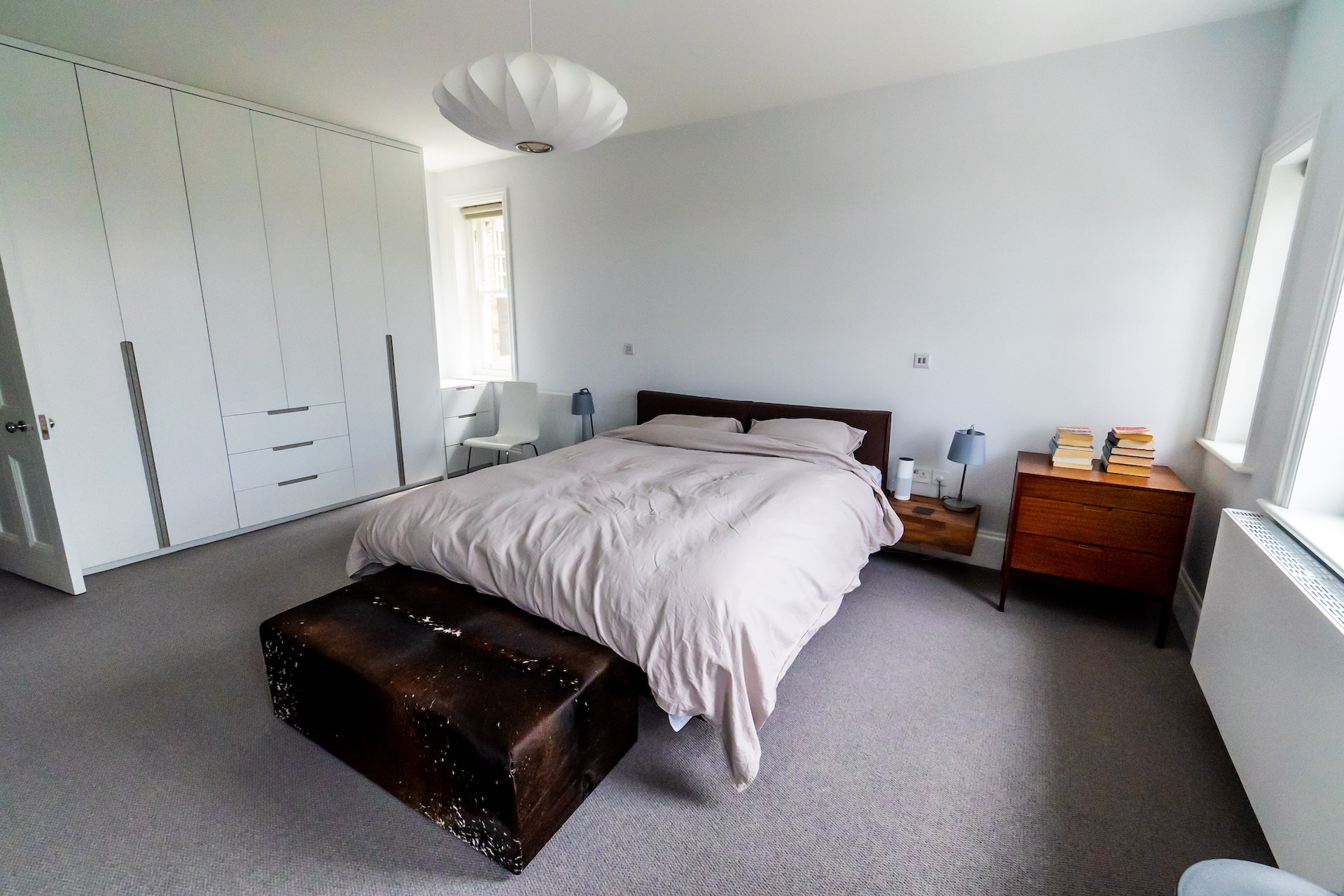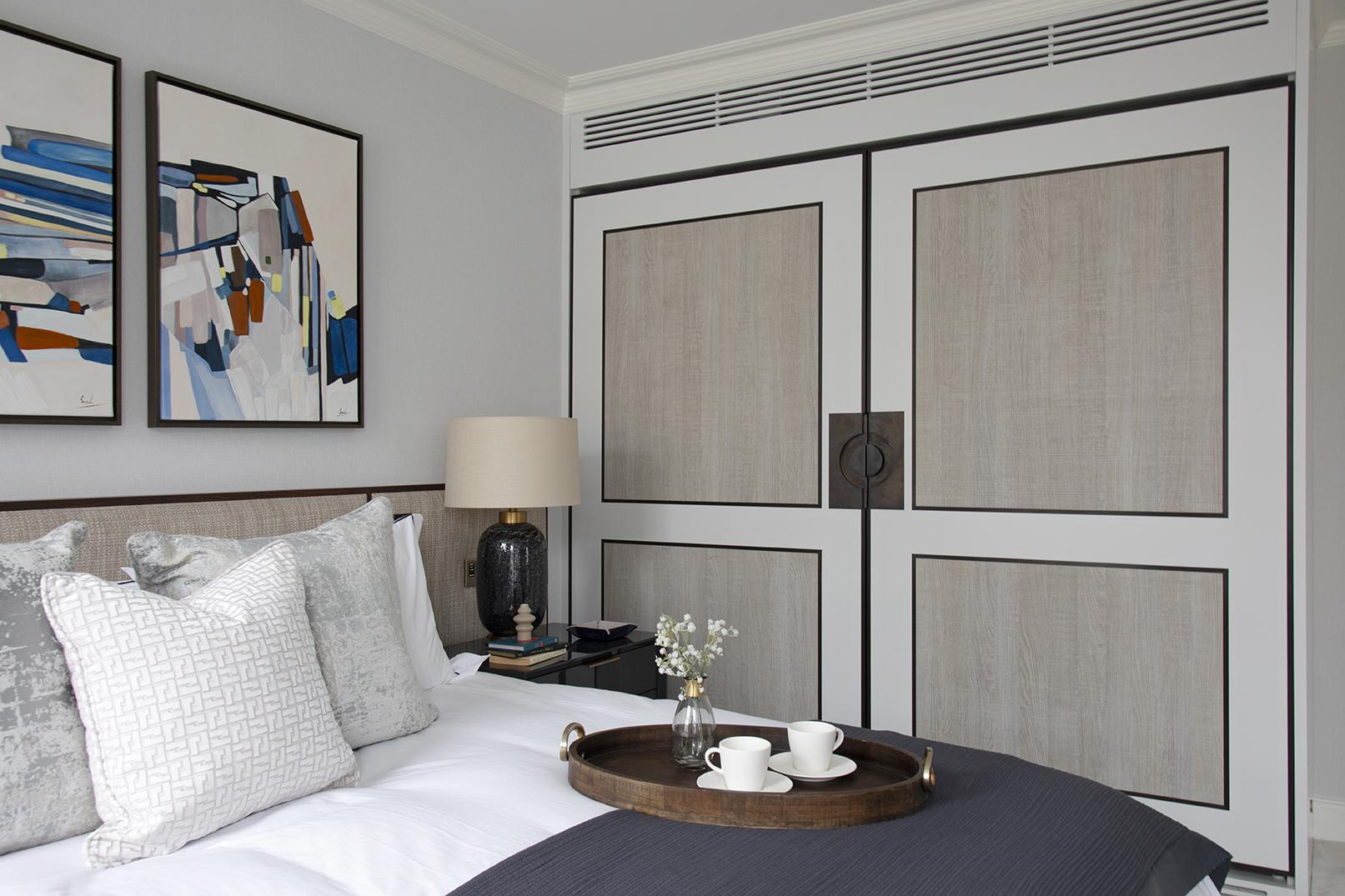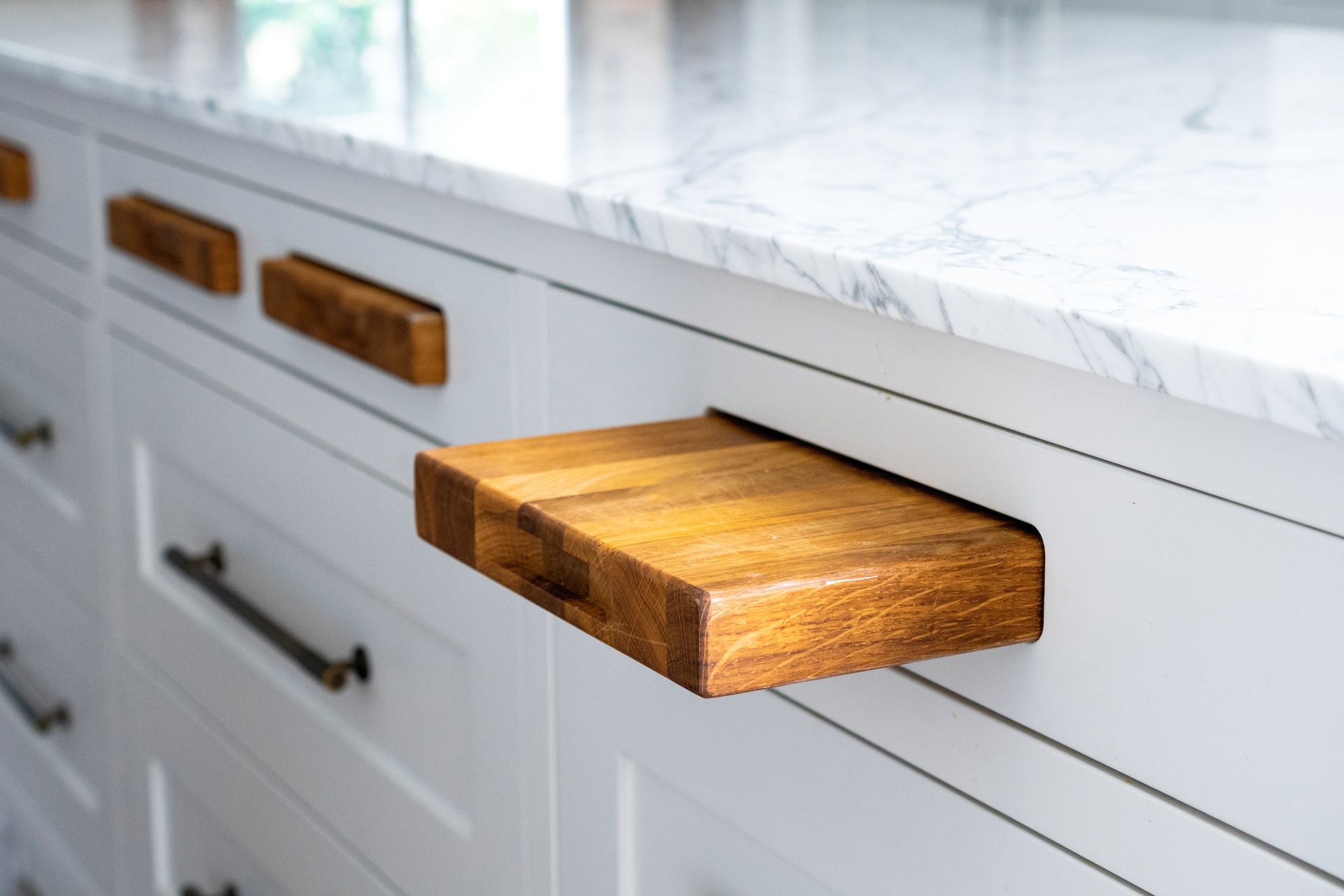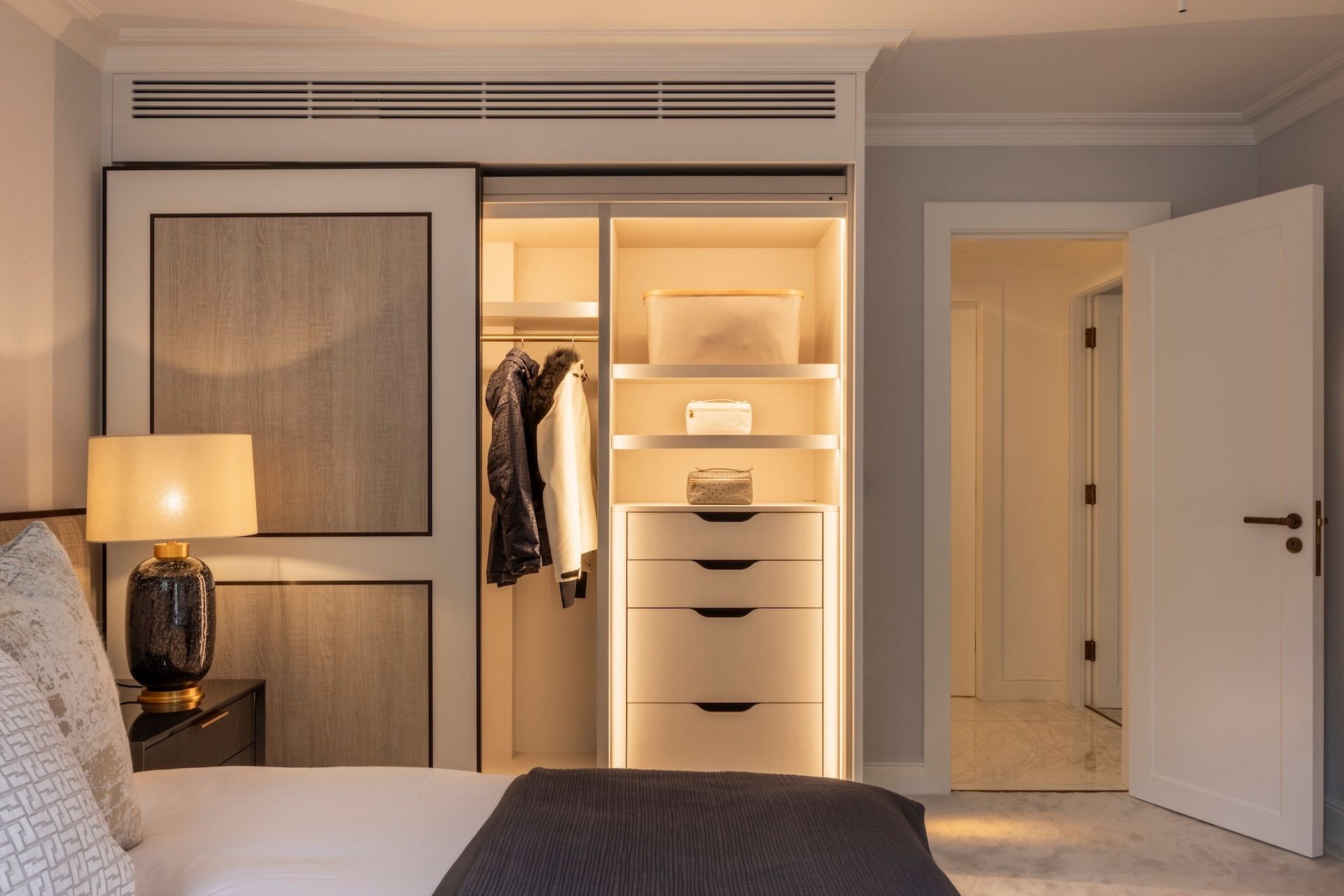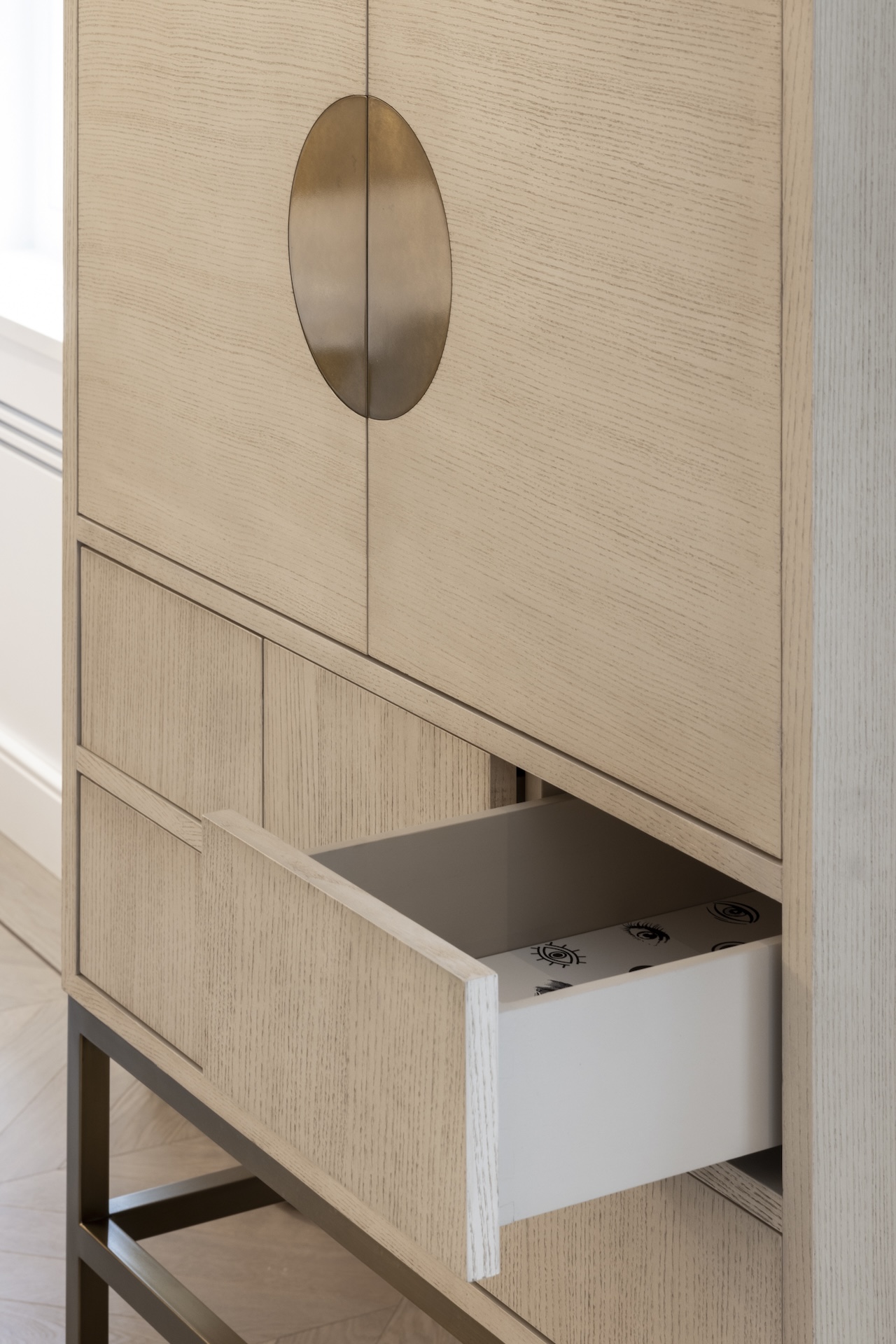
Cabinet and drawer hardware is the collective term for the hinges, runners, catches and fittings hidden inside fitted kitchens and wardrobes that let doors and drawers open, close and stay assembled smoothly, quietly and securely, often for many years of daily use without adjustment.
On a fitted kitchen or wardrobe, hardware is the part nobody notices when it’s working properly, and the part everybody notices the moment it isn’t. A door that slams or a hinge that sags after a year of daily use undermines even the best-designed cabinetry, so at Noba and Stod we spend as much time specifying hardware as we do choosing timber and finishes.
Because our kitchens and wardrobes are built to measure, we can match hardware to how a room is used: a deep pan drawer needs a different runner to a shallow cutlery drawer, and a heavy wardrobe door needs a different hinge to a light internal panel.
Cabinet hardware covers two main jobs. Hinges (soft-close, concealed or continuous/piano) control how doors move and close, while drawer runners (full-extension or under-mount) control how drawers slide and support their contents. Knock-down fittings, including cam locks, are the mechanical connectors that let flat-pack style panels be assembled without glue or visible screws. Quality shows most in what you don’t see daily: a well-specified soft-close mechanism eases a door shut every time without slamming, and a dovetailed drawer box will outlast a stapled one because its joints interlock rather than simply butt together.
Hinges: Soft-Close, Concealed and Continuous
Almost every hinged door on a fitted kitchen or wardrobe uses some combination of these three hinge types, and they aren’t mutually exclusive: a concealed hinge is very often also a soft-close hinge.
Soft-close hinges
A small hydraulic or pneumatic damper built into the hinge body catches and slows the door in its final few centimetres of travel, so it eases shut instead of slamming. The same damping principle is used in soft-close drawer runners.
Concealed hinges
A concealed hinge sits entirely inside the cabinet, folded out of sight once the door is closed, with no visible cup, arm or screw on the outside face. It’s the standard hinge on modern fitted kitchens and wardrobes, and most types adjust in three directions to keep doors aligned after fitting.
Continuous (piano) hinges
Rather than two or three separate hinges along an edge, a continuous or piano hinge runs the full length of a door or lid in one piece, spreading the load evenly. That’s why it’s often chosen for tall or heavy doors, drop-down flaps and lids.

Full-extension and under-mount drawer runners
Full-extension runners let a drawer pull all the way out of the carcase rather than stopping two thirds of the way along, so you can actually see and reach the back of a pan or filing drawer.
Under-mount runners are fitted beneath the drawer box rather than to its sides, so no runner hardware is visible when the drawer is open, and the box can run the full internal width of the cabinet. This is also where soft-close is most commonly built in as standard.
Cam lock and knock-down fittings
A cam lock joins two flat-pack style panels using a small rotating disc, the cam, and a connecting bolt or dowel. Turning the cam draws the bolt tight, joining the panels without any visible screw head or glue line on the finished surface.
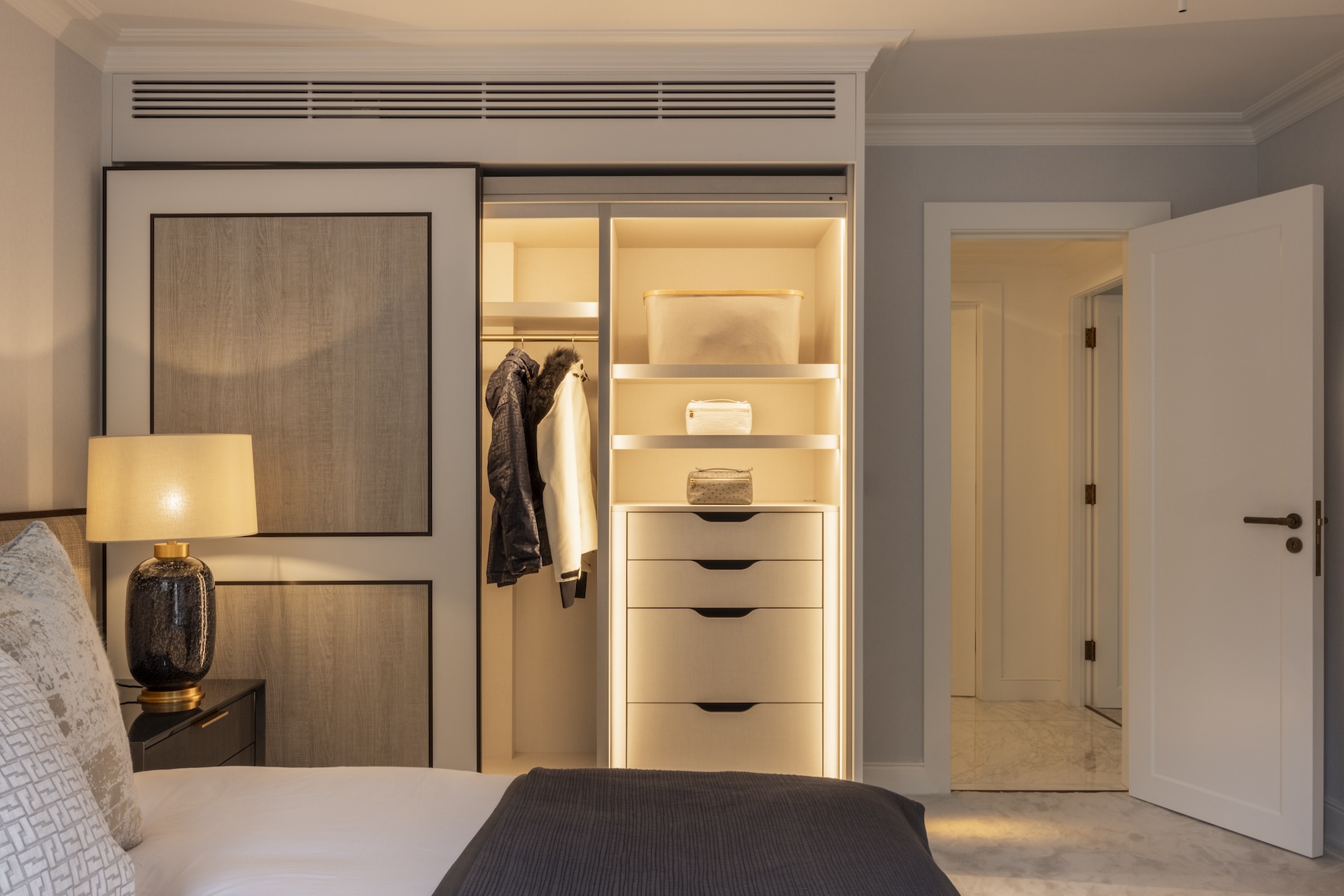
Cam locks are one type of knock-down fitting, a broader category of mechanical connectors that let furniture be assembled, and if needed taken apart, without glue. That matters for fitted wardrobe interiors especially, where shelving, hanging rails and drawer units are often built as separate modules and need to go together cleanly on site.
Drawer Box Construction: Dovetailed vs Stapled
Hinges and runners are what you feel every day, but the drawer box is where long-term quality really shows. There are two common ways to join its corners.
| Dovetailed drawer boxes | Stapled or pinned drawer boxes |
|---|---|
| Front, back and sides interlock mechanically through angled dovetail joints, resisting the load and racking a working drawer puts on it. | Panels are simply butted at the corners and fixed with staples or pins, relying on the fixing alone to hold the joint. |
| Stands up to repeated heavy use and years of opening and closing without the corners working loose. | Can work loose over time under sustained heavy use, particularly in deep drawers carrying weight. |
| Takes more skill and machining time to produce. | Quicker and less costly to produce. |
Noba and Stod builds its own drawer boxes with dovetail joints as standard, because a drawer is one of the hardest-working parts of any kitchen or wardrobe and a mechanically interlocked joint stands up to that better over time. That’s not a judgement on stapled construction as a whole, it has a legitimate place in furniture at a lower price point or lighter duty. It’s just not the standard we build to on our own work.
Related Terms
Cabinet hardware works alongside the carcase and door system it’s fitted to. See Kitchen Carcase for how the box itself is built, Wardrobe Door Types for how doors interact with hinges and runners, Types of Wood Joints for more on dovetail and other joinery joints, and Handleless Kitchen for how push-to-open hardware fits into a handleless design.
Frequently Asked Questions
Do soft-close hinges and runners wear out?
The damper inside can weaken after many years of heavy use, but high-quality soft-close hardware is designed to be replaceable, so a worn mechanism can usually be swapped out without replacing the whole door or drawer.
What’s the real difference between full-extension and under-mount runners?
Full-extension describes how far the drawer travels, all the way out rather than stopping partway. Under-mount describes where the runner is fitted, beneath the drawer rather than at its sides. Many runners are both at once.
Are all Noba and Stod drawer boxes dovetailed?
Dovetail-jointed construction is our standard for drawer boxes because of how well it holds up to daily use. Get in touch to talk through the specification for your project.
Planning a project that involves this? See our bespoke kitchens and fitted wardrobes services, or get in touch to talk it through.