Bespoke alcove cupboards and shelving in London cost between £1,200 and £6,000+ per pair, depending on materials and complexity. The most popular configuration is base cupboards with floating shelves above, built into the recesses either side of a chimney breast. Expect 2–4 weeks for design and manufacture, plus 1–5 days for installation.
Alcoves — the recesses flanking a chimney breast — are one of the most under-used spaces in British homes. In London’s Victorian and Edwardian terraces, these niches average 300–500 mm deep and 600–900 mm wide: too shallow for standard furniture, yet perfectly sized for bespoke built-in storage.
Whether you need alcove cupboards to hide clutter, alcove shelving to display books and objects, or a combination of both, this guide covers designs, costs, materials and planning considerations for London homeowners in 2026.
Alcove Cupboards & Shelving Costs in London (2026)
Pricing for bespoke alcove furniture depends on configuration, materials, and whether units are built on-site or workshop-manufactured. Below are typical London prices for a standard pair of alcoves (two units, one each side of a chimney breast).
| Configuration | Material | Typical Cost (pair) |
|---|---|---|
| Floating shelves only (3–4 per alcove) | MDF / Plywood | £400–£900 |
| Base cupboards only | MDF painted | £1,200–£2,000 |
| Base cupboards + shelves above | MDF painted | £1,800–£3,000 |
| Full-height cupboards with doors | MDF / Plywood | £2,500–£4,500 |
| Base cupboards + shelves above | Hardwood (oak/walnut) | £3,000–£5,000 |
| Full alcove wall unit (floor-to-ceiling) | Hardwood + specialist finish | £5,000–£8,000+ |
Prices are for London-based bespoke joinery workshops (2026). Costs include design, manufacture, installation, and painting/finishing. VAT included where applicable.
What Affects the Price?
| Factor | Lower Cost | Higher Cost |
|---|---|---|
| Material | MDF with spray paint | Solid oak or walnut |
| Door style | Flat slab | Shaker / raised & fielded panel |
| Internal fittings | Fixed shelves | Pull-out drawers, wine racks, lighting |
| Height | Base cupboard (900 mm) | Floor-to-ceiling (2,400 mm+) |
| Wall condition | Plumb, square walls | Out-of-square Victorian walls (scribing needed) |
| Finish | Primed for client to paint | Workshop spray-finished (2+ coats) |
Source: Pricing based on London bespoke joinery market rates. For comparison, Checkatrade estimates £1,000–£3,500 for alcove cupboards nationally, with London prices typically 20–40% higher.
Popular Alcove Designs & Ideas
The best alcove design depends on what you need to store, how you use the room, and the architectural style of your home. Here are the most requested configurations we see at Noba & Stod.
1. Base Cupboards with Open Shelving Above
The classic alcove treatment. Cupboards (typically 800–1,000 mm high) conceal everyday items while open shelves above display books, art, and objects. This configuration balances hidden and visible storage without overwhelming the room.
Best for: Living rooms, dining rooms, home libraries.
2. Full-Height Alcove Wardrobes
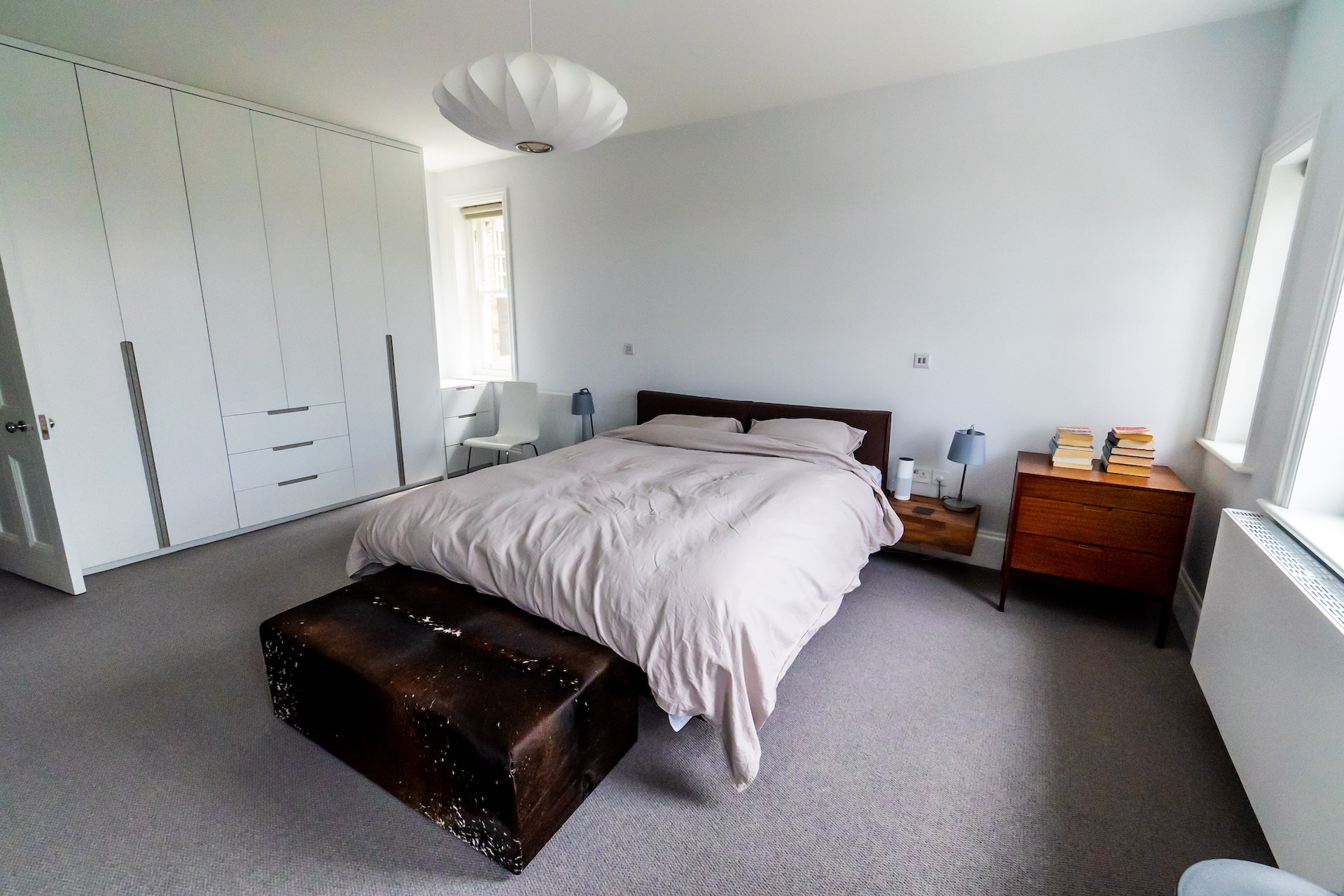
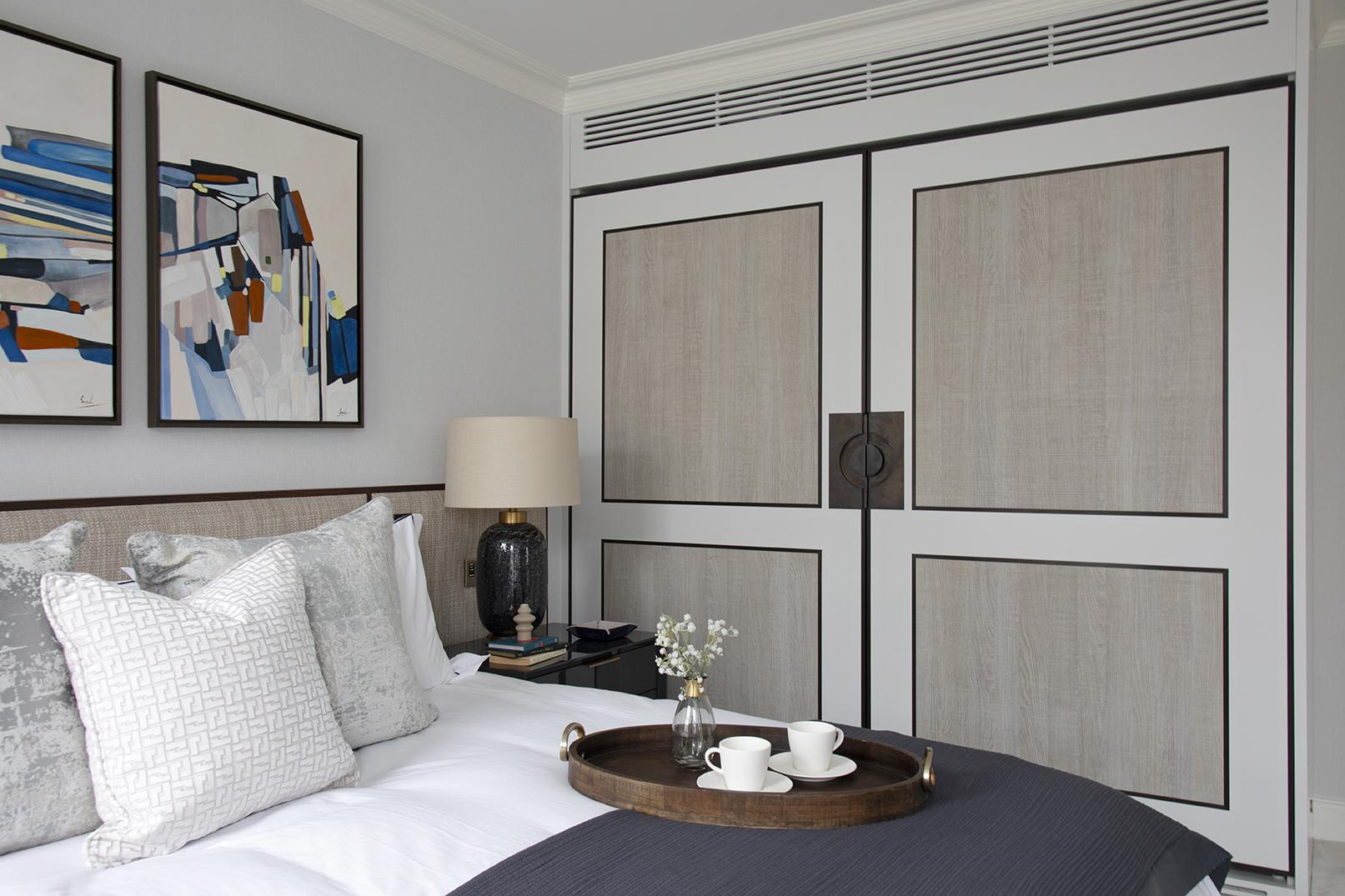
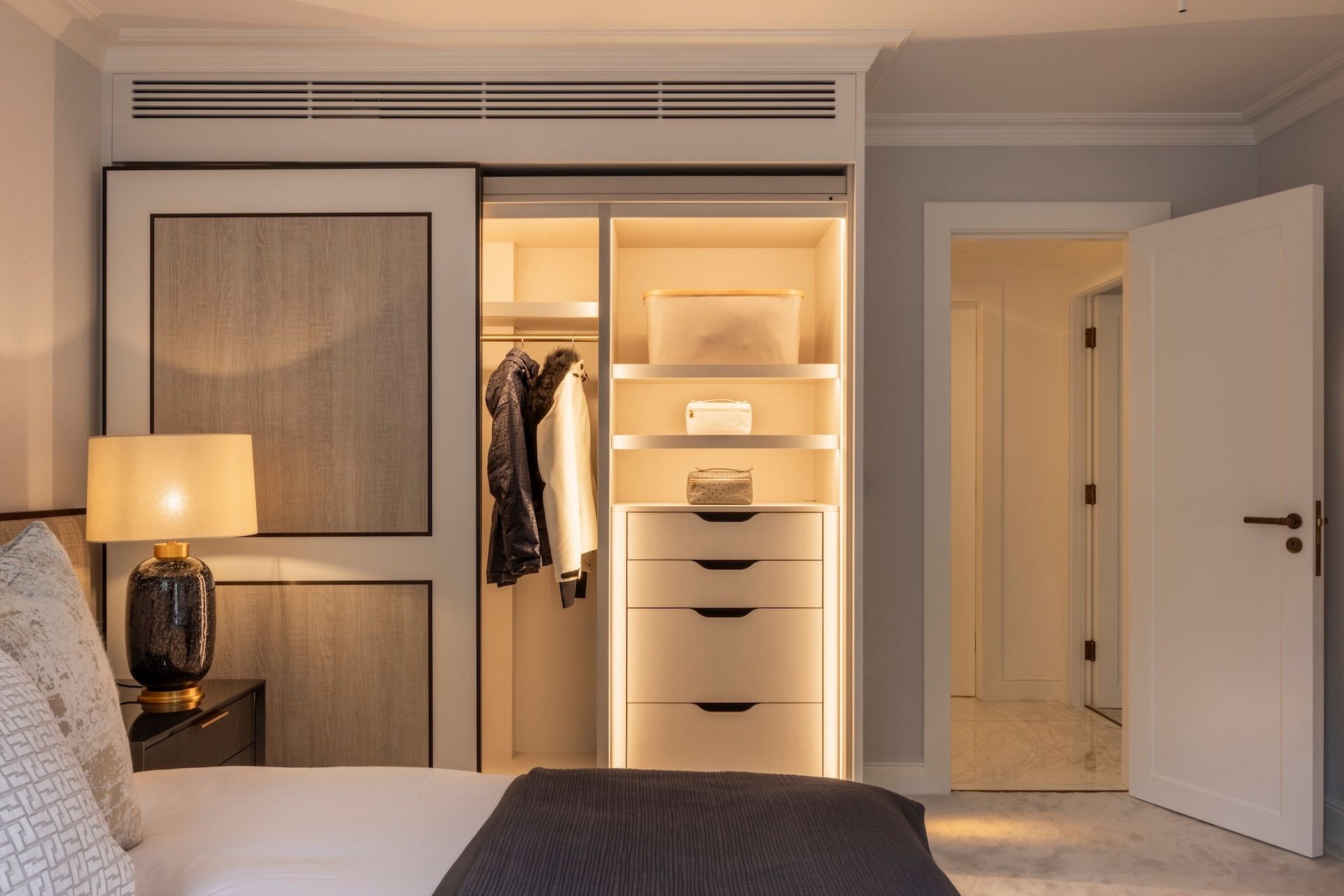
Floor-to-ceiling fitted wardrobes that span the full alcove depth. These maximise storage in bedrooms where freestanding wardrobes would be too deep or too narrow. Internal configurations include hanging rails, adjustable shelves, and pull-out drawers.
Best for: Bedrooms, dressing rooms. See also our guide to fitted wardrobe costs.
3. Alcove Shelving Wall
Open shelving from floor to ceiling across both alcoves, creating a library or display wall. Shelves can be floating (concealed brackets), supported on timber battens, or adjustable on bookcase strips.
Best for: Studies, children’s rooms, living rooms with book collections.
4. Window Seat with Flanking Cupboards
Where a window sits between the alcoves, a built-in bench seat with storage beneath connects cupboards on either side. The result is a cohesive, architectural feature.
Best for: Bay windows, bedrooms, reading nooks.
5. Home Office Alcove
A desk surface spanning between two alcove cupboards creates an integrated workspace. Shelving above stores files, books, and equipment. Cable management can be built into the cabinetry.
Best for: Spare bedrooms, living rooms doubling as work-from-home spaces.
6. Media & TV Unit
Low alcove cabinets either side of a fireplace with a bridging shelf or panel above for a wall-mounted television. Internal compartments are ventilated for AV equipment, with cable routes hidden in the cabinetry.
Best for: Living rooms, snugs, media rooms.
7. Alcove Drinks Cabinet / Bar
One or both alcoves fitted with glass-fronted upper cupboards, wine racks, bottle storage, and a worktop surface for mixing drinks. Internal LED lighting showcases glassware.
Best for: Dining rooms, entertaining spaces, living rooms.
8. Radiator Cover with Cupboards Above
A slatted or mesh radiator cover at the base of the alcove with storage cupboards built above. This maintains heat flow while using the full alcove height productively.
Best for: Hallways, living rooms with alcove-positioned radiators.
Materials Guide for Alcove Furniture
Material choice affects cost, finish quality, durability, and lead time. Here’s what we recommend for different budgets and styles.
| Material | Best For | Finish | Cost Level | Durability |
|---|---|---|---|---|
| Moisture-resistant MDF | Painted cupboards & shelves | Spray painted (any colour) | £ (lowest) | Good – excellent when sealed |
| Birch plywood (18 mm) | Visible-edge shelves, contemporary style | Clear lacquer or painted | ££ | Excellent |
| Tulipwood (solid) | Painted mouldings, door frames | Primed & painted | ££ | Excellent |
| Solid oak | Shelves, cabinet frames, natural look | Oiled, waxed or lacquered | £££ | Excellent |
| Solid walnut | Premium feature shelving | Oiled or lacquered | ££££ | Excellent |
| Oak-veneered MDF | Natural wood look at lower cost | Oiled or lacquered | ££ | Good (veneer can chip) |
Our recommendation: For most London alcove projects, we use moisture-resistant MDF for carcasses (the internal structure) with solid tulipwood or timber for visible frames and doors. This balances cost, stability, and paint finish quality. For natural wood shelving, 25 mm solid oak is our standard — it’s strong enough to span 900 mm without sagging and ages beautifully.
Styles by Property Type
Victorian Terraces (1837–1901)
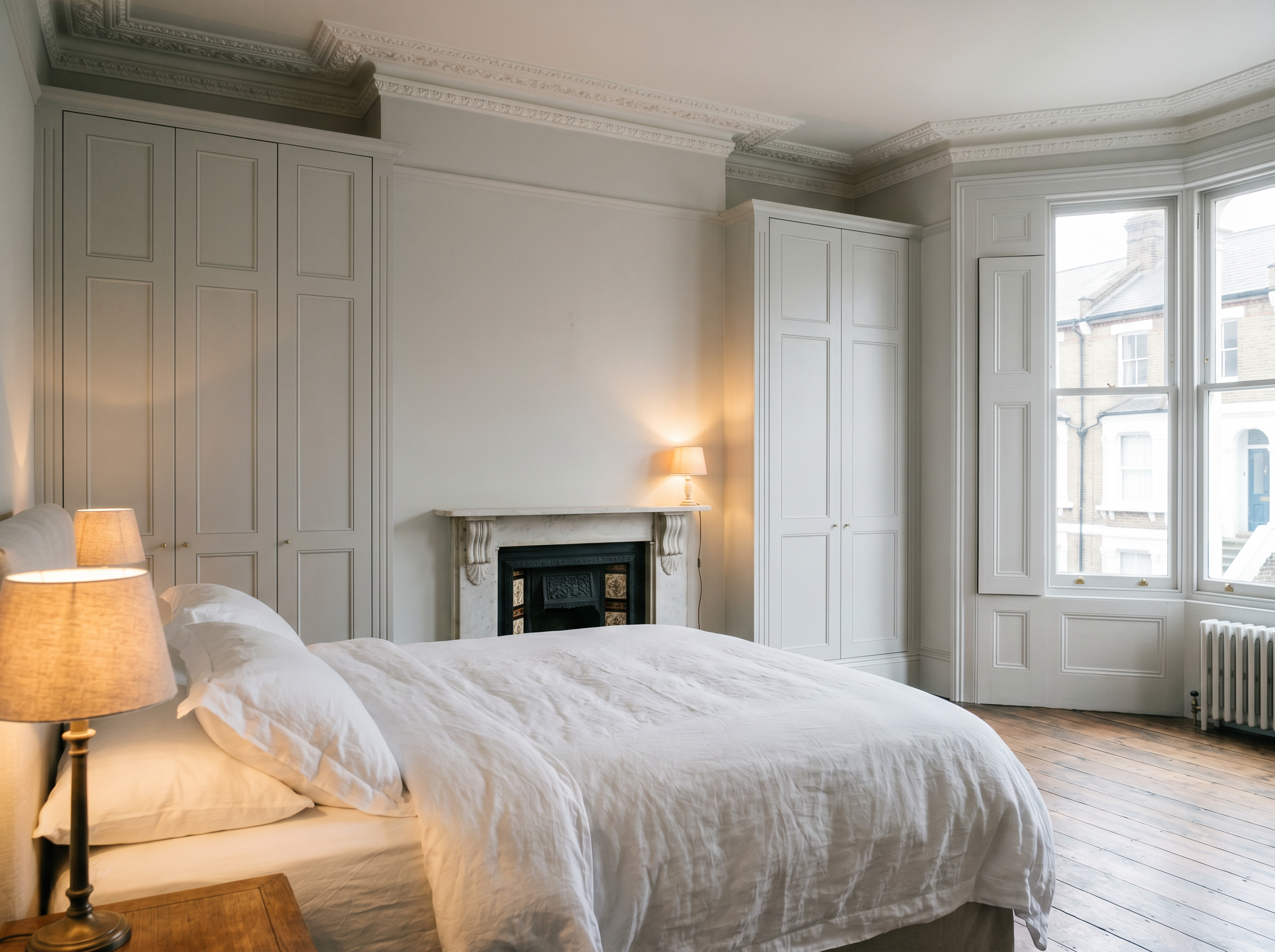
Victorian alcoves are typically 350–450 mm deep with ornate cornicing and high ceilings (2,700–3,000 mm). The most sympathetic approach uses panelled Shaker doors with beading detail, ogee or torus skirting to match existing profiles, and shelving that stops below the cornice line. Heritage paint colours (deep greens, navy, off-whites) complement original features.
Edwardian Homes (1901–1910)
Edwardian alcoves tend to be slightly wider and shallower than Victorian ones. Lighter, more restrained joinery suits these properties — think plain Shaker doors, slimmer mouldings, and pale painted finishes. Edwardian homes often have wider chimney breasts, giving more symmetrical proportions to alcove units.
1930s Semi-Detached
Art Deco and Arts & Crafts influences mean cleaner lines suit 1930s properties. Curved details, geometric handles, and a mix of open and closed storage work well. Alcoves tend to be wider (700–900 mm) and shallower.
Modern & New-Build Properties
Contemporary homes may have shallower alcoves or feature walls that mimic the traditional chimney breast. Handleless push-catch doors, floating units with shadow gaps, and visible plywood edges create a modern aesthetic. Minimal, clean-line joinery extends the design language from kitchen to living space.
Planning & Measuring Your Alcoves
Accurate measurement is critical for built-in furniture — especially in older London properties where walls are rarely plumb or square. Here’s what to consider before commissioning alcove cupboards.
Step 1: Measure at Multiple Heights
Take width measurements at floor level, 500 mm, 1,000 mm, and ceiling height. In Victorian properties, width can vary by 10–20 mm from bottom to top. Your joiner will scribe panels to fit, but knowing the variation upfront helps with design.
Step 2: Check Depth
Measure from the back wall to the front of the chimney breast. Standard alcove depths in London are 300–500 mm. For cupboards with doors, you need at least 300 mm internal depth; 350 mm+ is more practical for storage.
Step 3: Note Obstructions
Check for: skirting boards (will they be removed or scribed around?), dado rails, picture rails, electrical sockets, radiator pipes, gas meters, and any uneven plasterwork. Photograph everything before your site visit.
Step 4: Consider Services
Older properties may have gas pipes, electrical cables, or plumbing within alcove walls. A joiner experienced with London period properties will know where to check and how to work around services safely.
Step 5: Define Your Brief
Before meeting a joiner, decide: What do you need to store? Do you want doors, open shelving, or both? What height should cupboards be? Do you want lighting? What’s your budget range? A clear brief saves time and ensures accurate quotes.
Living Room Alcove Ideas
Living rooms are where alcove furniture makes the biggest visual impact. The right design transforms dead space into a focal feature that frames the fireplace and defines the room’s character.
Alcove Cabinets for Living Rooms
Living room cabinets built into alcoves typically combine closed storage below (for games, cables, paperwork, toys) with display shelving above. A popular option is to align the living room cupboard top with the mantelpiece height, creating a continuous horizontal line across the chimney wall. Bespoke alcove cabinets outperform freestanding alternatives because they’re scribed precisely to the walls, leaving no awkward gaps.
Built-In Cupboards for Small Living Rooms
In compact London flats, built-in cupboards that use the full alcove depth eliminate the need for freestanding furniture. Floor-to-ceiling designs maximise storage without encroaching on floor space. Push-catch doors keep lines clean in small rooms.
Alcove Shelving Ideas
For a lighter feel, alcove shelving without base cupboards opens up the room visually. Floating shelves on concealed brackets create a minimal look; for heavier loads (books, vinyl records), shelves on timber supports or metal brackets are more practical. Mixing shelf depths — deeper at the base, shallower at the top — adds visual interest.
Looking for more living space solutions? Our guide to under stairs storage ideas covers another commonly overlooked space in London homes.
Bedroom Alcove Storage
Bedroom alcoves offer opportunities for wardrobes, bedside storage, and dressing areas without the visual bulk of freestanding furniture.
Alcove Wardrobes
An alcove wardrobe fitted into a chimney breast recess provides hanging space and shelving within a footprint that would otherwise be unused. Depths of 350–500 mm accommodate folded clothes and short-hang items; for full-length hanging, you’ll need at least 550 mm (which some deeper alcoves provide).
For a complete guide to bedroom storage costs and options, see our article on fitted wardrobes cost in the UK.
Bedside Alcove Units
Low alcove units either side of a bed replace traditional bedside tables. These can include open niches for current reading, a small drawer for essentials, and a surface for a lamp — all built-in and perfectly proportioned to the space.
Dressing Table Alcove
A floating shelf at desk height within one alcove creates a compact dressing area. Add a mirror above, lighting, and a small stool, and you have a dedicated space that folds neatly into the room’s architecture.
Frequently Asked Questions
How much do bespoke alcove cupboards cost in London?
Bespoke alcove cupboards in London typically cost between £1,200 and £6,000+ per pair depending on size, materials, and finish. MDF painted units start around £1,200–£2,000, hardwood options range from £3,000–£6,000+. See our full cost breakdown above.
What is the best material for alcove shelving?
For painted finishes, birch plywood or moisture-resistant MDF are ideal — they’re stable, take paint well, and resist warping. For natural wood shelving, solid oak or walnut offer durability and character. Shelf thickness of 25–30 mm prevents sagging on standard alcove spans (600–900 mm).
Can you fit alcove cupboards in a rented property?
Freestanding or semi-fitted alcove units can work in rentals as they minimise wall damage. However, fully built-in cupboards require landlord permission as they’re fixed to walls and may be classed as fixtures (becoming the landlord’s property). Always get written permission before commissioning built-in joinery in a rental.
How long does it take to install alcove cupboards?
A single pair of alcove cupboards typically takes 3–5 days to install if built on-site. If units are workshop-built and delivered pre-finished, installation can be completed in 1–2 days. Total project timeline from initial consultation to completion is usually 4–8 weeks, including design, manufacture, and installation.
Do alcove cupboards add value to a property?
Yes. Built-in alcove storage is consistently cited by estate agents as a feature that adds perceived value, particularly in period properties where buyers expect fitted joinery that respects the architecture. Well-made units can add 1–3% to a property’s value according to property industry estimates. They also make rooms more functional, which helps properties sell faster.
What styles of alcove cupboards suit Victorian homes?
Victorian homes suit Shaker-style or panelled doors with beading detail, often painted in heritage colours (Farrow & Ball, Little Greene). Base cupboards with open shelving above is the most traditional configuration, complementing original cornicing and picture rails. Avoid overly modern, handleless designs which can clash with period features.
Ready to Design Your Alcove Storage?
At Noba & Stod, we design and build bespoke alcove cupboards and shelving for London homes. Every project is made to measure in our workshop and installed by our own team.
Related Articles
- Under Stairs Storage Ideas: Designs, Costs & Inspiration
- Fitted Wardrobes Cost UK: Complete Pricing Guide
- Kitchen Renovation Cost London: What to Budget
- Bespoke Kitchen Islands: Design & Cost Guide
- Bespoke Joinery London: The Complete Guide
- Luxury Kitchens London: Planning & Design Guide
Sources: Checkatrade – Alcove Cupboard Costs | MyBuilder | RICS – Royal Institution of Chartered Surveyors