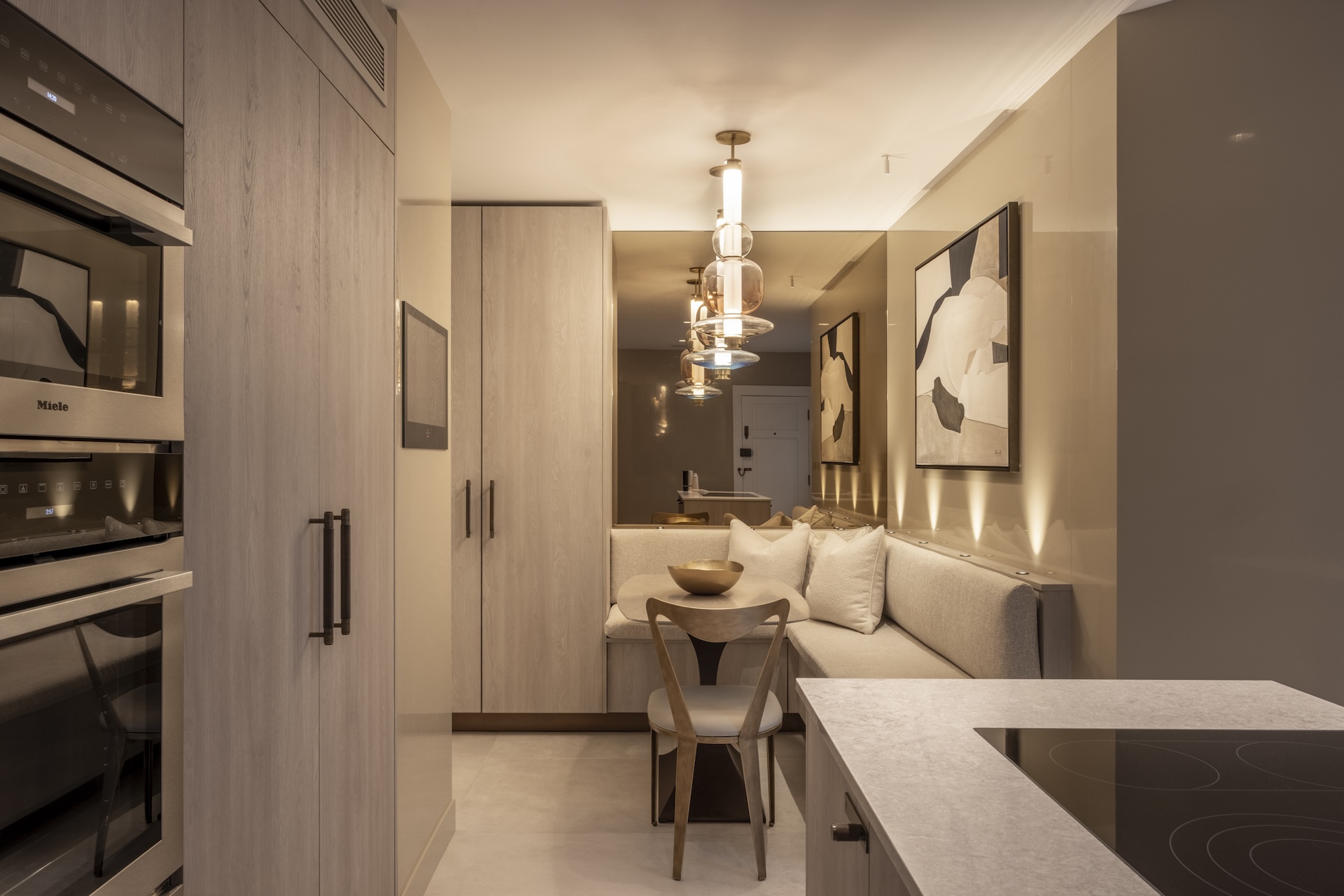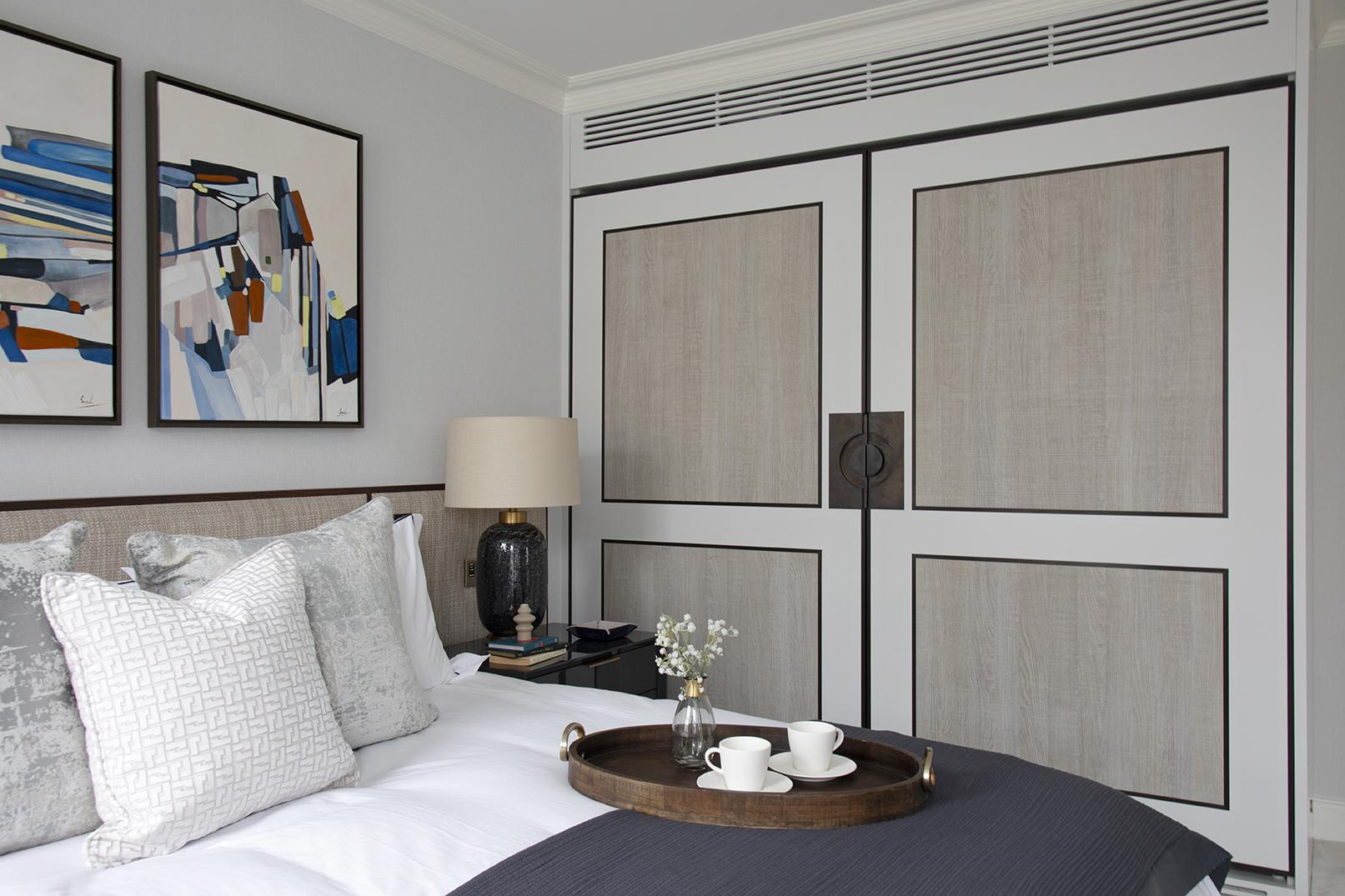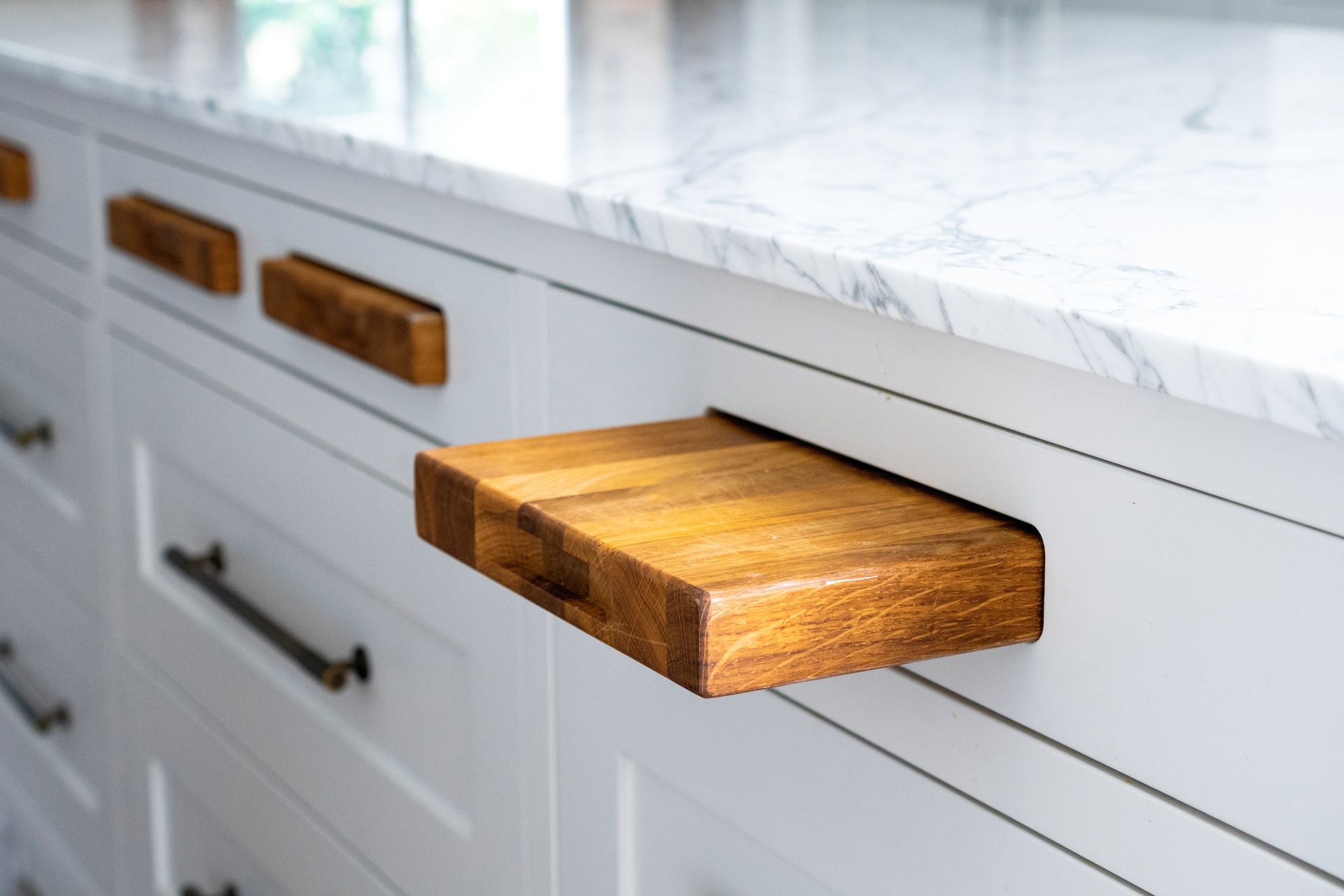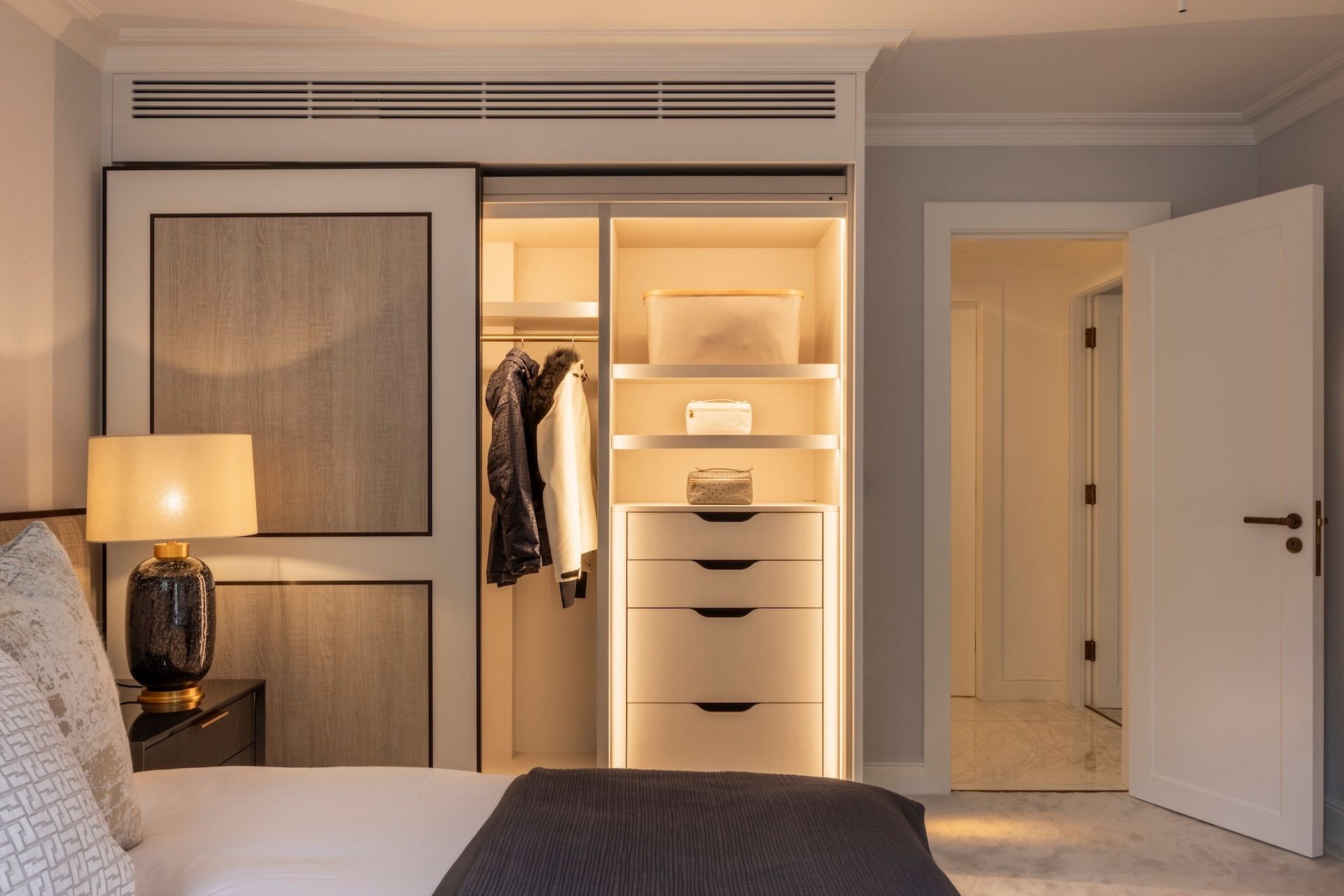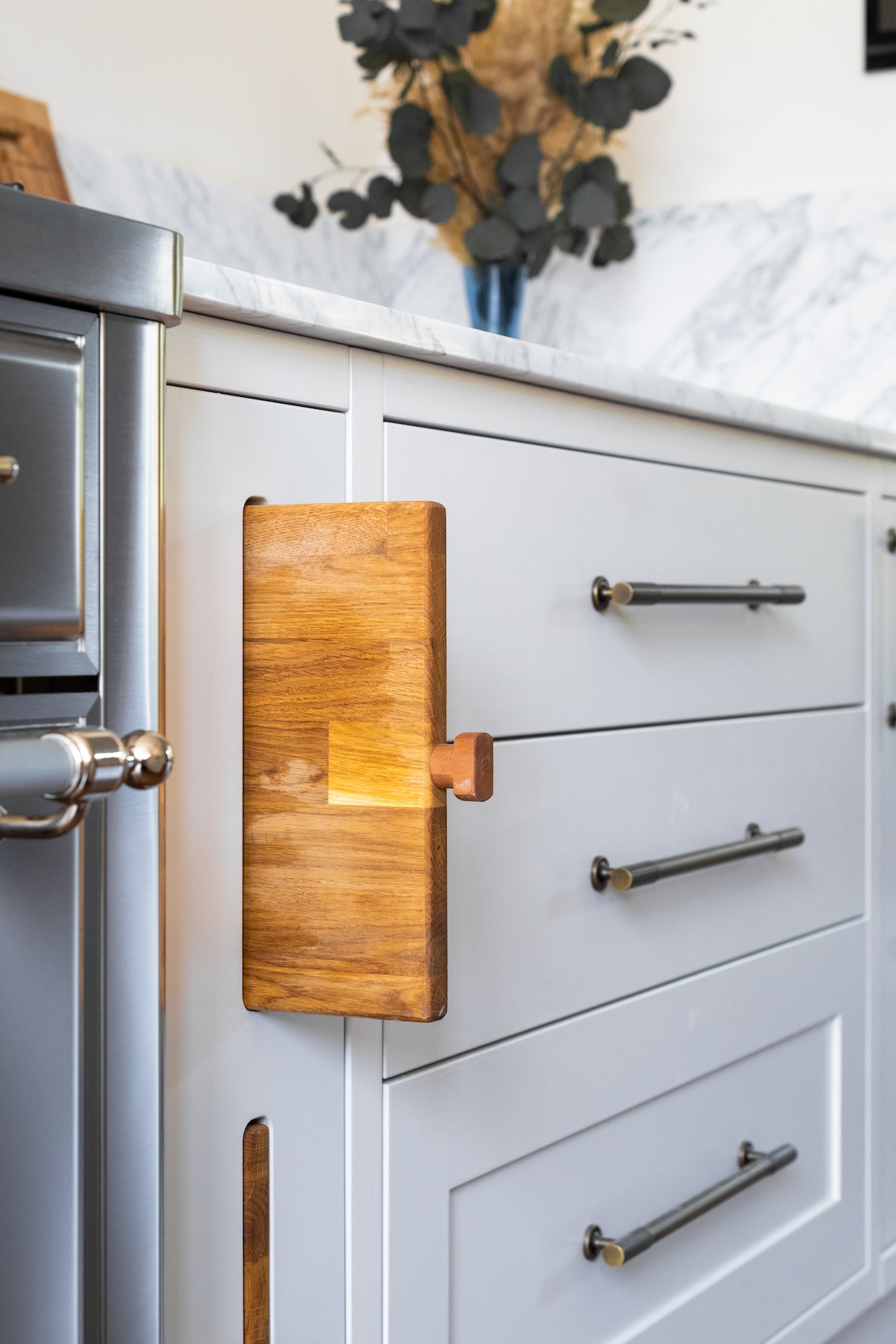
Shaker style is a kitchen and furniture door design built from a flat, recessed centre panel set inside a simple frame of four rails and stiles, with no raised mouldings or applied ornament, and it takes its name from the American Shaker religious communities of the 18th and 19th centuries, who valued plain, honest, well-made furniture over decoration.
At Noba and Stod, Shaker style is one of our most requested kitchen and furniture looks, especially in Victorian and Edwardian London homes, where a plain, well-proportioned door sits comfortably alongside original cornicing and panelling rather than competing with it. The same flat-panel door works just as well in a contemporary extension, which is part of why it has stayed popular for so long.
We build every Shaker door as a genuine five-piece frame, not a printed or moulded imitation, using premium materials, such as birch plywood or solid timber, depending on the finish a client chooses. Because the design relies on plain, square edges rather than a moulded profile, the quality shows in the details: even reveals, crisp inner edges, and a consistent paint or timber finish across every door in the run.
Shaker style describes a five-piece kitchen or furniture door: a flat, recessed centre panel held inside a frame of four flat rails and stiles, with square, unmoulded edges and no applied ornament. It originates with the American Shaker communities’ furniture-making tradition of the 1800s and remains one of the UK’s most popular kitchen door styles, working equally well painted, in timber veneer, or as a mix of both across the same kitchen.
History and the Five-Piece Door
The Shaker communities were religious groups active in the United States from the late 18th century, known for valuing simplicity, honest construction and function over decoration. Their furniture makers avoided handles, carving and applied mouldings, believing good proportion should speak for itself, and the flat-panel door that carries their name today is a direct descendant of that thinking. A true Shaker door is built from five separate pieces, two vertical stiles and two horizontal rails forming a frame around a flat centre panel, usually set slightly recessed to create a shadow line without any moulding at all. Because every edge is square rather than profiled, the style depends entirely on accurate joinery and a consistent finish.
Shaker Style in Period and Modern London Homes
Shaker’s popularity in London comes down to how little it competes with a room’s existing architecture. In a period property with cornicing or panelling already in place, a heavily moulded door can feel busy, while a flat Shaker door lets those original features stay the focus. In a contemporary extension or open-plan space, the same door reads as clean and considered rather than plain, which is why we specify it across such a wide range of projects.
Painted Shaker
An MDF or solid timber frame finished in a solid painted colour, in a matt or mid-sheen lacquer.
Timber Shaker
The same flat-panel frame in solid or veneered timber, left in a clear or lightly tinted finish.
Two-Tone Shaker
Island doors in one colour and wall units in another, using the same flat-panel profile throughout.
Handleless Shaker
A Shaker frame paired with a recessed grip rail or push-to-open mechanism instead of handles.
Related Terms
Shaker style is a door design and can be combined with different cabinet constructions. See In-Frame Kitchen for how a Shaker door is fitted, Handleless Kitchen for a hardware-free variant, Kitchen Carcase for what sits behind the door, and Wood and Furniture Finishes for how it’s painted or finished.
Frequently Asked Questions
Is Shaker style still popular in 2026?
Yes. It remains one of the most requested kitchen and furniture styles in the UK, largely because its plain, flat-panel design doesn’t date the way more decorative profiles can.
Can a Shaker kitchen be handleless?
Yes. The flat-panel Shaker door works well with a recessed grip rail, a push-to-open mechanism, or a J-pull, since none of these need a raised profile to work with.
Planning a project that involves this? See our bespoke kitchens service, or get in touch to talk it through.