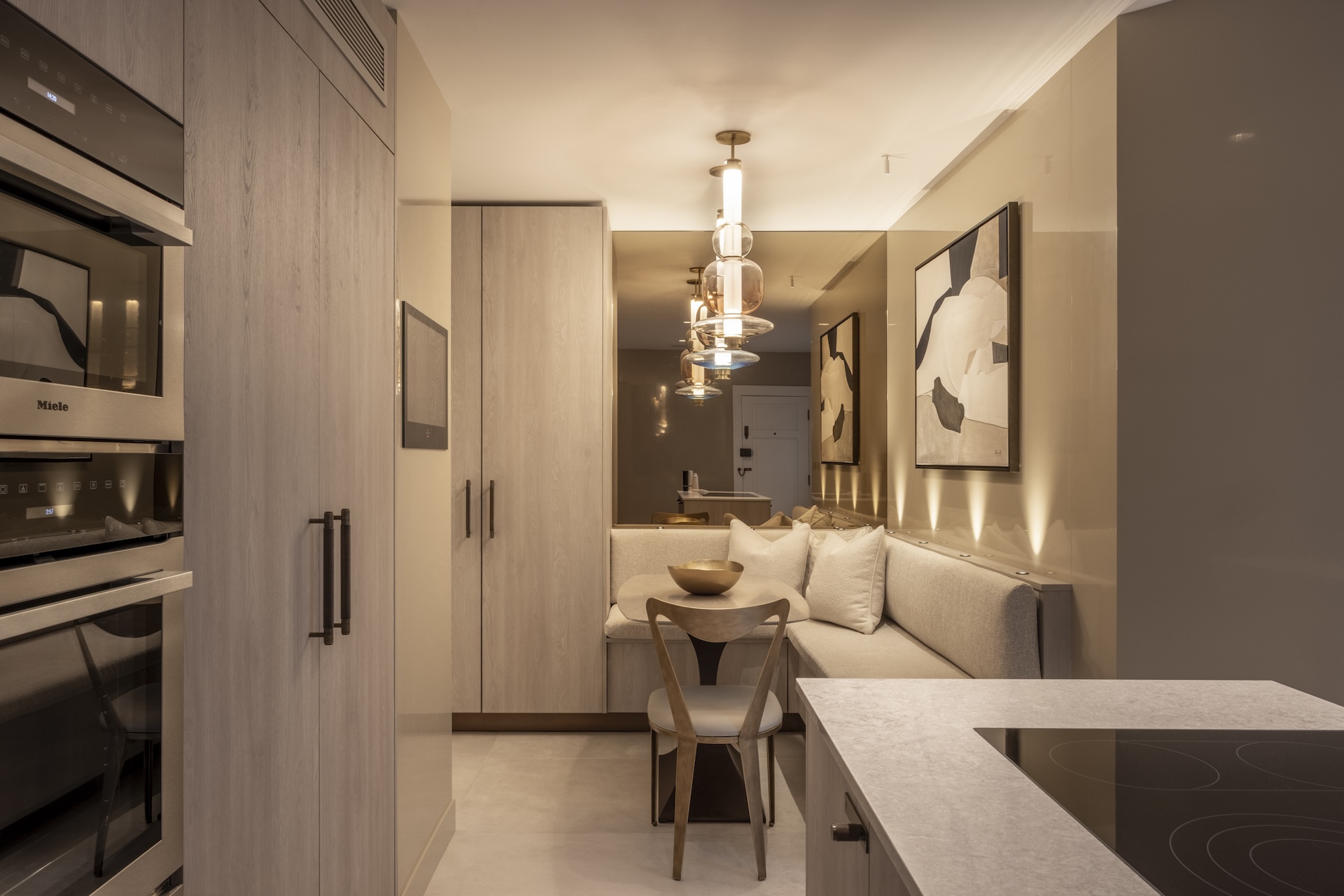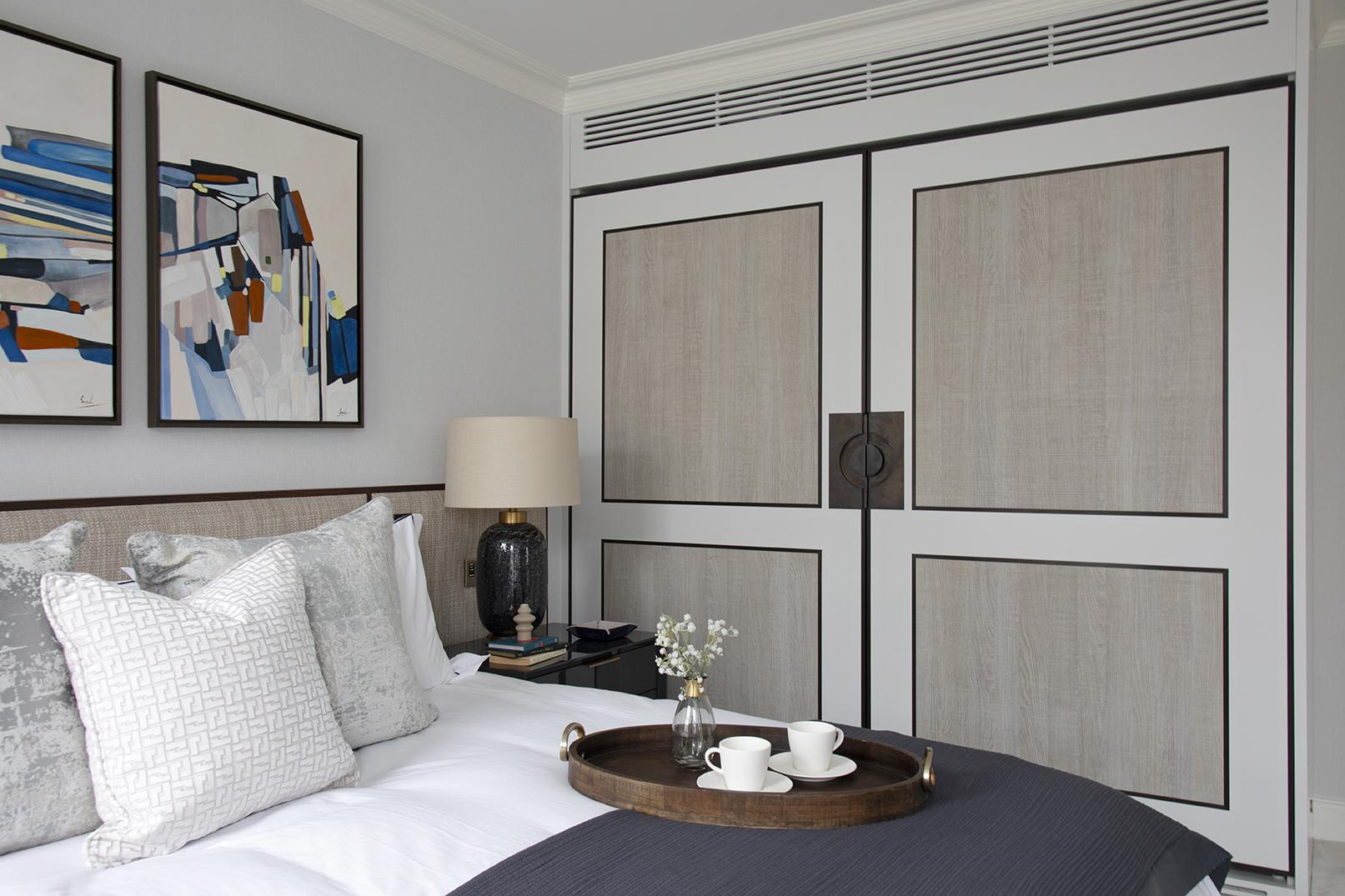
A kitchen carcase is the structural box that sits behind every cabinet door and drawer front, made up of the sides, base, top rail and back panel that the whole unit is built around. It carries the weight of shelves, drawers, appliances and worktop, and once the kitchen is finished it is almost entirely hidden from view.
On paper the carcase is the least glamorous part of a kitchen, and once fitted you rarely see one. But it decides whether drawers still run smoothly years on and whether a heavy worktop stays properly supported. At Noba and Stod we build the carcase to the same standard as the parts you see, because a beautiful door fitted to a poorly built box never lasts.
A kitchen carcase is the internal structural box of a cabinet, its sides, base, back and shelves, as distinct from the facade, the doors, drawer fronts and end panels you actually see. “Carcase” is the correct British spelling, not “carcass”, which refers to an animal’s remains. Carcases are most commonly built from engineered wood boards such as MDF or plywood rather than solid timber, chosen for stability in a structural box.
Carcase or Carcass? A Note on Spelling
In British cabinetmaking, “carcase” is the correct spelling for the structural box of a cabinet. “Carcass” is a different word, the body of a dead animal, and the two are easy to mix up in a search. Trade drawings and kitchen quotes in the UK use “carcase”, and that is the spelling we use in our own documentation.
Carcase vs Facade: The Box and the Face
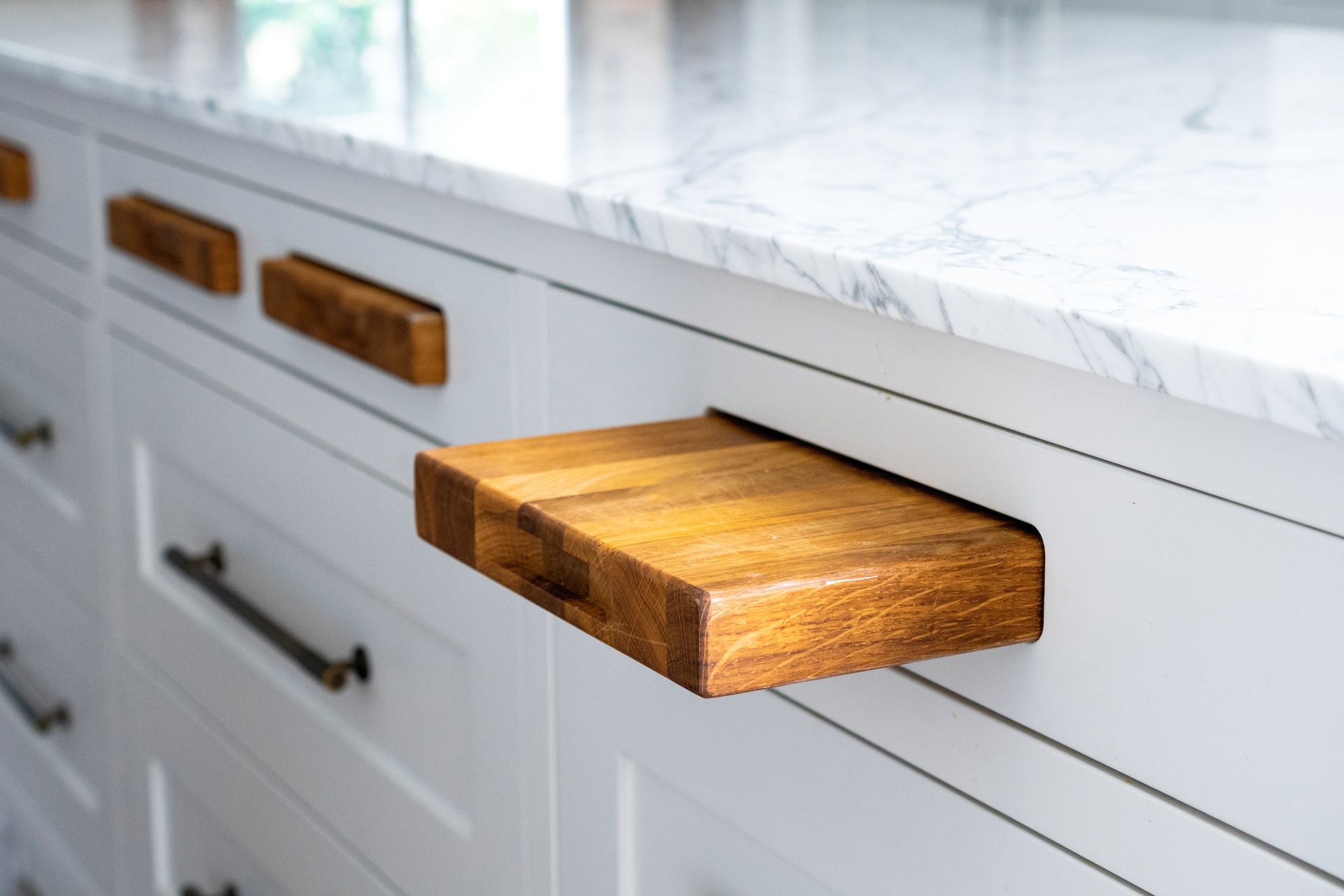
Every kitchen cabinet is really two things working together. The carcase is the structural box, fixed to the wall or floor, holding everything in place. The facade, sometimes called the fascia, is everything applied to the front: the doors, drawer fronts, handles or handleless channels, and any visible end panels. You choose the facade for how it looks, a Shaker style or a fully handleless kitchen, but the carcase is chosen for strength and how it performs over years of use.

Facade Over Carcase, in Practice
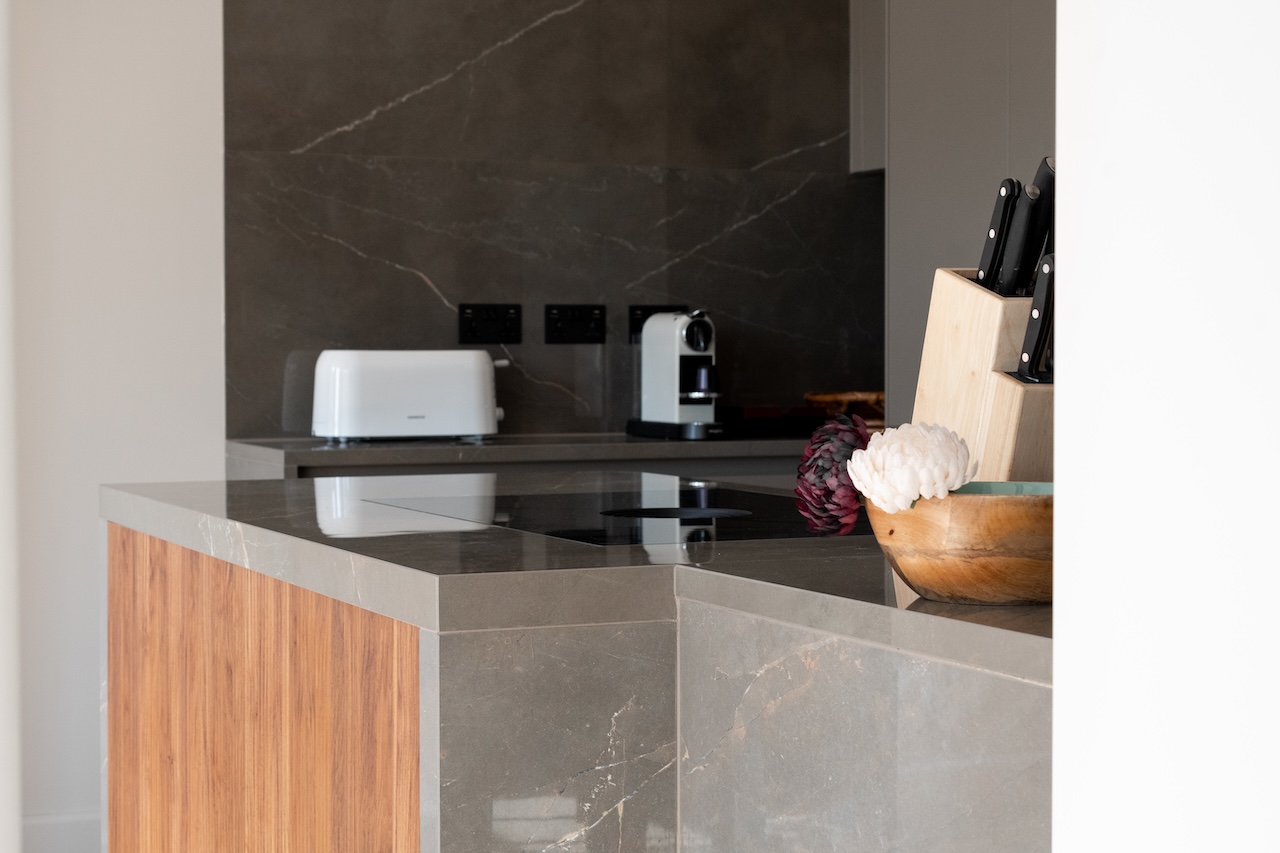
On an island like this one, the timber front panel and stone worktop are the facade you see. Underneath sits the carcase, built square and level to carry the full weight of a stone top and everything stored inside it.
What Carcases Are Typically Made From
Most modern carcases are built from engineered wood panels rather than solid timber, which tends to warp in large flat panels. The specific board depends on the area of the kitchen and the specification, covered in more detail on our MDF and engineered wood pages. The choice is about stability and how well the panel takes fixings, not appearance, since the carcase is built to be covered.
Related Terms
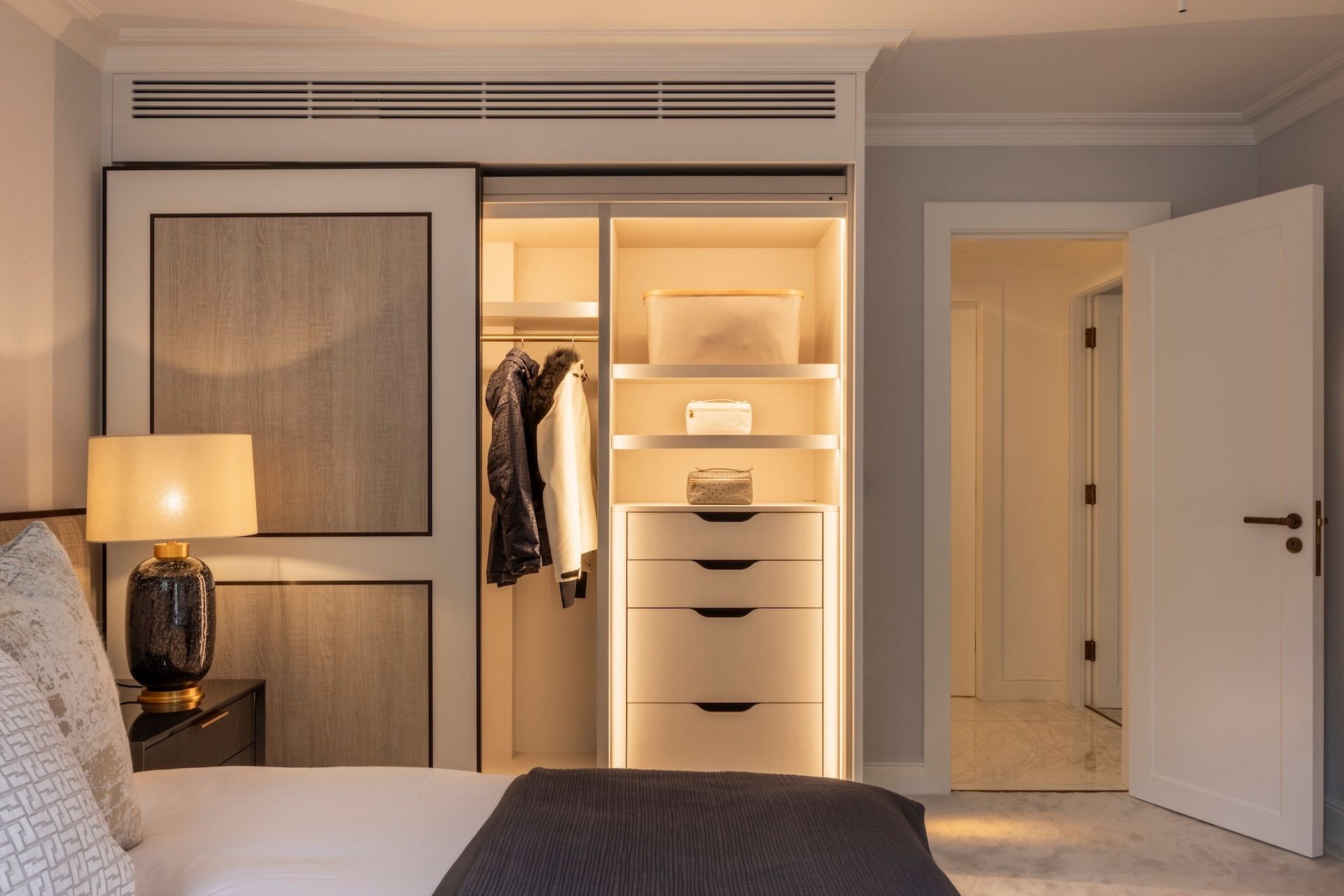
See Kitchen storage solutions for how the inside of a carcase is fitted out, or Handleless kitchen and In-frame kitchen for how the facade in front of it is typically styled.
Planning a kitchen and want to understand how it is built, not just how it looks? See our bespoke kitchens service, or get in touch to talk it through.