MDF, or medium-density fibreboard, is an engineered wood panel made by breaking down softwood and hardwood fibres, combining them with wax and resin, then compressing the mixture under heat and pressure into dense, flat sheets with no visible grain, giving joiners a smooth, stable material that is ideal for painted or spray-finished cabinetry, panelling and mouldings.
On a Noba and Stod project, MDF earns its place through the finish it allows rather than through cost alone. With no grain and no natural knots, a sprayed or painted MDF door sits flat and holds a crisp edge that solid timber rarely achieves without extensive preparation.
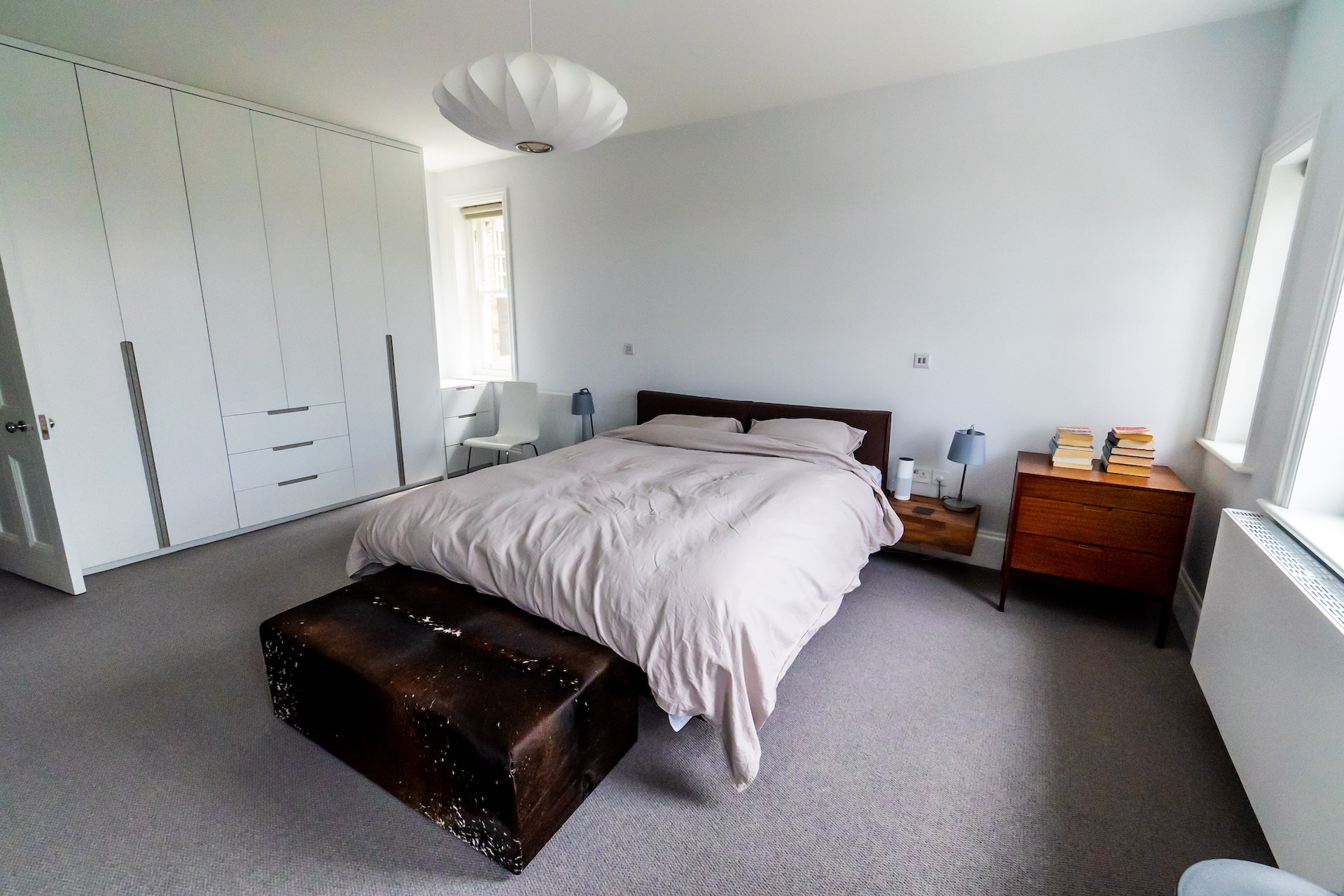
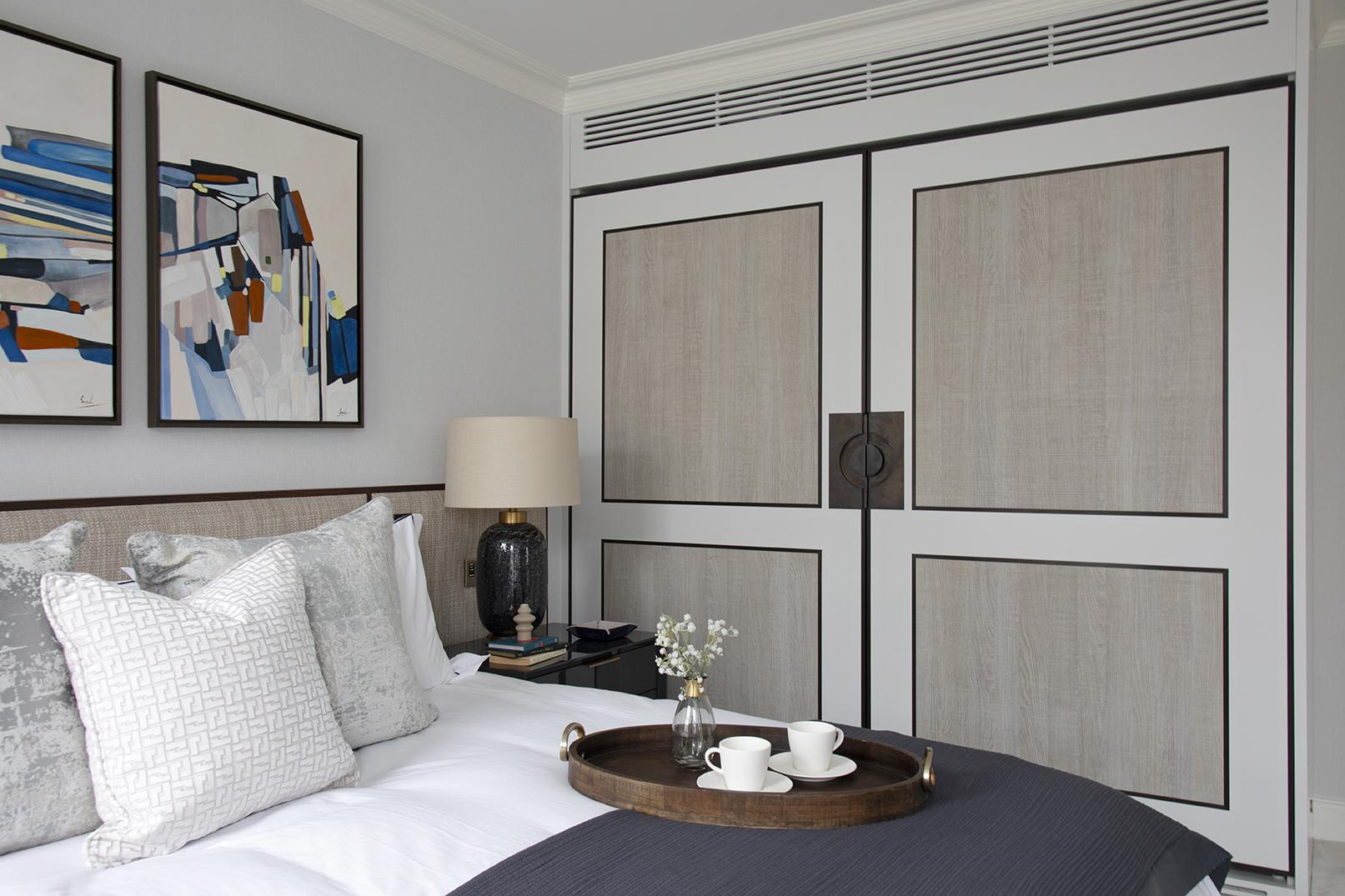
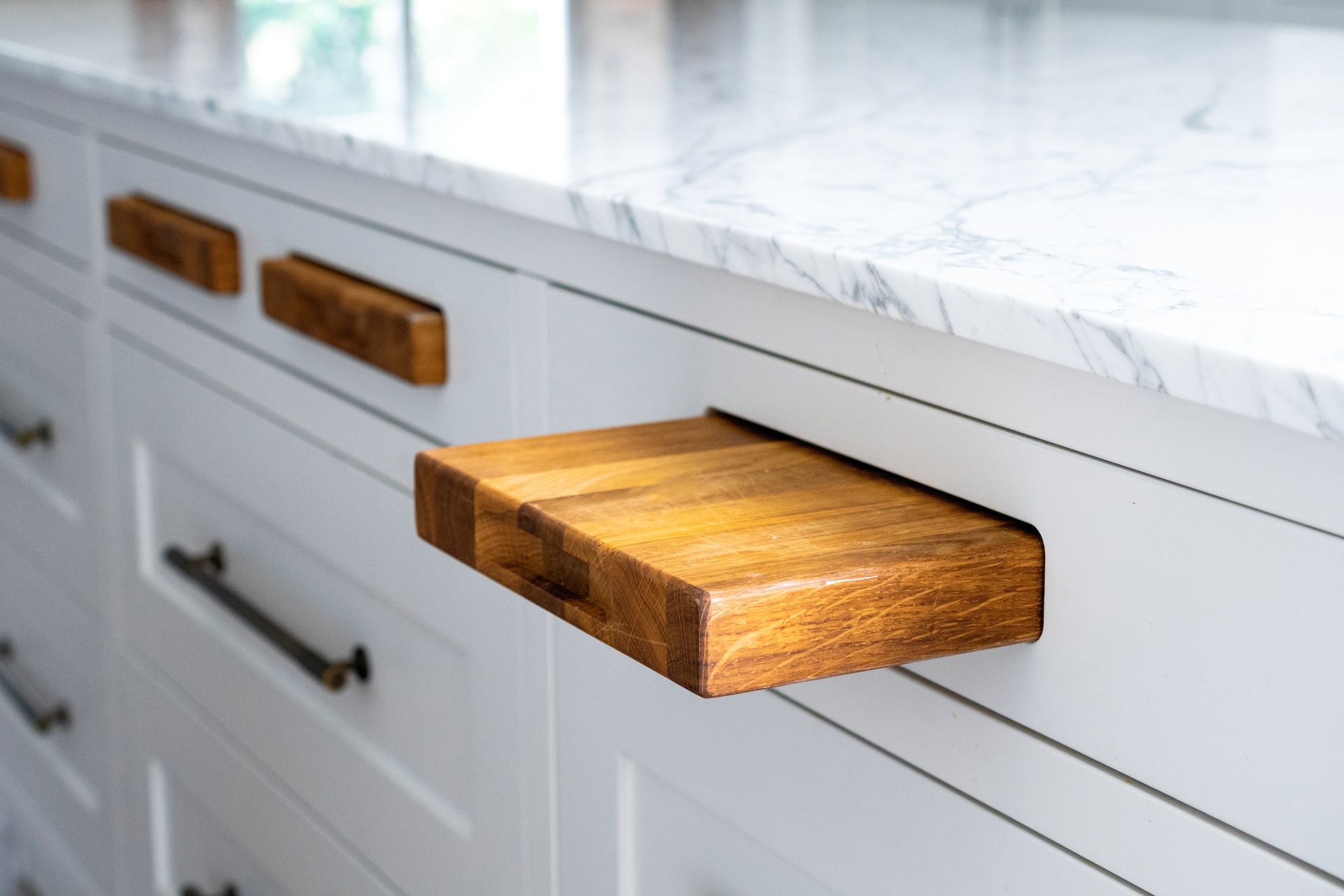
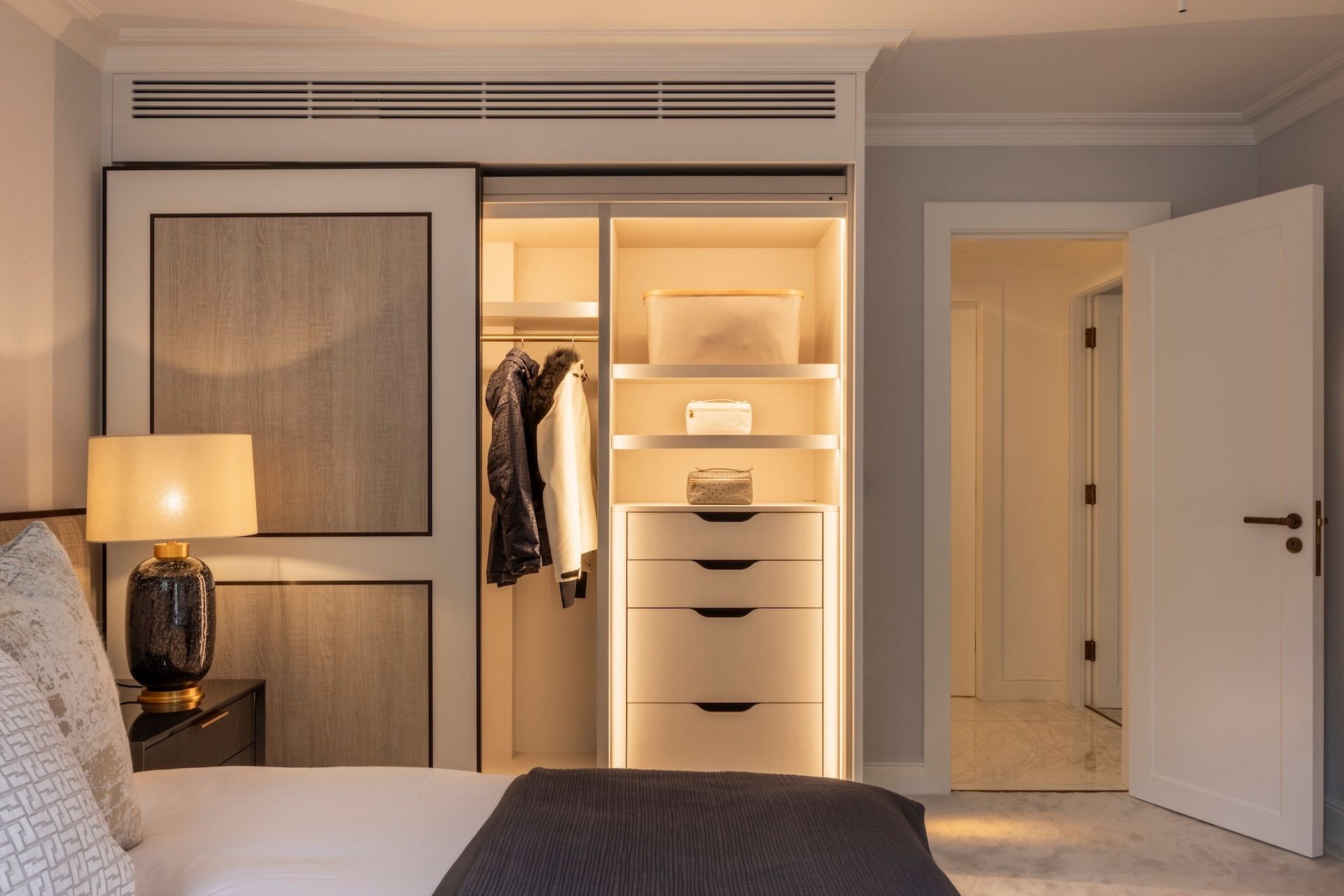
We specify MDF most often for painted shaker and handleless kitchen doors, fitted wardrobe fronts, skirting, architrave and panelling. It sits alongside premium materials, such as birch plywood and solid timber, chosen to match each project’s finish and budget.
MDF (medium-density fibreboard) is manufactured by compressing wood fibres and resin into flat, dense, grain-free panels. It machines cleanly and takes paint or spray finishes better than solid timber or plywood, making it the standard choice for painted kitchen doors, wardrobes, skirting, architrave and panelling. Standard MDF is not moisture-resistant, so an MR grade is used in kitchens and bathrooms.
How MDF Is Made
Manufacturers break down wood into fine fibres, dry them, then bind them with wax and resin under heat and high pressure. The result is a flat panel with consistent density right through its thickness, hence “medium-density”. With no grain running in one direction, MDF cuts and routs cleanly on every edge, without the splitting or tear-out solid timber can suffer.

MDF as a Base for Panel Finishes
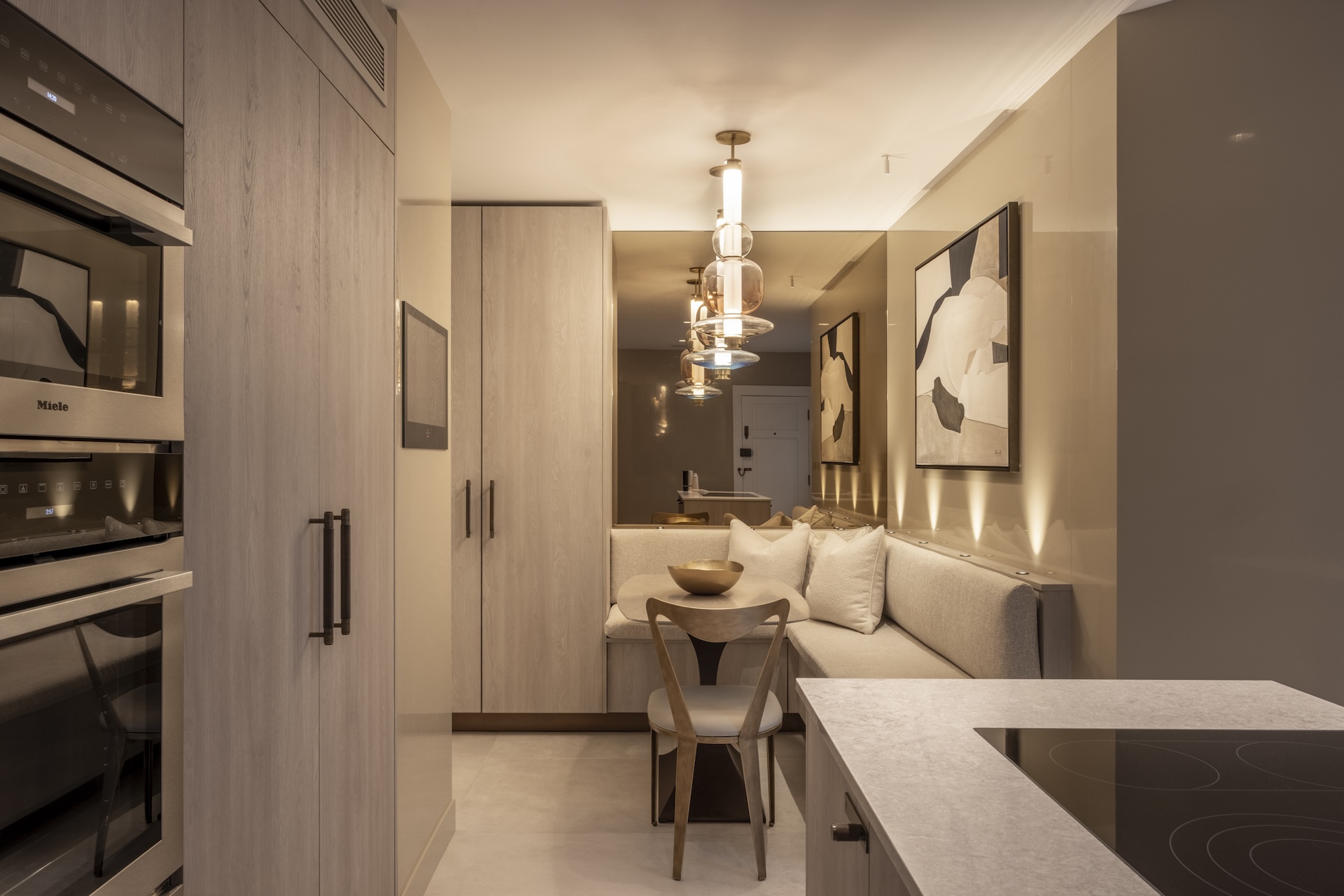
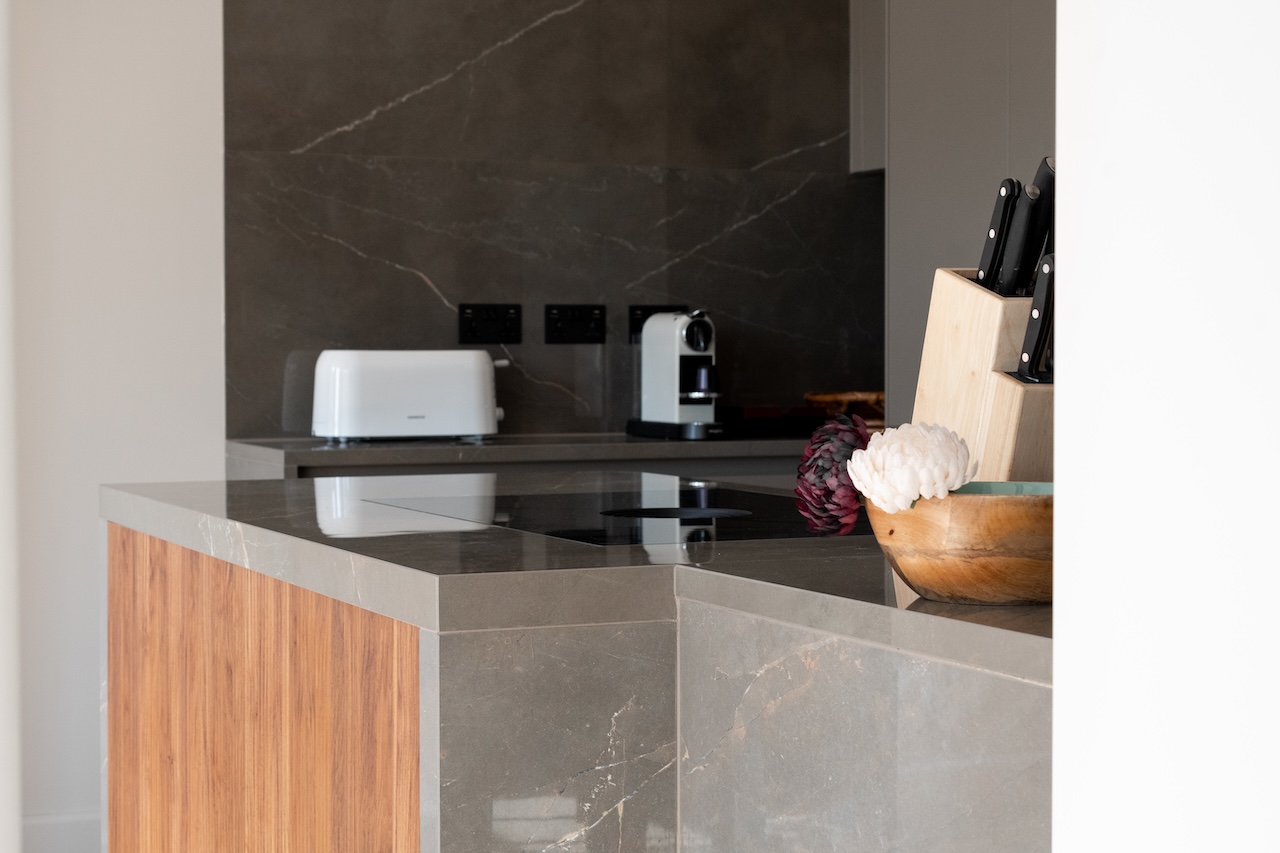
MDF is also a common base board behind a timber veneer or panel front, giving an island the flat, precise substrate a veneer needs while still reading as solid wood. This island front from a Kensington flat refurbishment shows the grain-faced panel look a well-prepared engineered board makes possible.
MDF vs Plywood
MDF and plywood are both engineered wood panels, but built differently for different jobs. Plywood is layers of wood veneer glued with the grain of each layer running at right angles to the next, making it strong and warp-resistant. MDF is compressed fibres rather than layers, so it has no grain at all, making it smoother and far better suited to a painted or sprayed finish. On many projects we use both within the same piece, plywood for the carcase, MDF for doors and mouldings that will be painted.
| MDF | Plywood | |
|---|---|---|
| Structure | Compressed wood fibres and resin | Layered veneers, grain alternating |
| Surface | Smooth, no grain, ideal for paint | Visible grain, suits stain or exposed edges |
| Strength | Good for flat panels, less rigid over large spans | Stronger, better for structural carcases |
| Moisture behaviour | Absorbs moisture, MR grade improves this | Generally more moisture-tolerant |
| Best suited to | Painted doors, panelling, skirting, mouldings | Carcases, structural or stained joinery |
Types of MDF
Standard MDF
General-purpose grade for interior painted joinery where moisture is not a concern.
Moisture-Resistant (MR) MDF
Treated to resist damp, used in kitchens, bathrooms and utility spaces.
Veneered MDF
A real wood veneer bonded to an MDF core, giving a flat, stable base with a natural timber face.
Fire-Retardant MDF
Made with additives that slow the spread of fire, specified where regulations require it.
Frequently Asked Questions
Is MDF waterproof?
No. Standard MDF absorbs moisture and can swell when wet. Moisture-resistant (MR) MDF performs better in kitchens and bathrooms, but no grade is fully waterproof, so it is not used outdoors.
Can MDF be stained like real wood?
Not successfully. With no grain, MDF does not take wood stain the way timber or veneer does, and cut edges absorb it unevenly. It is designed to be painted or sprayed instead.
Related Terms
MDF is closely tied to other material and finishing terms in our glossary. See Veneer for how a wood-faced surface is bonded to a base board, Wood and Furniture Finishes Explained for how MDF is painted, and Panelling and Kitchen Carcase for two of the areas where MDF is used most.
Planning a kitchen that relies on a flawless painted finish? See our bespoke kitchens service, or get in touch to talk it through.