A wood veneer is a thin slice of real wood, typically less than 3mm thick, bonded to the surface of a manufactured board such as plywood or MDF. It gives furniture, cabinetry and panelling the authentic grain and colour of solid timber, at a fraction of the weight, cost and environmental impact of building entirely from solid wood.
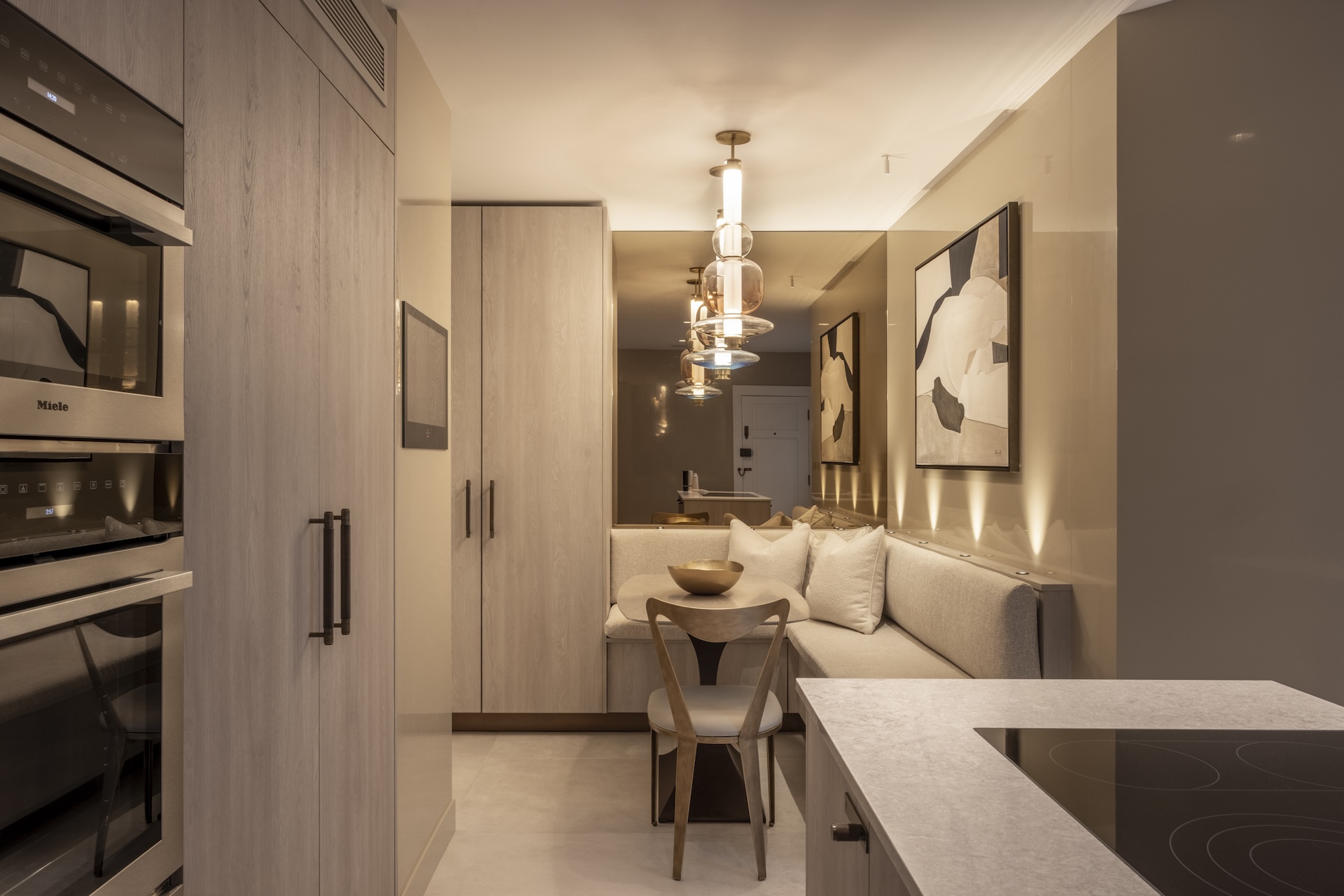
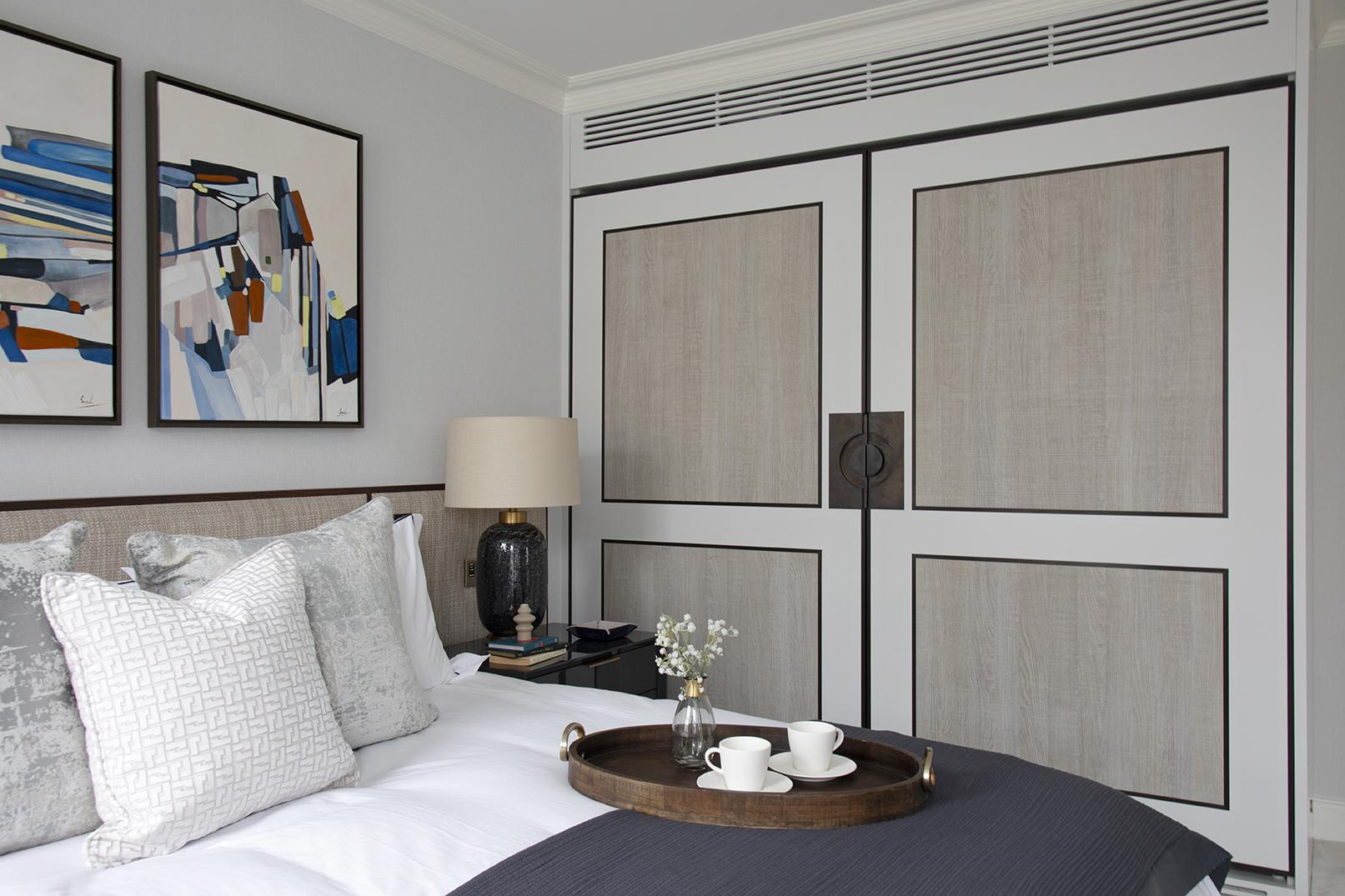
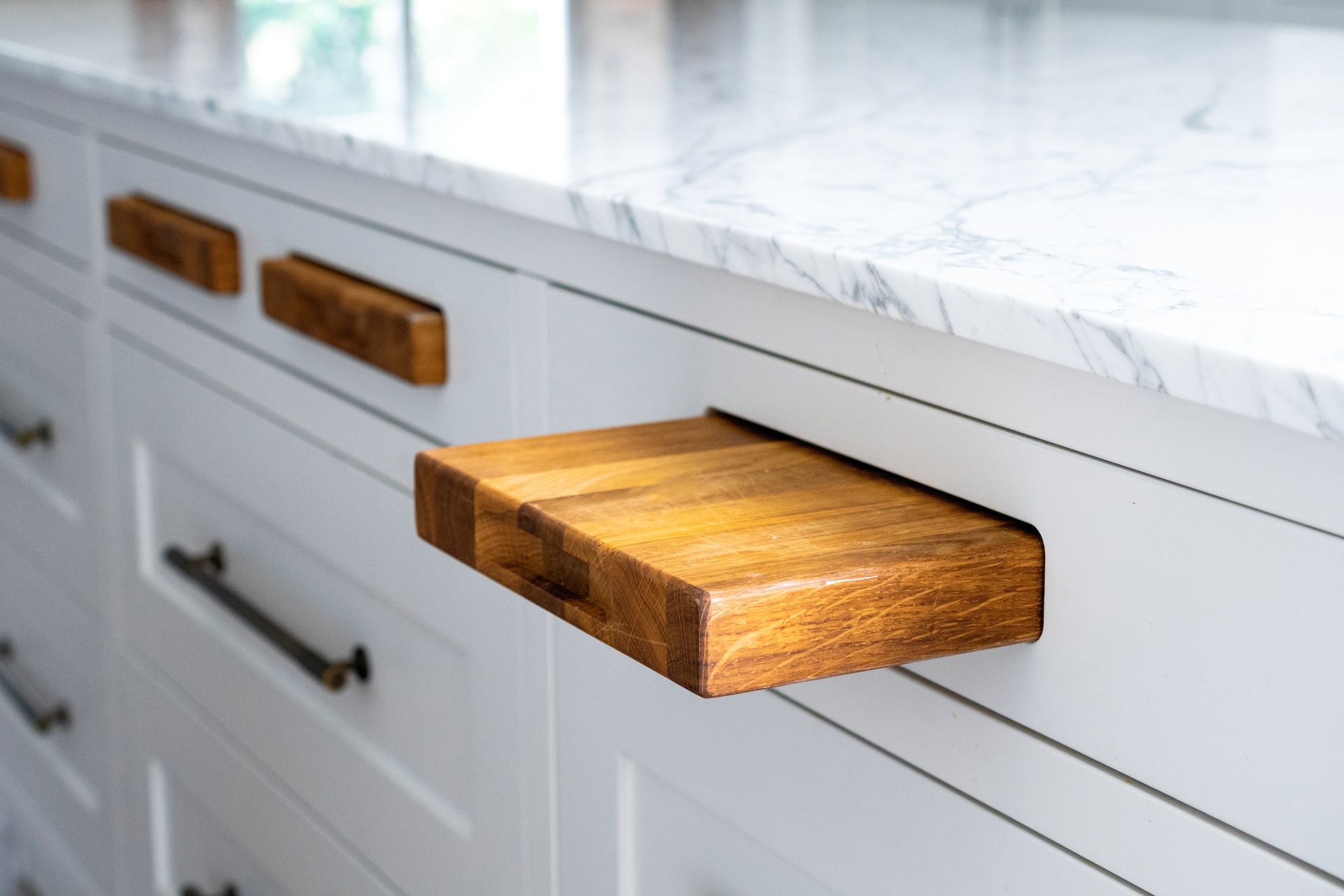
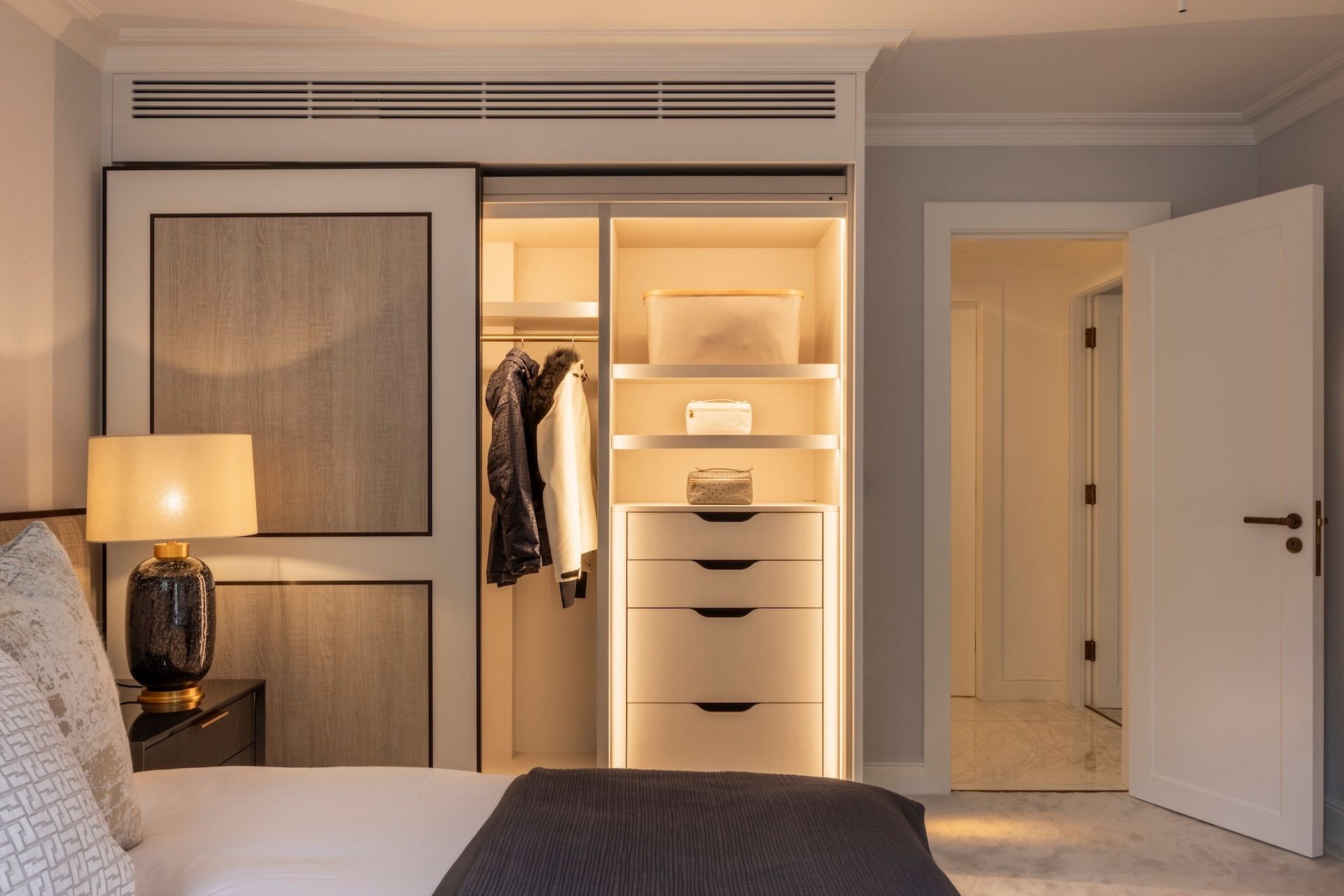
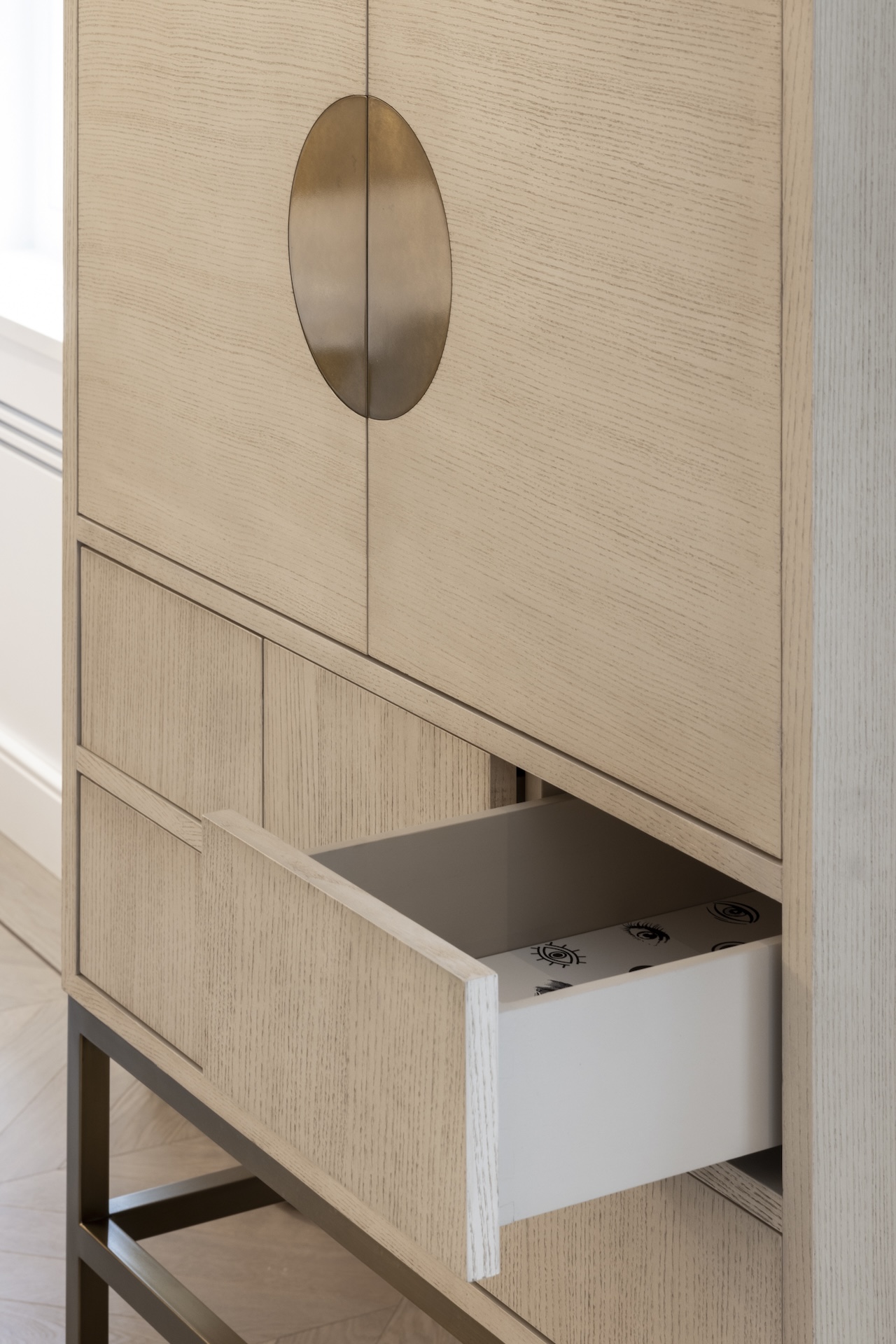
At Noba and Stod, we use wood veneer across bespoke kitchens, fitted wardrobes and furniture whenever a client wants the warmth and grain of real timber without the weight, movement or cost of solid wood. Oak veneer is one of our most requested choices, prized for its colour and figure, and it lets us keep a consistent, book-matched grain running across a full run of doors or panelling in a way solid boards cannot match.
A wood veneer is a thin slice of real wood, usually 0.5 to 3mm thick, bonded to a manufactured board such as plywood or MDF using heat and pressure. Common species include oak, walnut and ash. Book-matched veneer uses two mirrored leaves cut from the same log to create a symmetrical grain pattern across a join, a technique often used on doors, panelling and table tops in high-end joinery.
How Wood Veneer Is Made
Wood veneer starts as a log that is sliced or rotary-cut into thin layers, each retaining the natural grain, colour and character of the species it comes from. These layers are then bonded under heat and pressure to a stable core, typically an engineered board such as plywood or MDF, to create a panel that behaves predictably and resists the warping solid timber is prone to.
Why We Use Wood Veneer
We use wood veneer on kitchen and wardrobe doors, panelling and furniture where the look of solid timber matters but stability and consistency matter more. Bonding a veneer to premium materials, such as birch plywood, gives a flat, reliable board that holds its shape over time, something a thick slab of solid oak cannot always guarantee across a large door or panel.

Book-Matched Veneer
Book-matched veneer takes two consecutive leaves sliced from the same section of log and opens them like the pages of a book, so the grain pattern on one leaf mirrors the other across the join. The result is a symmetrical, almost architectural pattern that draws the eye, often used on a run of wardrobe doors, a feature panel or a statement piece of furniture. It takes a practised eye to lay the leaves correctly and keep the join tight, a mark of careful cabinetmaking.
Related Terms
Wood veneer often appears alongside other materials and joinery terms. See Engineered Wood for the boards veneer is usually bonded to, MDF for one common core material, Wardrobe Door Types for how veneer doors compare to other styles, and Cabinetmaking for the wider craft it belongs to.
Planning a project that involves wood veneer? See our bespoke furniture service, or get in touch to talk it through.