Wardrobe doors come in five main types, sliding, bi-fold, mirrored, hinged and pocket, and the right type for a bedroom depends on how much floor space sits in front of the wardrobe and how the room needs to feel and function.
On a fitted wardrobe project, the door type is one of the first decisions we help clients make, because it shapes the whole layout. Sliding doors along a bedroom wall behave completely differently to hinged doors that need space to swing open, and getting it wrong means a wardrobe that looks right on a drawing but is awkward to live with.
At Noba and Stod we design the door type around the room first, checking how close the bed sits to the wardrobe and how much clearance the door swing actually has. The five types below cover the vast majority of the fitted and built-in wardrobes we make.
The five main wardrobe door types are sliding (doors run on a top and bottom track, no swing space needed), bi-fold (hinged panels that fold in on themselves, roughly half the clearance of a hinged door), mirrored (a sliding or hinged door faced in mirror, adding a full-length mirror and making the room feel larger), hinged (traditional swing-open doors, the most flexible for detailed joinery and colour matching), and pocket doors (doors that slide fully into a cavity built into the adjoining wall, leaving no visible door at all when open). The right choice comes down to available floor space and how the wardrobe interior needs to be accessed.

Sliding wardrobe doors
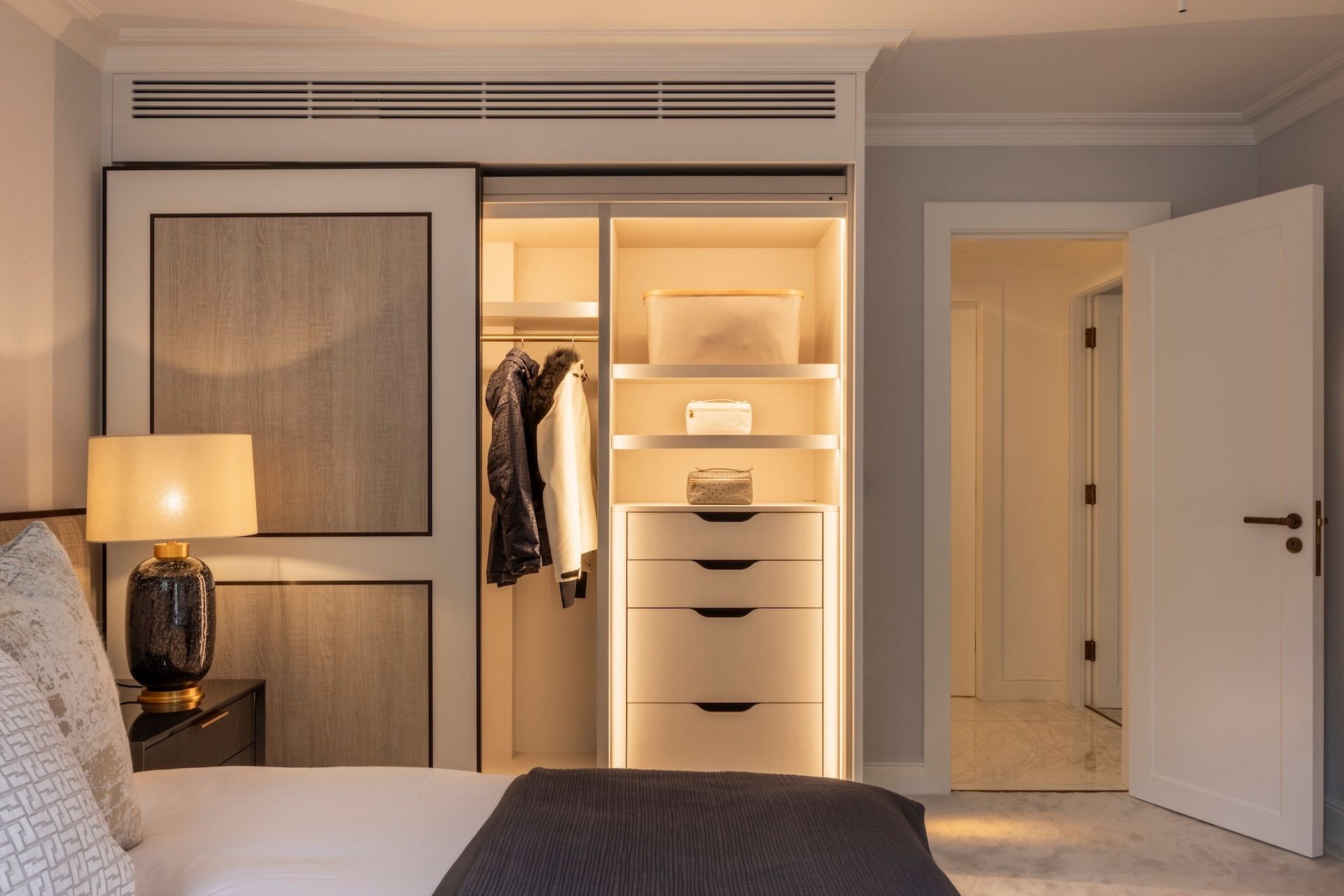
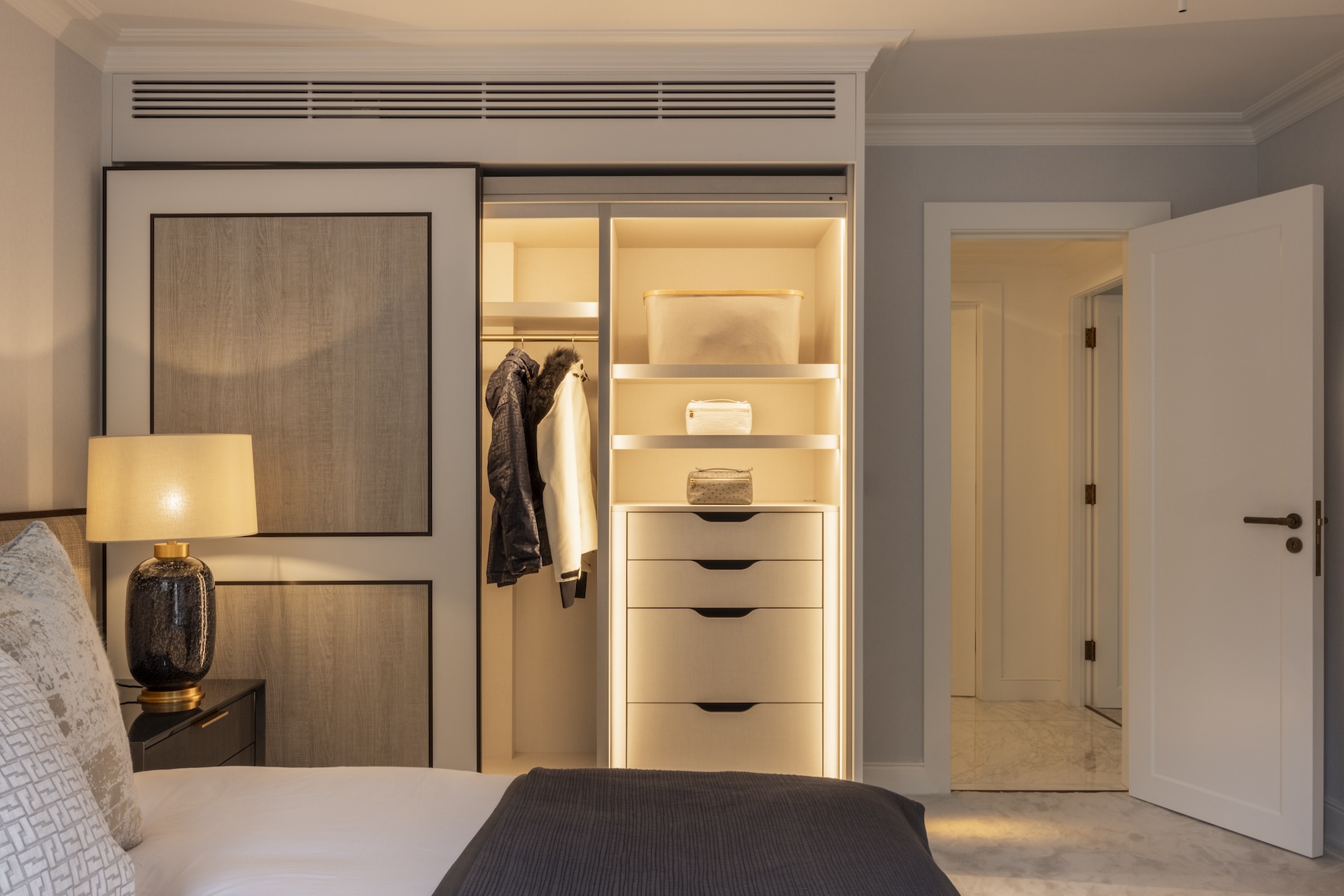
Sliding wardrobe doors hang from a track fixed at the top of the opening, with a second track at floor level keeping them running true. Because the door moves sideways rather than swinging outward, sliding doors need no clearance in front of the wardrobe at all, which makes them the standard choice for smaller bedrooms, box rooms, or anywhere a bed or piece of furniture sits close to the wardrobe front. The trade-off is that only one section of a multi-door run is accessible at a time, so the track needs to stay clean and properly aligned. We fit sliding doors with quality running gear so they stay quiet and true over years of daily use.
Hinged wardrobe doors
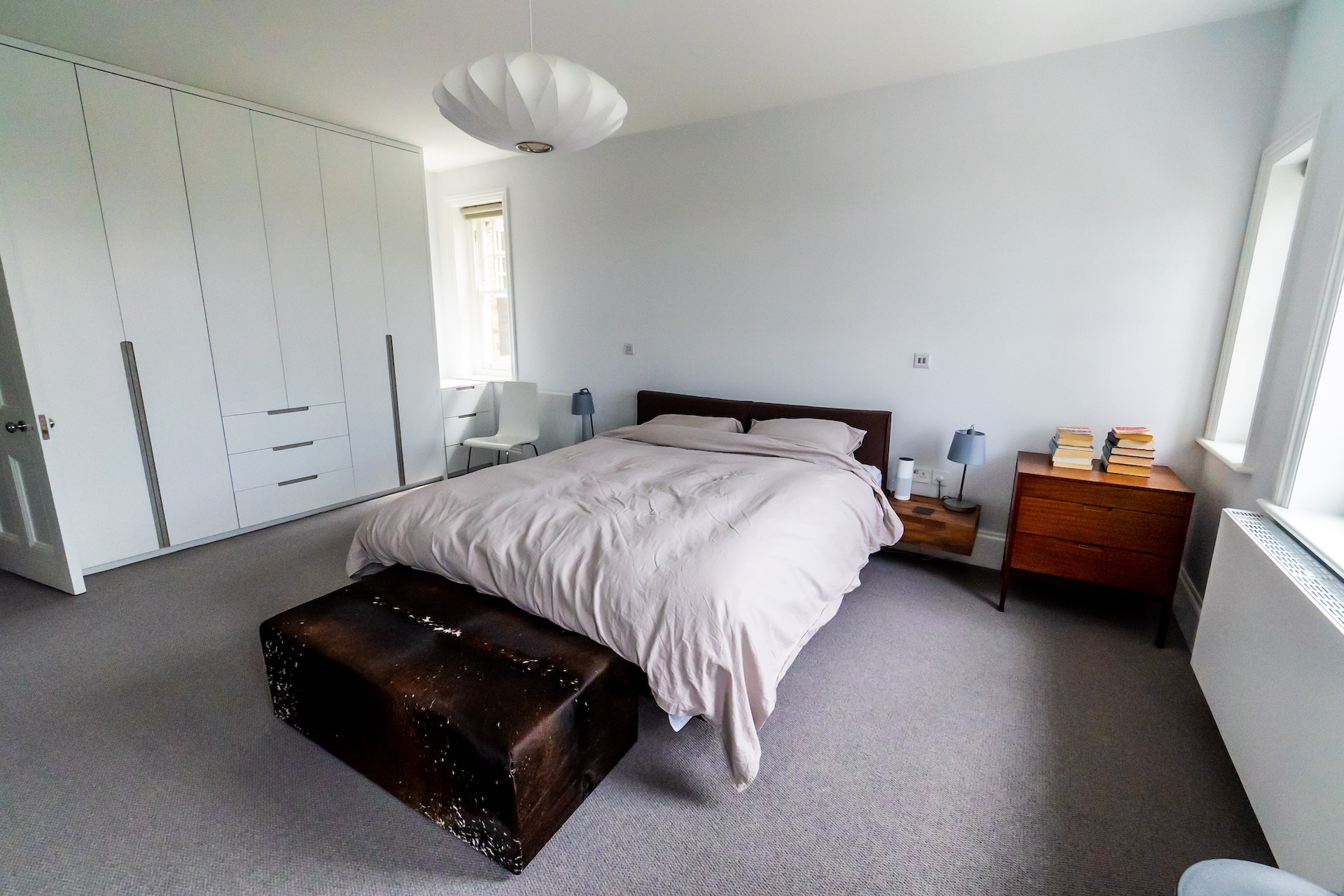
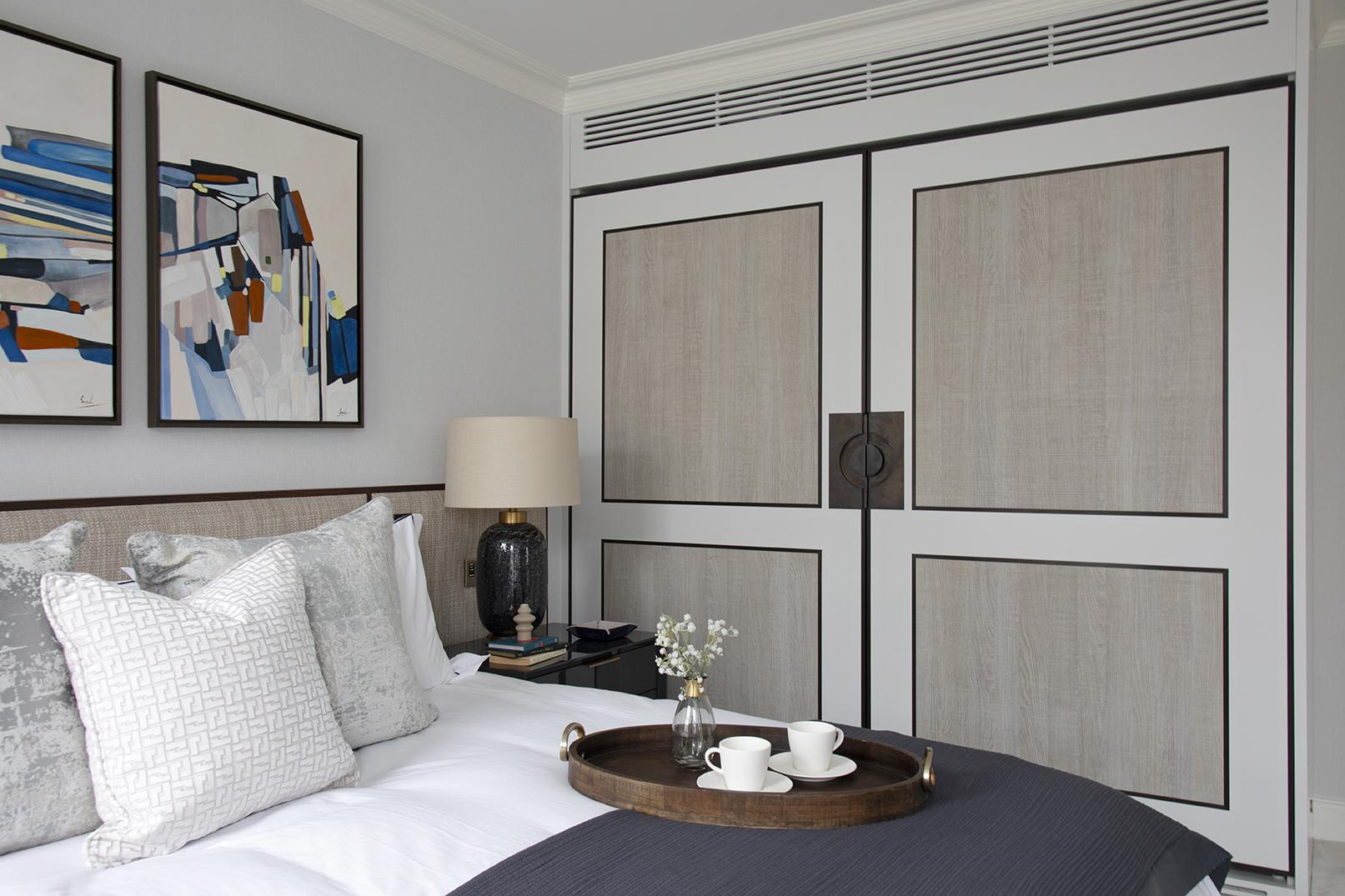
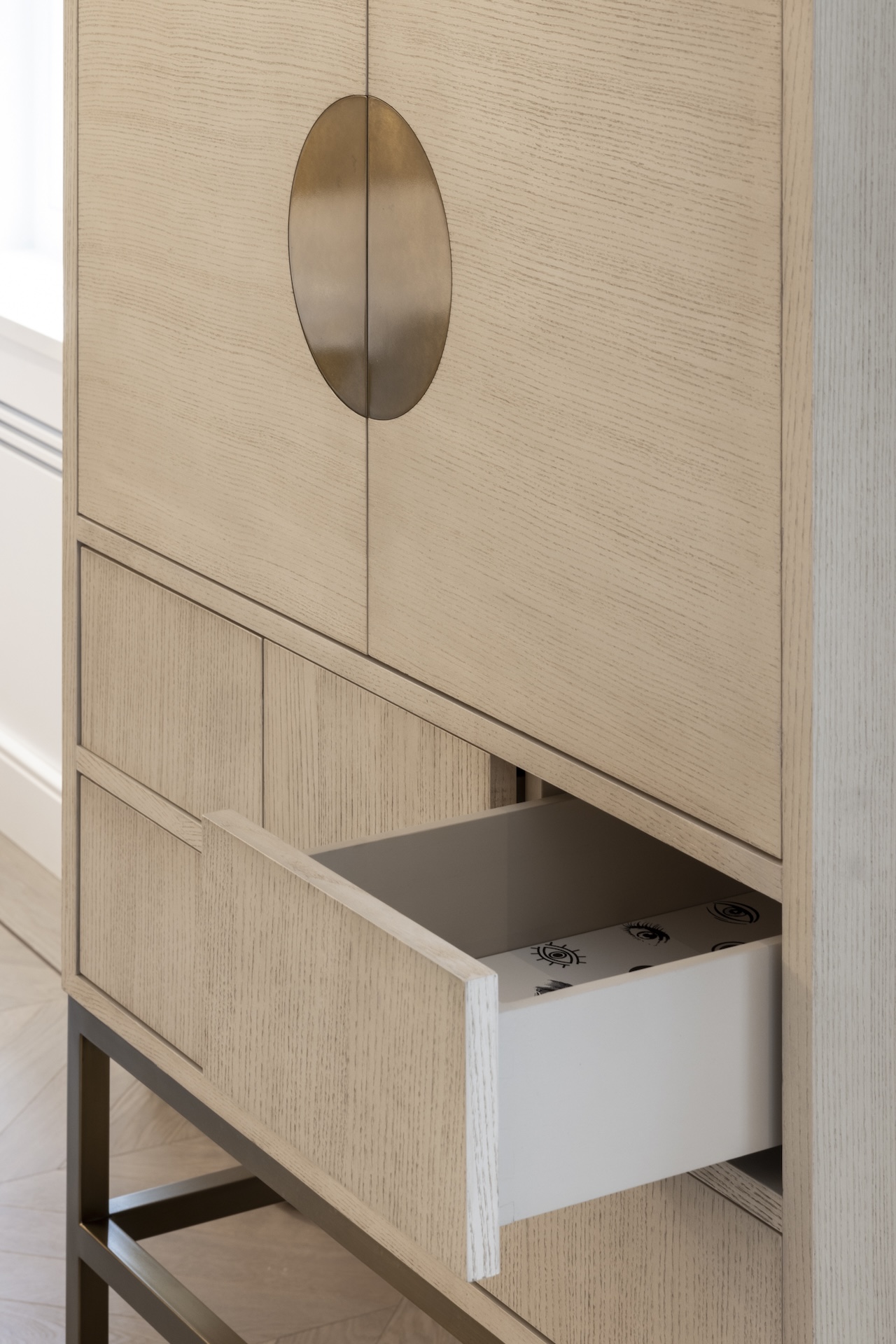
Hinged wardrobe doors are the traditional swing-open type, mounted on concealed hinges along one edge and opening outward like a cupboard door. They give the widest, most unobstructed view into the wardrobe interior when open, and suit almost any style, from a simple shaker frame to a detailed painted finish with a decorative handle. Each door needs room to swing fully open, so hinged doors work best where there’s a reasonable amount of floor space rather than a tight box room.
Bi-fold, mirrored and pocket doors
Bi-fold wardrobe doors
Bi-fold doors are made of two or more narrow panels joined by hinges, so the door folds in on itself as it opens rather than swinging out flat. This roughly halves the clearance space needed compared with a hinged door, while still giving a wide, open view of the interior. They suit rooms with some floor space but not quite enough for full hinged doors to swing.
Mirrored wardrobe doors
A mirrored wardrobe door has a mirror fixed to the face of a sliding or hinged door instead of a painted or veneered panel. It works exactly like the door type behind it for clearance and operation, but it also doubles as a full-length mirror and bounces light around the room, a popular choice for smaller bedrooms that need to feel bigger.
Pocket doors
A pocket door slides fully into a cavity built into the adjoining wall, so when it’s open there’s no door visible at all, just a clean opening. It gives the most unobstructed access of any door type, but it needs a stud wall with room inside it for the door to travel into, so it’s usually planned in at the building or renovation stage rather than retrofitted.
Choosing between door types
| Door type | Clearance needed | Best suited to |
|---|---|---|
| Sliding | None in front | Small bedrooms, tight layouts |
| Bi-fold | Roughly half a hinged door’s swing | Some space, not a full swing |
| Mirrored | Same as base door type | Rooms needing extra light |
| Hinged | Full door swing | Larger bedrooms, dressing rooms |
| None, needs a cavity wall | New builds, renovations |
Frequently Asked Questions
Which wardrobe door type needs the least floor space?
Sliding and pocket doors, since neither swings out into the room. Sliding doors need the full width of the wardrobe run to slide along, while pocket doors disappear into the wall but require a stud wall built to take them.
Related Terms
Wardrobe door types are closely tied to the wardrobe itself, and to the hardware that makes them work. See Fitted wardrobe for the broader concept, Cabinet and drawer hardware for the hinges and runners involved, and Veneer for one of the common door finishes.
Planning a wardrobe project and weighing up door types? See our fitted wardrobes service, or get in touch to talk it through.