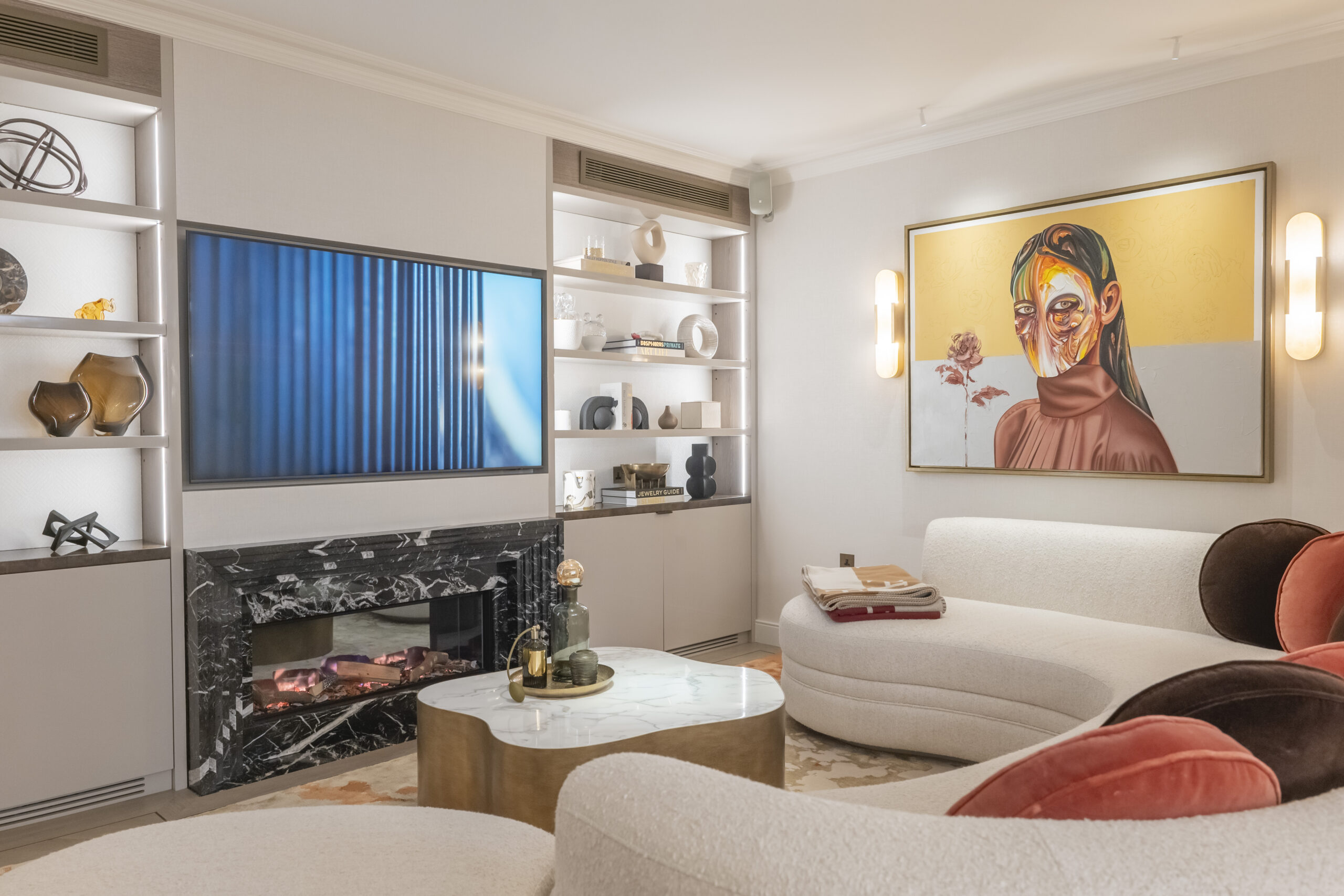
A media wall is a purpose-built feature wall that houses a television, media equipment and often an electric fire within one built-in unit, with the screen recessed into the wall, cables hidden from view and the surrounding surface finished in panelling, shelving or storage.
At Noba and Stod, a media wall is one of the projects clients ask for most, usually because the living room television has been sitting on a stand with a tangle of leads behind it for years and they want the room to look considered instead. The appeal is less about the screen itself and more about everything around it: a fireplace built into the same run of joinery, shelving either side for books and objects, and storage that absorbs the set-top boxes, speakers and consoles that would otherwise clutter an open shelf.
Because a media wall is built into the fabric of the room rather than bought as a piece of furniture, it is planned around the existing wall, the position of sockets and aerial points, and often the flue or clearance requirements of an electric fire. That is the main reason it is worth having a proper conversation with a joiner before committing to a design, rather than choosing a look from a photo first.
A media wall is a built-in joinery installation that combines a recessed or flush-mounted television, concealed cable management and, frequently, an inset electric fire within a single feature wall, typically finished with panelling, floating shelving or storage cabinetry either side. It is distinct from a media wall unit, which is a pre-built or freestanding cabinet simply placed against a wall rather than built out from it. A media wall is usually designed and fitted as part of a bespoke joinery project, matched to the room’s proportions and the client’s storage needs.

Media wall vs. media wall unit
The two terms get used interchangeably online, but they describe different things. A media wall unit is a standalone piece of furniture, whether flat-pack, pre-built or bespoke, that stands against the wall much like a sideboard would. It can be moved, and the cables generally still have to run somewhere behind or beside it. A true media wall, by contrast, is built out from the wall itself: the screen sits flush or recessed within the joinery, the cables are chased or routed inside the structure so nothing is visible, and the unit is fixed as part of the room rather than furniture within it. If a fire is included, it is built into the same run rather than sitting beside a separate cabinet.
What goes into a media wall
A typical media wall combines several elements in one built structure: a recess or bracket point for the television, sized so the screen sits flush with or slightly proud of the surrounding panelling; internal routing for power, aerial and HDMI cables so nothing trails down the wall; and storage or open shelving to either side for consoles, books, speakers or display pieces. Many clients also want an electric fire built into the lower section, which brings its own requirements around heat clearance and ventilation that need to be designed in from the start rather than retrofitted.
The finish is where a media wall becomes a genuine feature rather than just a practical fix. Vertical panelling, slatted timber, fluted profiles or a simple painted finish in a shaker style are all common choices, and the surrounding joinery is usually designed to read as one continuous piece with the rest of the room’s woodwork rather than as an add-on.
Planning a media wall project
Because a media wall is fixed joinery, a few practical questions need answering before design starts: where the existing sockets and aerial point are (and whether they need moving), whether the chimney breast or wall behind is suitable for chasing in cables, and whether a fire is wanted, which affects both the depth of the unit and any electrical work required. Noba and Stod manages this as one dedicated point of contact through design, joinery and installation, coordinating any specialist electrical work needed alongside the woodwork itself, so the finished wall works as one considered piece rather than a screen bolted onto a shelf.
Related Terms
A media wall is often built either side of a chimney breast, much like an alcove unit, and shares the same underlying cabinetmaking principles as fitted storage elsewhere in the home. The panelling used to finish the surround is often the same as that used for panelling projects more broadly.
Frequently Asked Questions
Is a media wall the same as a media wall unit?
No. A media wall unit is a freestanding or pre-built cabinet placed against a wall, while a media wall is built into the wall itself, with the screen recessed and cables fully concealed within the structure.
Does a media wall need an electric fire?
No, a fire is optional. Many media walls are built purely around the television and storage, though a built-in electric fire is a popular addition where the layout allows for it.
Can a media wall include storage?
Yes. Most media walls combine the recessed screen with shelving or cupboards either side, giving somewhere to keep consoles, books and media equipment out of sight.
Planning a project that involves this? See our media wall service and our guide to media wall ideas and cost, or get in touch to talk it through.