A dado rail is a horizontal strip of moulding fixed to an interior wall at roughly chair-back height, around 900mm to 1 metre above the floor, originally intended to stop chair backs and furniture scuffing or denting the plaster and now used mainly as a decorative break between two wall treatments or paint colours.
It is one of the smallest details we fit and one of the most effective for making a room feel considered rather than plain. A single length of moulding, run at the right height and profile, protects the wall, breaks up a tall expanse of plasterboard, and gives a clean line to change colour, paper or panelling at. We fit dado rails both on their own, as a standalone detail in a hallway, and as the finishing line at the top of a full wainscoting or panelling scheme, where it doubles as the cap for the panels below.
A dado rail is a horizontal moulding, typically 900mm to 1 metre up from the floor, roughly level with the back of a dining chair. It protects the wall below from knocks and lets two different wall treatments, such as paint above and panelling below, meet at a clean line. It is often confused with a picture rail, a similar-looking moulding fixed much higher up, close to the ceiling, which was originally designed for hanging pictures on wires rather than protecting the plaster.
What a Dado Rail Is Used For
Historically, a dado rail stopped chair backs and general foot traffic marking the plaster in busy rooms, which is why it still appears most often in period hallways and stairwells. Fitted today it does the same job, but the decorative role matters just as much: it lets you run a bolder wallpaper or deeper colour above and a calmer panelled or painted finish below, with a proper break between the two rather than one colour running floor to ceiling.

Dado Rails in Hallways and Stairs
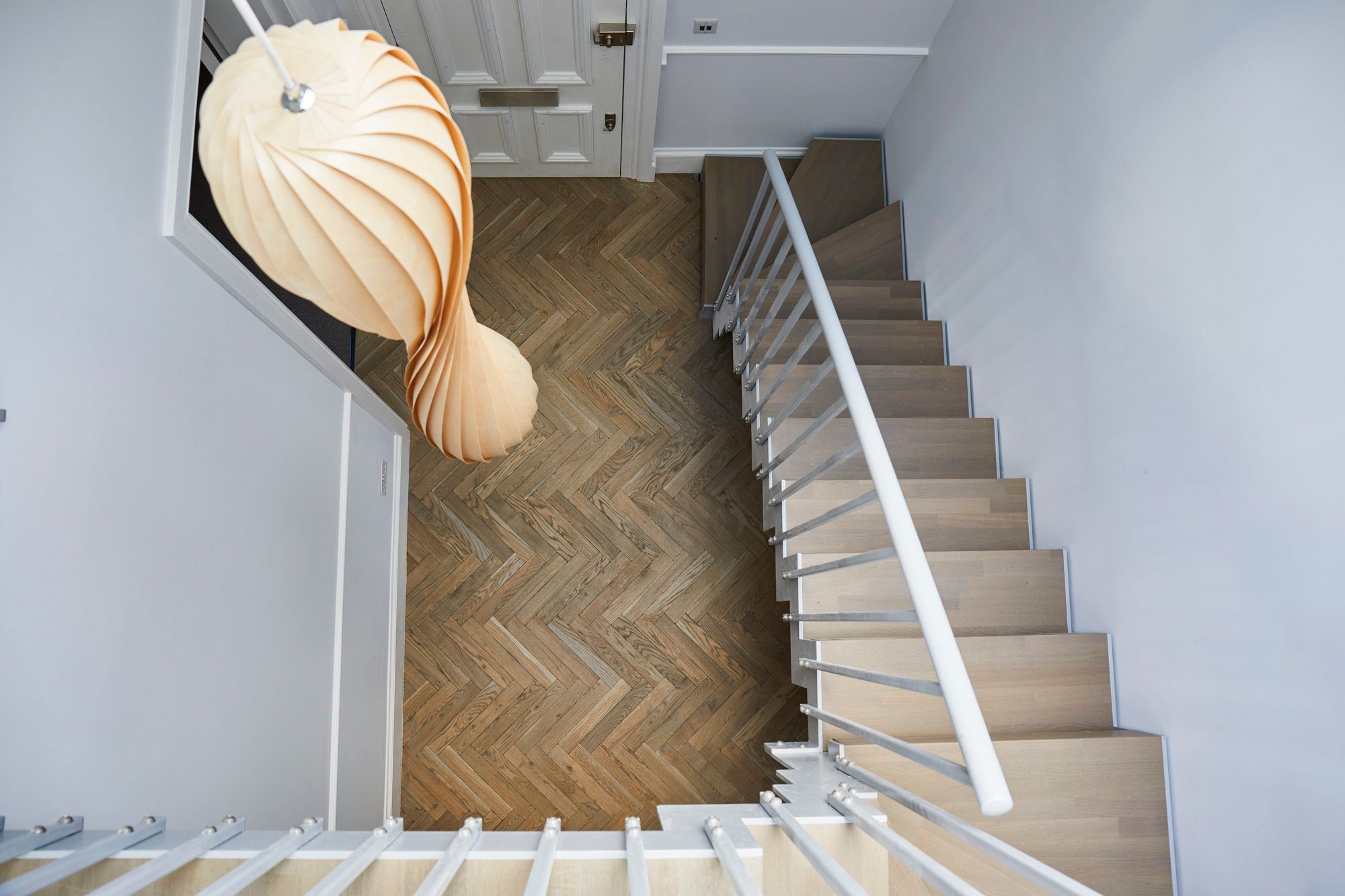
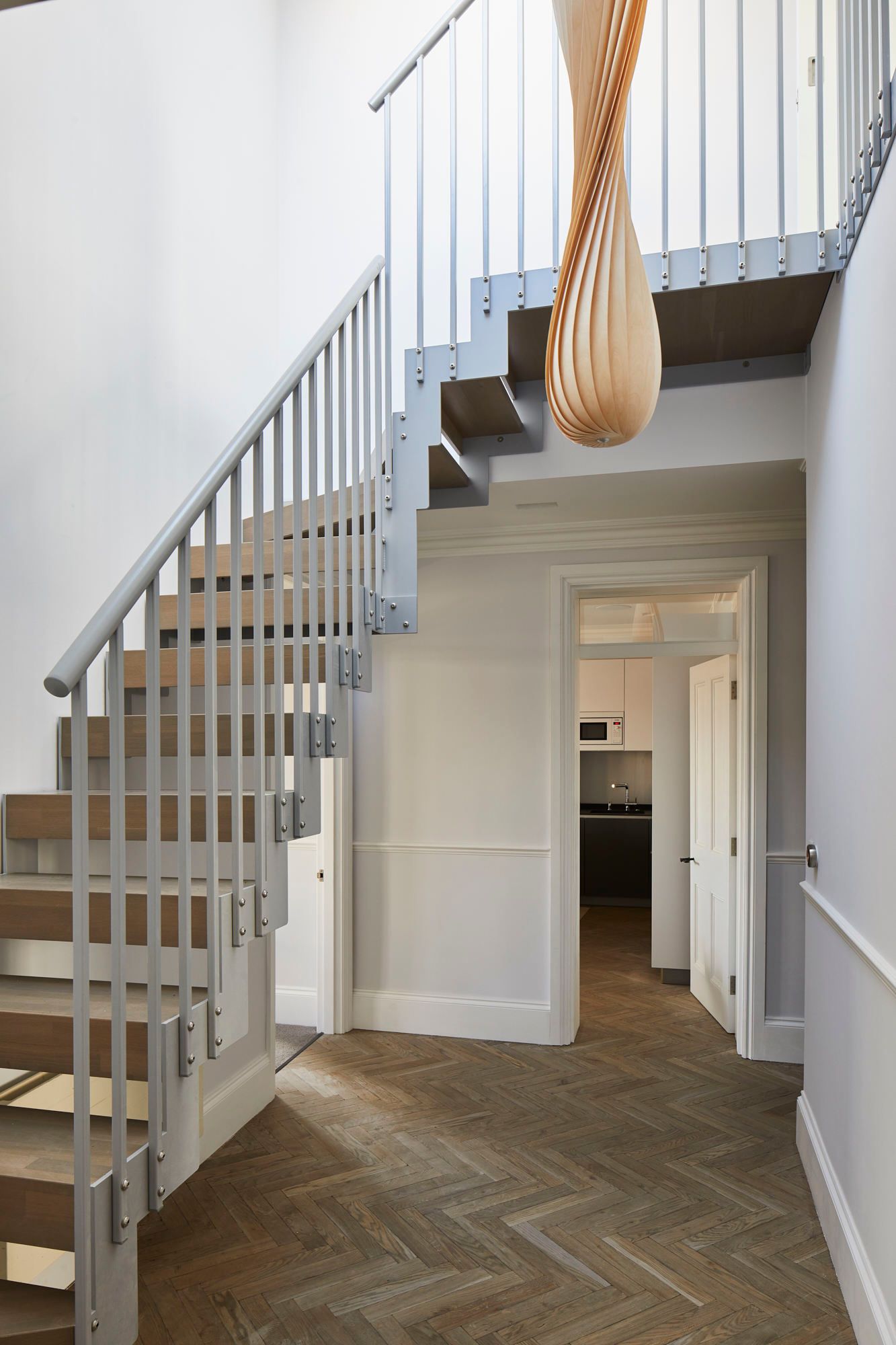
A hallway and staircase like this is the classic setting for a dado rail, a narrow, high-traffic space that original panelling would have protected from knocks, and where the horizontal line also breaks up a tall, narrow run of wall alongside the stairs.
Dado Rail vs Picture Rail
The two are often mixed up because both are horizontal timber mouldings run around a room, but they sit at different heights and originally did different jobs.
| Feature | Dado Rail | Picture Rail |
|---|---|---|
| Typical height | 900mm to 1 metre from the floor, roughly chair-back level | Close to the ceiling, generally 250 to 400mm below it |
| Original purpose | Protecting plaster from chair backs and furniture | Hanging picture wires without nailing into the plaster |
| Typical use today | Decorative break between finishes, cap for panelling | Period detailing, occasionally still used for pictures |
Related Terms
See also Skirting Board, Architrave and Cornice, the other mouldings a dado rail is most often specified alongside.
Frequently Asked Questions
What height should a dado rail be fitted at?
Most sit around 900mm to 1 metre above the floor, roughly level with the back of a dining chair, though the exact height is often adjusted to suit the room or to line up with a doorframe.
Planning a project that involves this? See our wall panelling service, or get in touch to talk it through.