Timber sash windows London period homes deserve. Every window made to the exact opening in our own London workshop, or your original sashes restored and draught proofed rather than thrown away.
A sash window is the detail that tells you how old a London house is, and the first thing ruined when it is replaced badly. Noba & Stod makes timber sash windows in London as a joinery studio rather than a window company. The sashes, box frames, glazing bars and cills are made by the same bench joiners who make our wardrobes and panelling, to the exact opening of your house rather than the nearest standard size.
There are two honest routes and we will tell you which your house needs. Where the original joinery is sound, sash window restoration with draught proofing will usually outlast a replacement. Where the timber is beyond repair, we make replacement sash windows to the original profile.
Noba & Stod makes bespoke sash windows in London in our own workshop: box sash and vertical sliding sash windows in hardwood or engineered timber, matched to the original glazing bar profile and sightlines of the house. Where the original windows are sound we carry out sash window restoration with draught proofing, new cords and weights and repairs to decayed sections. Where they are beyond repair we make exact replacement sash windows to the same profile. Single glazing, slim-profile double glazed sash windows and secondary glazing are all available. Sash windows are priced per window after a survey, because size, timber, glazing and whether the job is a restoration or a replacement all change the figure. Prices are a guide and exclude VAT. Conservation areas and listed buildings usually need consent for replacement, and we advise on that at the survey.
Timber Sash Windows London: What a Joinery Studio Does Differently
Most sash windows in London are ordered from a catalogue and fitted by an installer. We design, make and fit them ourselves. Four things decide whether a sash window looks like it belongs in the house.
Bespoke Timber Sash Windows Made to the Opening
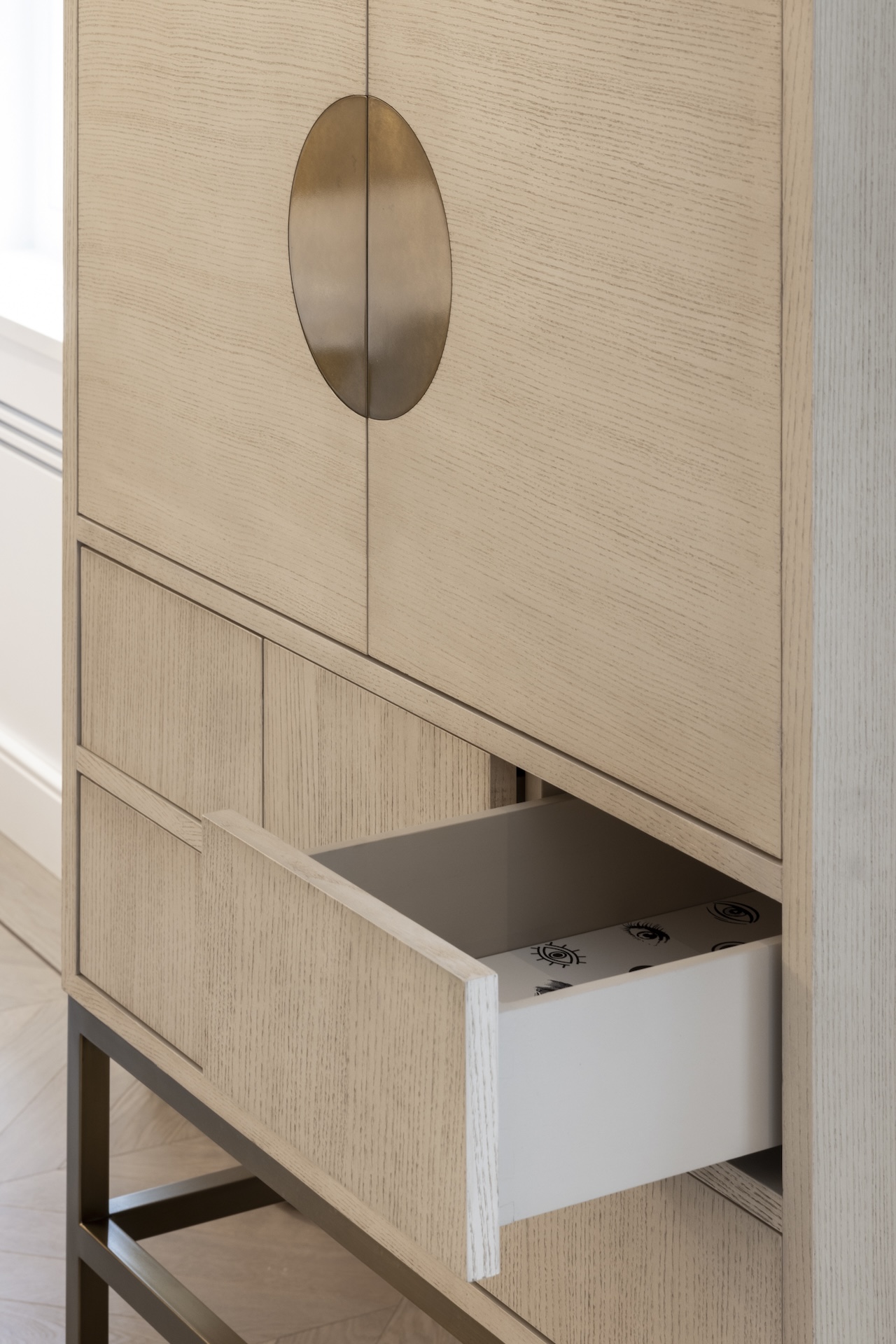
Every window starts with a survey of the actual opening: width at head, middle and cill, the depth of the reveal, and the profile of the existing glazing bars. We make the window to those figures in hardwood or engineered timber, chosen for the elevation rather than fixed in advance. Hardwood suits fine glazing bars and exposed fronts; engineered timber is laminated from stable sections, so it moves less and holds paint longer.
The details are where wooden sash windows are won or lost. We copy the original bar width and moulding, keep the meeting rail thin rather than chunky, and set the sashes so the sightlines line up with the windows either side of yours. Everything is sprayed and finished in the workshop.
Sash Window Restoration and Draught Proofing
Original sashes were cut from slow-grown timber that outlasts most modern stock, so our first question is whether yours can be saved. Usually they can. Decayed sections of cill, stile or bottom rail are cut out and new timber spliced in, rather than the whole sash being scrapped over forty millimetres of rot. Broken cords are replaced, the weights rebalanced and pulleys renewed. Where weights will not fit, spiral balances do the same job.
Draught proofing sash windows is the part that changes how a room feels. Brush seals are routed into the stiles, meeting rail and head, so the sashes still slide freely but the whistling, the rattle and much of the street noise stop. Where old crown glass survives we keep it.
Double Glazed and Secondary Glazing Sash Windows
Glazing changes comfort, noise and cost more than any other decision. Single glazing is right where a conservation officer requires it or where original glass is retained. Double glazed sash windows use slim-profile sealed units, thin enough to sit inside a traditional sash without thickening the glazing bars or coarsening the sightlines, which is what goes wrong when a standard unit is forced into a period window.
Where new glazing is not permitted, secondary glazing gives most of the same benefit. A slim frame sits behind the original sash, is generally reversible, and is often what a conservation officer will accept. On busy London roads we specify acoustic laminated glass, which does more for traffic noise than an extra millimetre of air.
The Joinery Advantage: One Workshop, One Set of Profiles
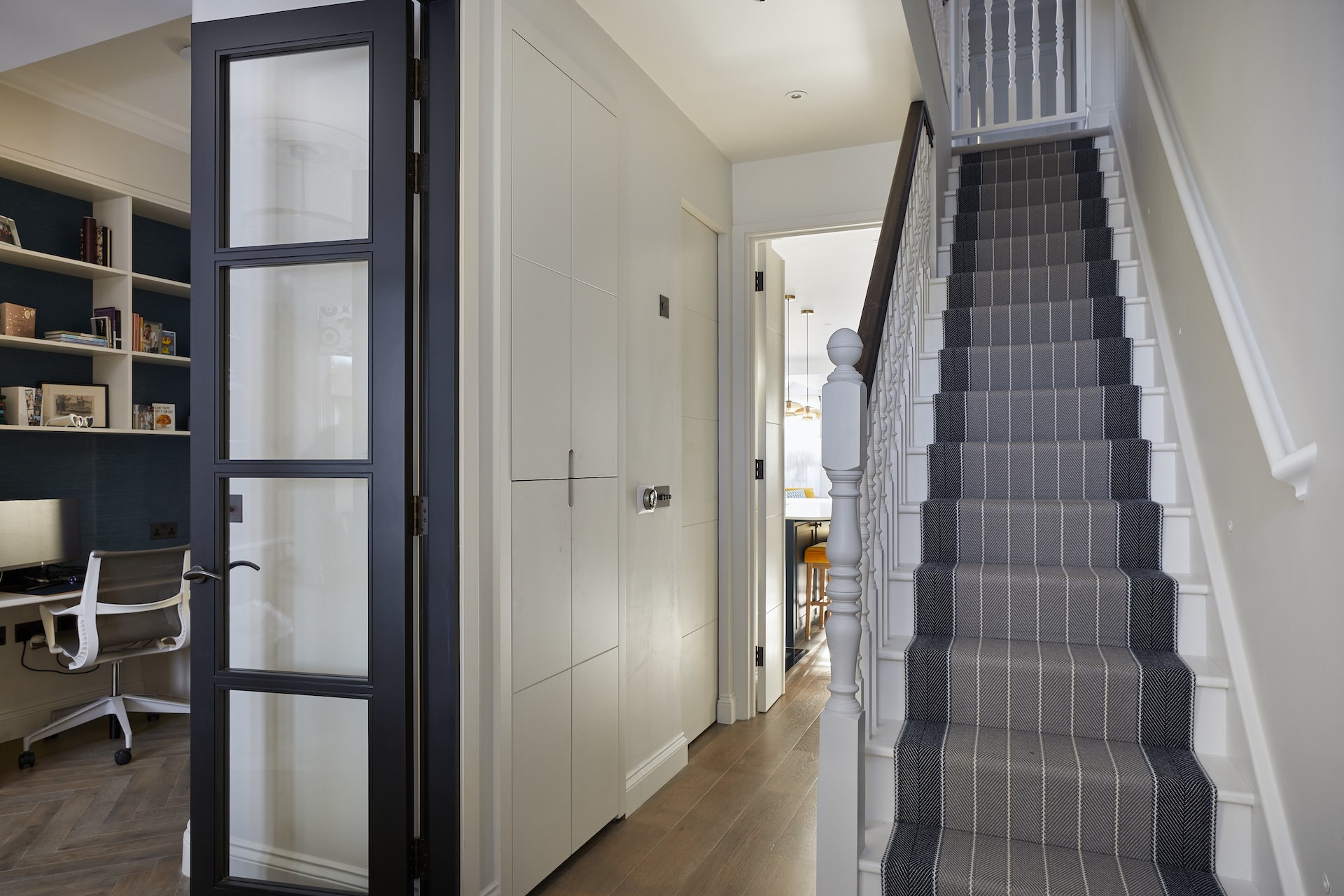
The workshop that makes your windows makes everything else in the house. That sounds like a detail until you stand in a room where the architrave, the shutter and the cupboard doors were made by different people, to different mouldings, in three shades of off-white. Because our bespoke joinery and carpentry teams are the same people, the profiles, finishes and paint colour carry across the room.
It also means the window is drawn alongside the rest of the work rather than after it: shutters set out to the box frame before it is made, window seats sized to the finished reveal. On a whole-house project the windows sit in the same programme as the renovation, the fitted wardrobes and any loft conversion work, delivered by one dedicated team coordinating qualified trades. Our Victorian house renovation in Chelsea shows the result.
Which Style of Sash Window Does Your House Have?
The style is set by the age of the house and the street it stands on. These are the sliding sash windows we make and restore most often.
Victorian Two Over Two
Once larger panes became affordable, bars disappeared and Victorian sash windows settled into two panes over two, divided by one slim vertical bar. Plain and unforgiving: the meeting rail must be thin and the sightlines dead level.
Georgian Six Over Six
Glass came in small sheets, so Georgian sash windows are divided into six panes over six by fine glazing bars. The bars are the character of the window, so we copy the original width and moulding exactly.
Box Sash Windows
Box sash windows are the traditional construction: a hollow boxed frame each side housing cast iron weights on cords over pulleys, so the sashes stay where you put them. Where the boxes are sound we repair them and renew only the sashes.
Vertical Sliding Sash Windows
Vertical sliding sash windows replace the weighted box with a slim frame on spiral balances. They suit narrow reveals and flats where the original boxes have gone, giving the same look with less depth to the frame.
Arched and Curved Heads
Many London terraces carry a segmental or round arched head on the first floor or the stair window. The top rail and bars have to follow the brick arch above. This is bench work, not a catalogue option.
How We Make and Fit Sash Windows
Survey & Measure
We open the windows, check the boxes, cords, cills and bottom rails, and take opening sizes window by window. You get an honest verdict on which can be restored and which are past saving.
Design & Profile Matching
We record the existing glazing bar width, moulding shape, meeting rail and sightlines, and draw the new joinery to match. Where a window has already been replaced badly, we work from the best surviving original.
Workshop Manufacture
Sashes, frames, bars and beads are machined and assembled in our own London workshop in the specified timber, then primed, sanded and sprayed under controlled conditions rather than on site.
Glazing
Units are glazed in the workshop: single glass, slim-profile double glazed units or acoustic laminated glass, beaded traditionally so the putty line reads correctly from the street. Original glass we are keeping is reused carefully.
Installation & Making Good
Windows are fitted one opening at a time so the house is never left open, with one dedicated team coordinating qualified trades where scaffolding or plastering is involved. Reveals and disturbed plaster are made good.
Decoration & Aftercare
Final coats are applied, the sashes balanced so they hold at any height, and ironmongery adjusted. We hand over the finish specification and maintenance notes, and return if a sash needs adjusting after the first season.
Sash Windows in Conservation Areas and Listed Buildings
Most London houses with sash windows sit in a conservation area, and a good number are listed. In a conservation area, replacing windows usually needs consent, because the windows are part of what the designation protects. Like-for-like repair normally does not, which is one practical reason restoration is so often the better route. On a listed building, consent is generally required for replacement and can be required for repairs too.
We advise at the survey, prepare the profile details a conservation officer will want to see, and can work to the requirements they set, such as retaining original glass or matching bar widths. What we will not do is tell you what your council will decide. Boroughs apply the rules differently and individual streets carry their own directions, so always check with your local authority.
The uPVC question deserves a fair answer. uPVC windows are cheaper to buy and need very little maintenance, and on some buildings that is a sensible trade. On a period facade they are the wrong material: the sections are thicker, the sightlines heavier, the profiles cannot follow an original moulding, and in most conservation areas they are not permitted.
How Are Sash Windows Priced?
We do not publish a price per window, because a single figure would mislead you. A small two over two sash in a retained box frame and a large arched Georgian window in new hardwood with slim double glazing are different pieces of work. Sash windows are quoted per window after a survey. These things move the number.
| What drives the price | Why it changes the figure |
|---|---|
| Size and number of sashes | Heavier sections, more glass and more weight in the boxes. |
| Hardwood or engineered timber | Material cost, machining time and preparation before spraying differ. |
| Single, slim double or secondary glazing | Slim-profile sealed units cost far more than single glass; secondary glazing is a separate item. |
| Glazing bars | Six over six is far more joints and glazing than two over two. |
| Curved or arched heads | Curved top rails and bent bars are bench work; shaped glazing units are specials. |
| Ironmongery | Fasteners, lifts, pulleys, weights or spiral balances, specified per project. |
| Access and scaffolding | Upper floors, lightwells and rear elevations needing a scaffold carry a real cost. |
| Whether the frame is retained | Repairing sound boxes and renewing only the sashes costs less than a whole window. |
Prices are a guide and exclude VAT. We survey, specify and quote window by window, and any change is agreed in writing before it happens.
Sash Windows London: Areas We Cover
We make and restore sash windows across London from our own workshop, mostly on the Victorian and Georgian streets where sash windows define the elevation: Chelsea and Kensington, Hampstead, Islington, Chiswick, Fulham, Richmond and Clapham. Our house renovation with basement in Greenwich and the rest of our portfolio show the houses we work in.
If you have been searching for sash windows near me, we can usually arrange a survey within days, and we are happy to look at one failing window as well as a whole house. If you are comparing companies, ask who actually makes the window. A studio that makes its own joinery can match your profile; a company ordering from a supplier can only offer what that supplier already makes.
Cost Guides & Resources
Straight answers on real costs from the team that does this work every week.
Frequently Asked Questions
Can sash windows be double glazed?
Yes. We make double glazed sash windows using slim-profile sealed units, thin enough to sit inside a traditional sash without thickening the glazing bars or coarsening the sightlines. Where a conservation officer will not accept new glazing, secondary glazing behind the original sash gives most of the same benefit and is reversible.
Is it better to repair or replace sash windows?
Repair, wherever the joinery is sound. Original sashes were cut from slow-grown timber that outlasts most modern stock, and decayed sections can be spliced out rather than the whole window scrapped. Replacement makes sense when frames are failing throughout, when past repairs used filler in place of structure, or when the boxes have decayed.
Do I need permission to replace sash windows in a conservation area?
Usually yes for replacement, and on a listed building consent can be needed for repairs too. Like-for-like repair in a conservation area often needs no application. Rules differ between boroughs and between streets, so we advise at the survey and can work to your conservation officer’s requirements, but always check with your local authority.
How long do timber sash windows last?
A well made timber sash window kept painted and free of trapped water will last for decades, and many we restore are well over a century old. Lifespan depends far more on maintenance than on the timber: redecorate the outside every few years, keep the cills clear, and deal with small failures early.
What timber do you use for sash windows?
Hardwood or engineered timber, specified per project after the survey rather than decided in advance. Hardwood suits fine glazing bars and exposed elevations. Engineered timber is laminated from stable sections, so it moves less and holds paint longer, which suits large sashes and sunny facades. We explain the choice for your house.
How much do sash windows cost in London?
Sash windows are priced per window after a survey. Size and number of sashes, hardwood or engineered timber, single, slim-profile double or secondary glazing, glazing bars, arched heads, ironmongery, access and whether the box frame is retained all change the figure. We measure, specify and quote window by window. Prices are a guide and exclude VAT.
Start Your Sash Window Project
Send us photographs of the windows, inside and out, with a note of how many there are and which floor they are on, and we will tell you honestly whether you are looking at a restoration or a replacement. If the answer is repair, we will say so, even though it is the smaller job. Call 0207 118 9889 or book a sash window survey, and a member of the team will come back to you.