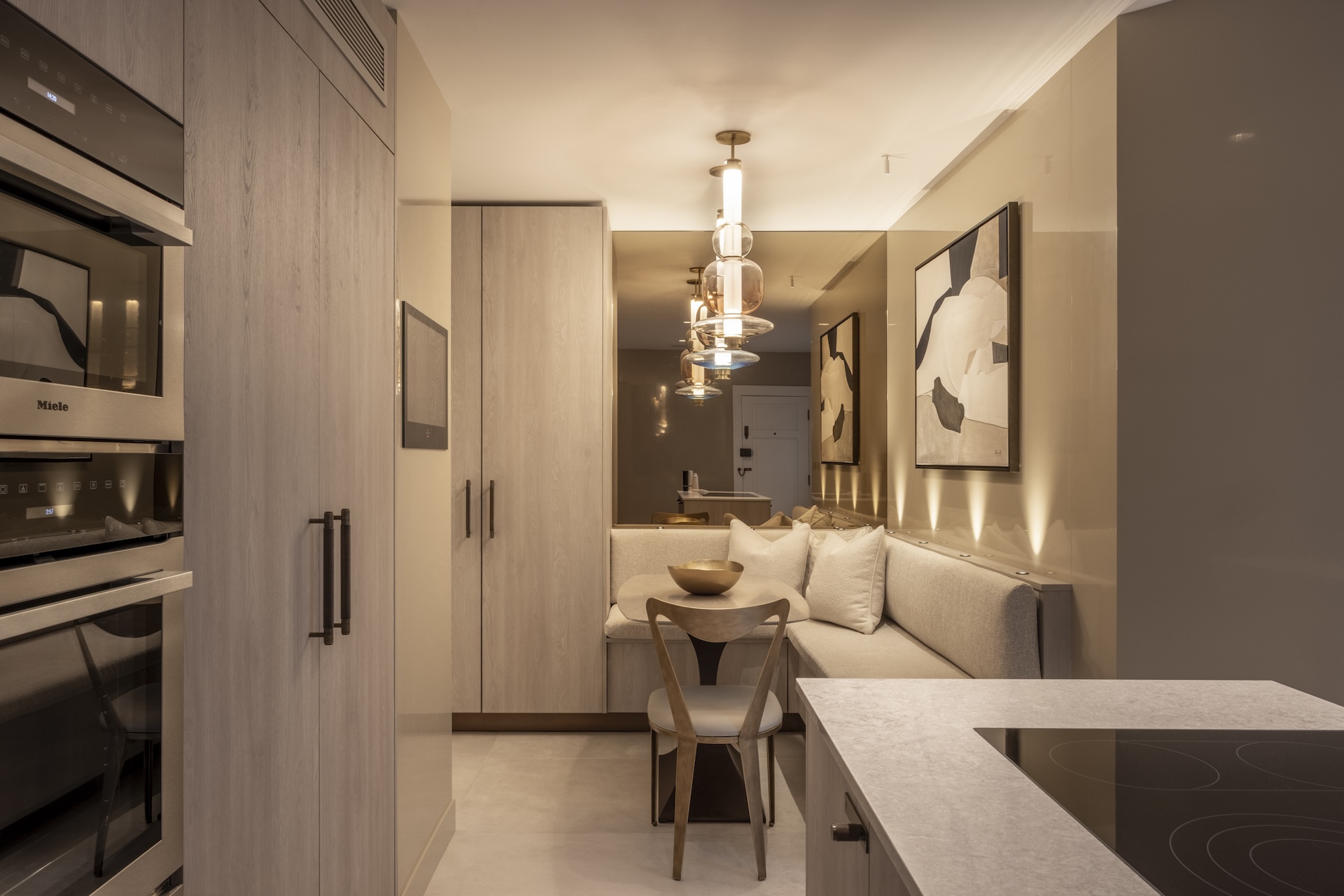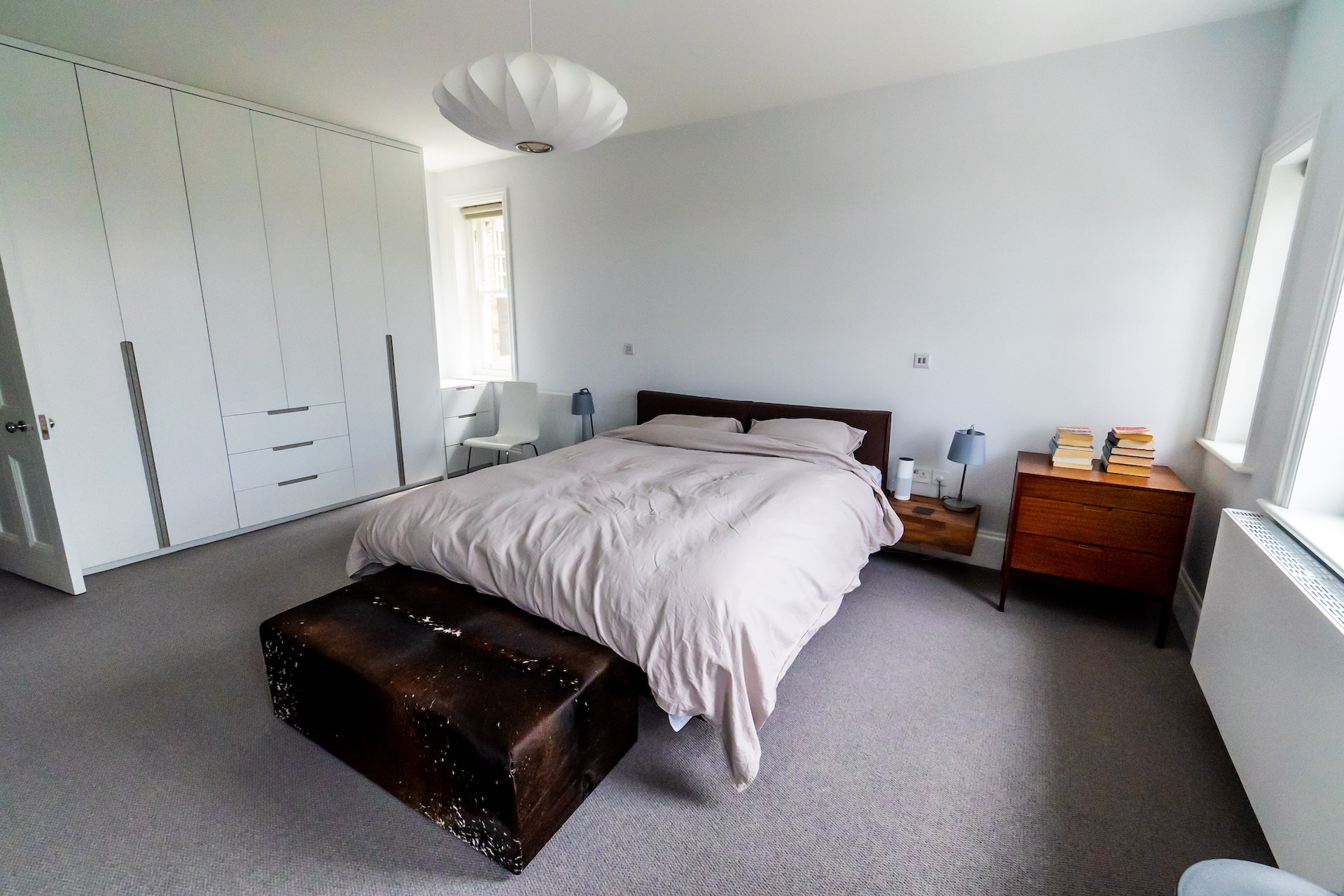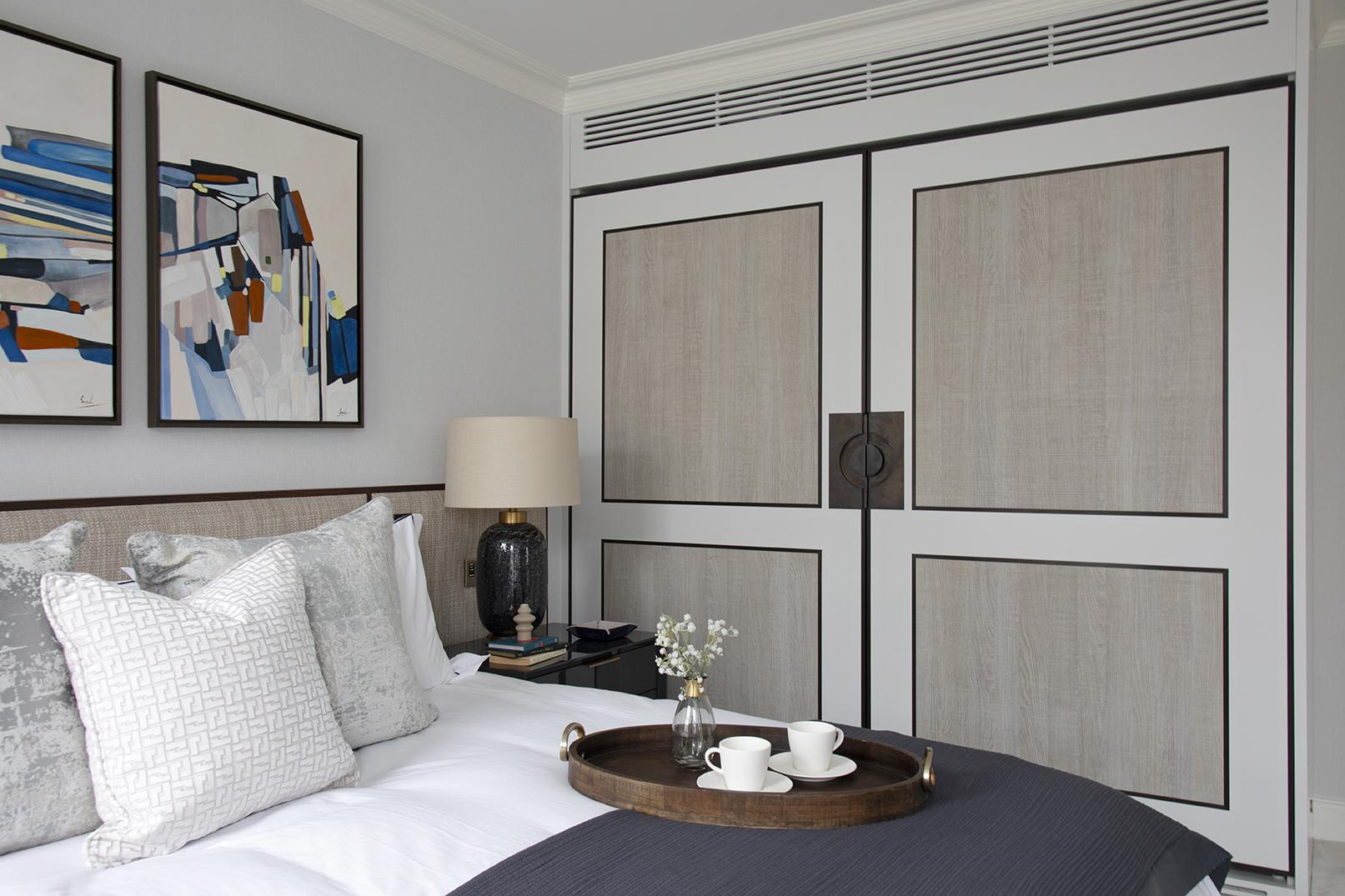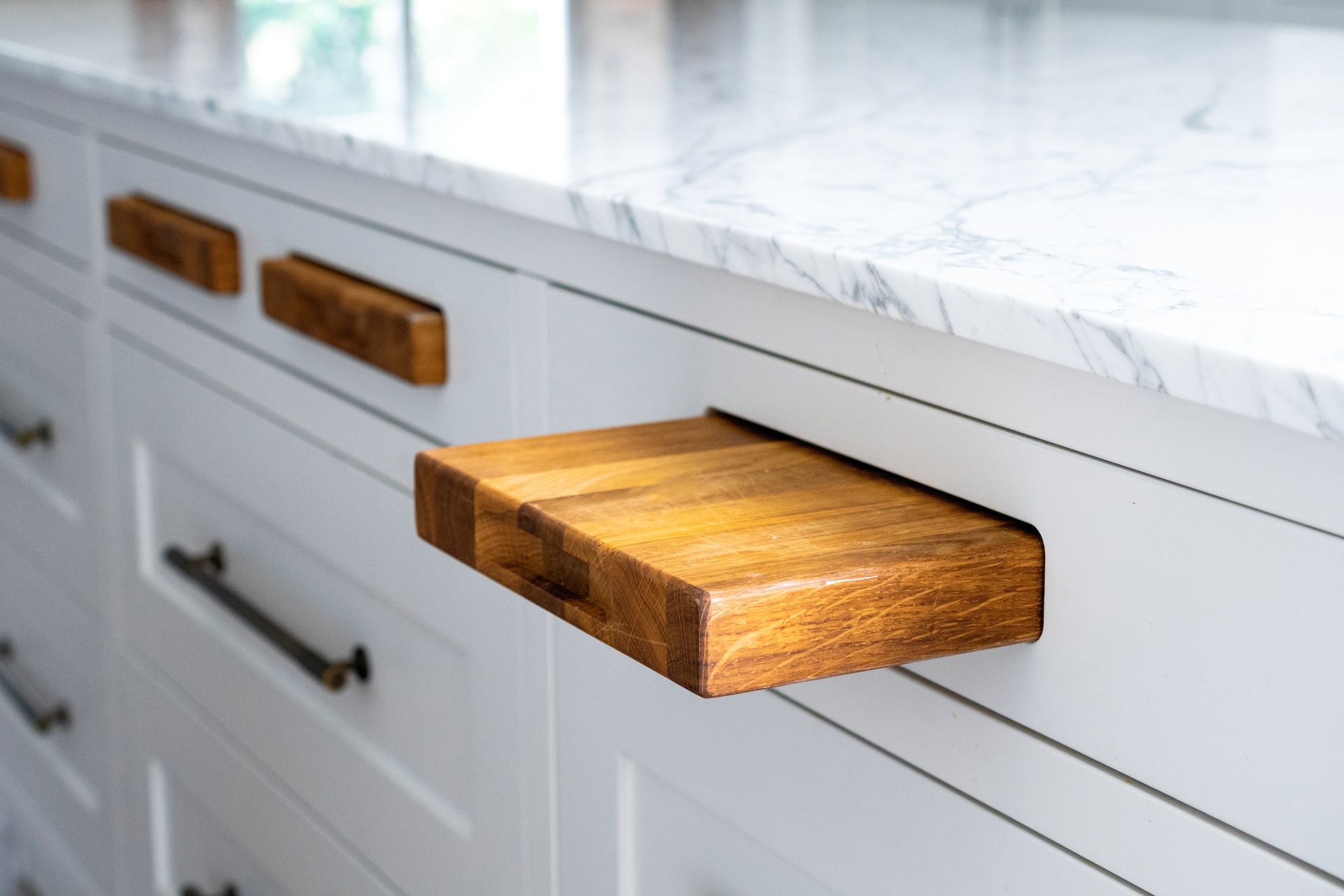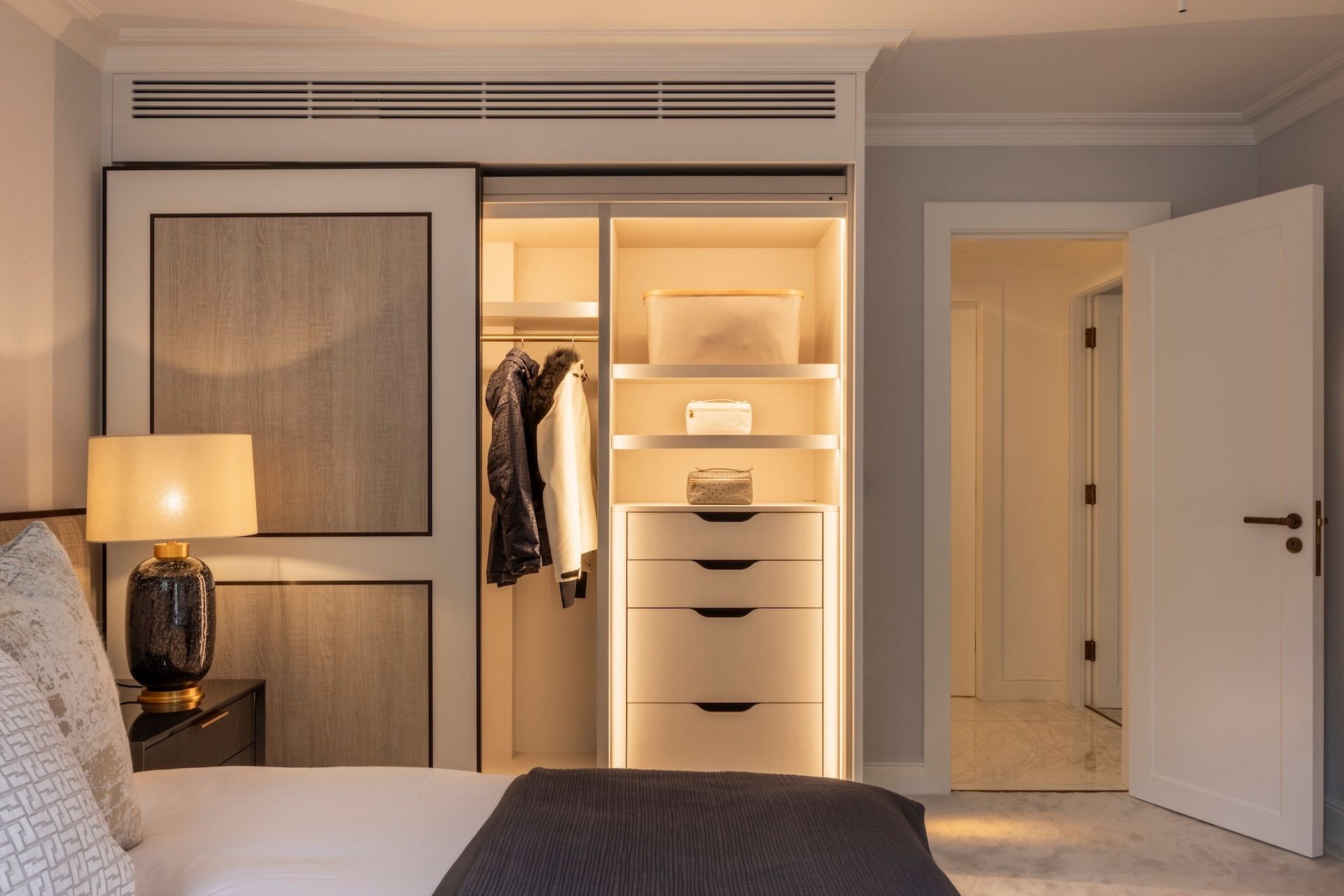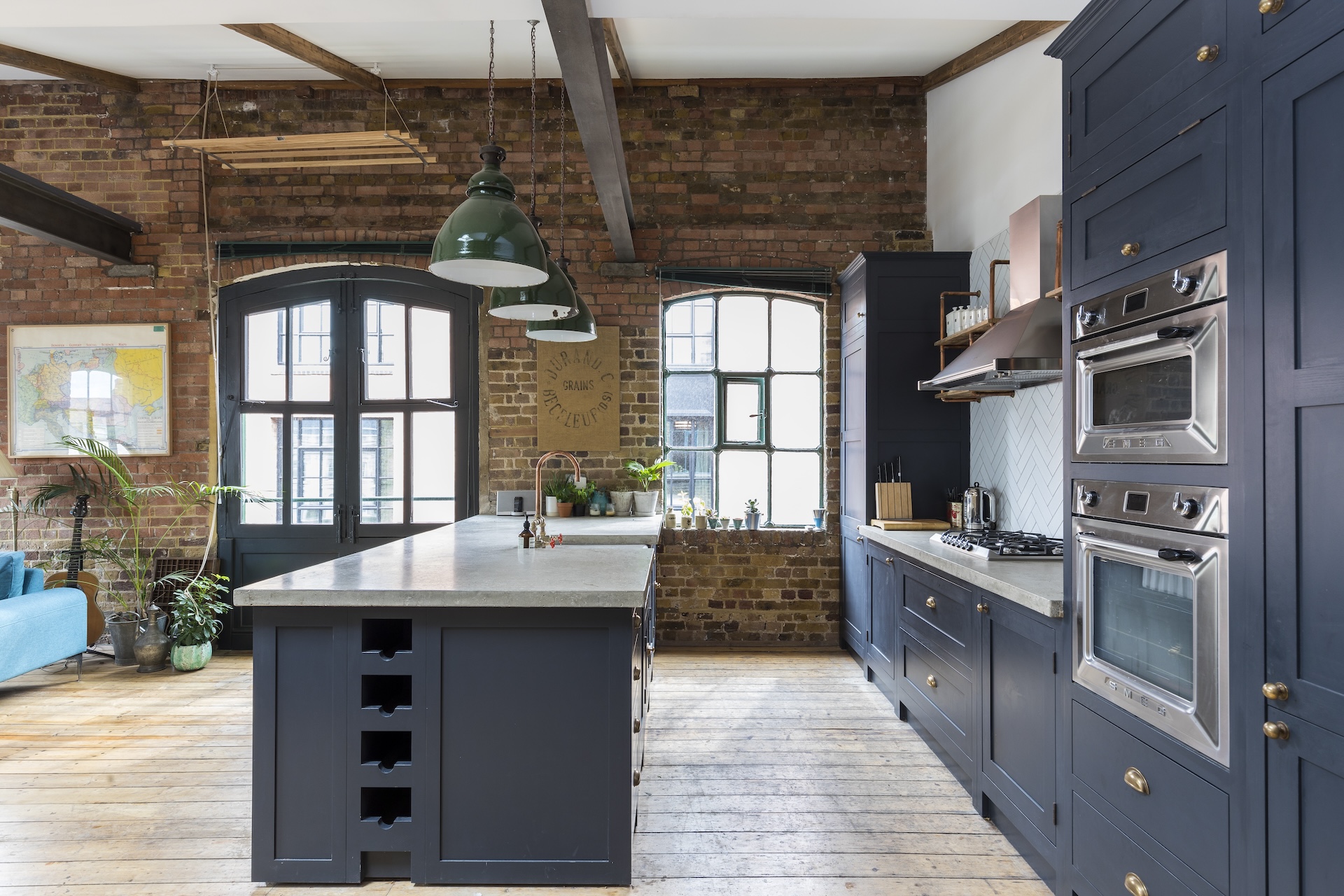
Bespoke kitchen cabinets are individually designed and handmade to fit your exact space, using materials like birch plywood and solid hardwood rather than the chipboard found in mass-produced kitchens. In London, a full set of bespoke kitchen cabinets costs between £8,000 and £35,000+, with lead times of 8–16 weeks from design to installation.
A kitchen lives or dies on the quality of its cabinets. They hold the worktops, house the appliances, absorb daily wear, and define the room’s character. Mass-produced fitted kitchens use standard-size chipboard carcasses and foil-wrapped doors — they’re fast to install and budget-friendly, but they don’t last, and they can’t adapt to the irregular walls, sloping floors, and tight corners that are standard in London properties.
Bespoke kitchen cabinets solve this. Every unit is designed to your dimensions, built from better materials, and finished to a standard that factory lines can’t match. This guide covers what goes into a bespoke kitchen, what it costs, and how to commission one in London.
Bespoke vs Fitted vs Semi-Custom Kitchens
Understanding the three tiers of kitchen cabinetry helps you decide where to invest. Each serves a different purpose, budget, and longevity expectation.
| Feature | Fitted (Off-the-shelf) | Semi-Custom | Bespoke (Handmade) |
|---|---|---|---|
| Cabinet sizes | Fixed increments (300, 400, 500, 600 mm) | Modified standard sizes | Any dimension to the millimetre |
| Carcass material | Chipboard / melamine | Chipboard or MDF | Birch plywood, MDF, or solid timber |
| Door options | Catalogue selection | Wider catalogue + some customisation | Unlimited — any design, material, colour |
| Internal fittings | Standard shelves & drawers | Some upgrade options | Fully custom — spice drawers, plate racks, knife blocks, pull-outs |
| Lifespan | 10–15 years | 15–20 years | 25–30+ years |
| Lead time | 2–4 weeks | 4–8 weeks | 8–16 weeks |
| Price range (London, cabinets only) | £3,000–£8,000 | £6,000–£15,000 | £8,000–£35,000+ |
The gap between fitted and bespoke isn’t just about looks — it’s about how long your kitchen will serve you. Chipboard carcasses swell when they get wet (and kitchens get wet). A plywood or solid timber carcass, properly sealed, handles moisture for decades without deteriorating.
Carcass Materials: What’s Inside the Box
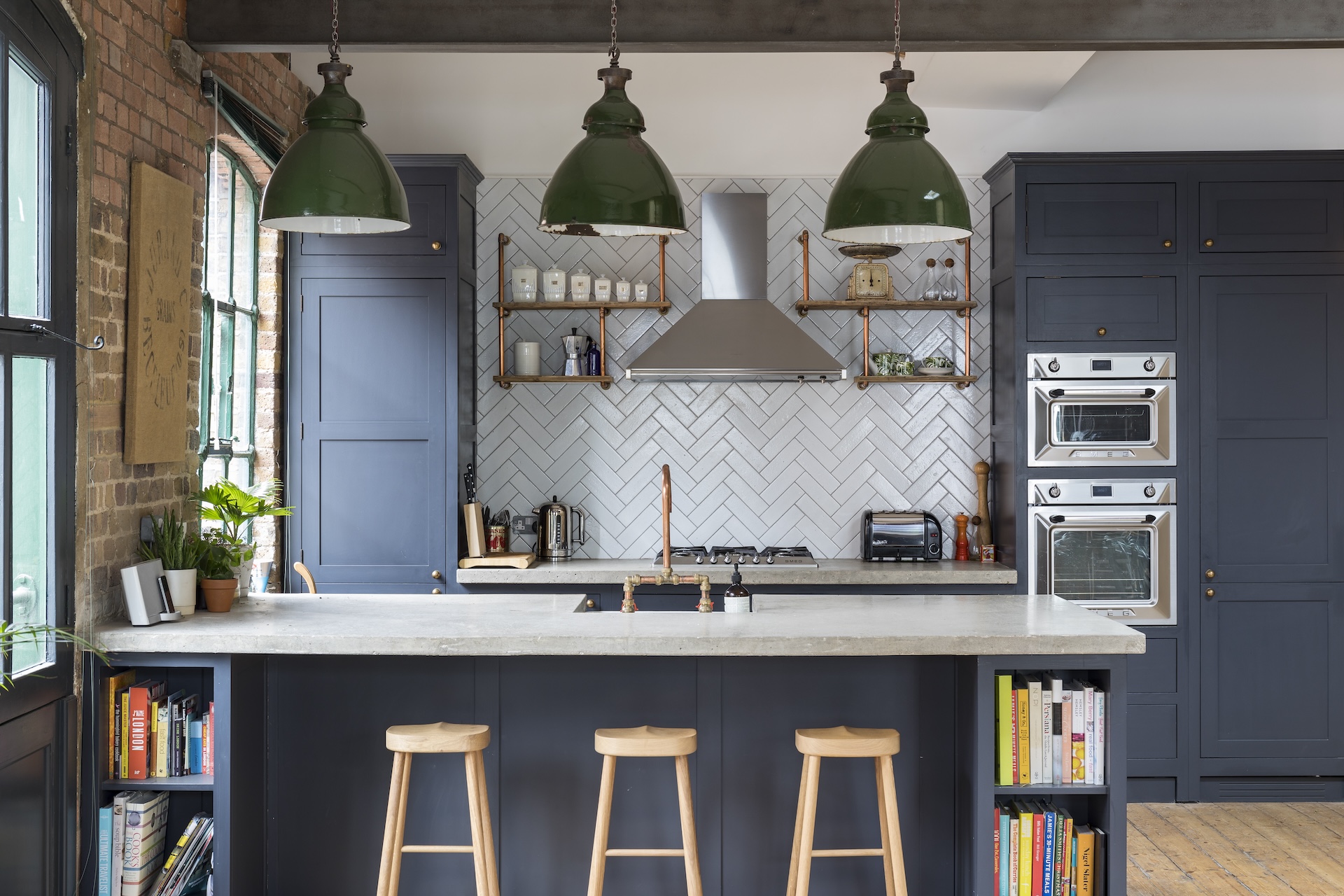
The carcass — the structural box of each cabinet — determines how long your kitchen lasts and how much weight it can carry. Most homeowners never see the carcass once doors are fitted, but it’s the most important decision you’ll make.
Birch Plywood
Birch plywood is the gold standard for bespoke kitchen cabinets. Made from layers of birch veneer cross-laminated and bonded under pressure, it’s exceptionally strong, dimensionally stable, and resistant to moisture. A birch plywood carcass will outlast the rest of the kitchen. The exposed plywood edge has a distinctive layered appearance that works as a design feature in contemporary kitchens.
Cost: £45–£70 per sheet (2440 × 1220 mm, 18 mm). Premium over chipboard: approximately 40–60%.
Moisture-Resistant MDF
MR MDF is dense, smooth, and takes paint beautifully. It’s a good mid-range carcass material — stronger than chipboard, more affordable than plywood. It doesn’t have plywood’s cross-grain strength, so it’s less forgiving of prolonged water exposure, but for most kitchen environments it performs well.
Cost: £30–£45 per sheet (18 mm). A practical choice when the budget needs to stretch further.
Chipboard / Melamine
Used in virtually all mass-produced fitted kitchens. It’s the cheapest option but the weakest — particularly vulnerable to water damage. Once the melamine coating is breached (by a hinge screw loosening, a pipe leak, or a dishwasher overflow), chipboard swells irreversibly. For a bespoke kitchen, we avoid it entirely.
Solid Timber
Occasionally used for open-frame constructions or in high-end traditional kitchens. Solid oak or tulipwood carcasses are beautiful but expensive and require careful detailing to manage wood movement. Most bespoke makers use solid timber for doors and visible elements, with plywood for structural components.
At Noba & Stod, we use birch plywood as our standard carcass material. It costs more upfront but the longevity justifies it — our cabinets are built to last the life of the property, not the length of a trend.
Door Styles & Finishes for Bespoke Kitchen Cabinets
Doors are the visible face of your kitchen — the element that defines its style. With bespoke cabinetry, there are no catalogue constraints. Here are the most popular styles we build.
Shaker
The most enduringly popular kitchen door style in the UK. A flat centre panel framed by a simple profiled rail and stile. Shaker doors work in both traditional and contemporary settings depending on the profile and colour. They’re typically made from MDF (for painting) or solid hardwood (for natural finishes).
Best for: Period homes, family kitchens, classic-contemporary hybrids.
Slab / Flat Panel
A single flat panel with no frame or detail. Clean, minimal, and modern. Slab doors suit handleless kitchens with push-catch or J-pull mechanisms. They can be spray-painted in any RAL or BS colour, or finished in natural timber for a Scandinavian aesthetic.
Best for: Modern apartments, open-plan living, handleless designs.
Tongue & Groove
Vertical planks with a v-groove between each board, creating a cottage or coastal feel. T&G doors add texture and warmth. They work particularly well in country kitchens or as a contrast to contemporary elements.
Best for: Country kitchens, period cottages, utility rooms.
Raised & Fielded Panel
A more ornate panel door with a raised centre and shaped edges. This is the traditional English kitchen door — seen in manor houses and Georgian townhouses. It requires skilled joinery and higher-quality timber, making it one of the more expensive options.
Best for: Grand kitchens, heritage properties, formal dining kitchens.
In-Frame vs Lay-On
Bespoke kitchens offer a choice that fitted kitchens rarely do: in-frame construction, where doors sit within the face frame of the cabinet, or lay-on, where doors overlay the carcass. In-frame is the hallmark of traditional high-end kitchens — it requires precise craftsmanship as the gaps between door and frame must be uniform. Lay-on is simpler and suits modern designs.
Kitchen Base Units & Wall Cabinets
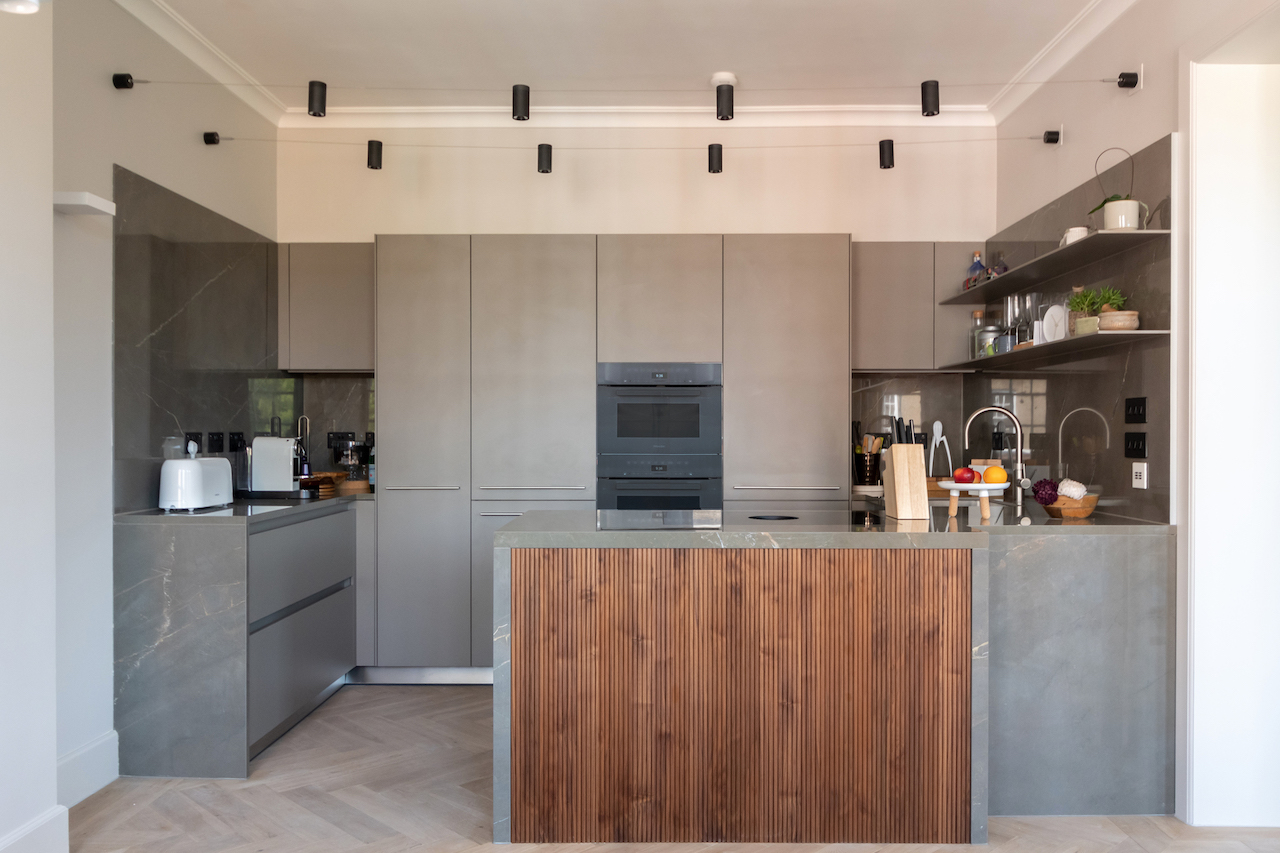
The layout of your kitchen base units and wall cabinets determines how practical your kitchen is day-to-day. Bespoke cabinetry lets you configure every unit around how you actually cook, store, and move through the space.
Base Unit Configurations
| Unit Type | Typical Width | Best For |
|---|---|---|
| Standard base cabinet (door + shelf) | 300–600 mm | General storage, pots, appliances |
| Drawer stack (3–4 drawers) | 400–900 mm | Cutlery, utensils, linens, heavy pans |
| Corner carousel or LeMans pull-out | 900 × 900 mm (L-shape) | L-shaped and U-shaped kitchen corners |
| Integrated bin unit | 300–600 mm | Waste & recycling concealment |
| Sink base | 600–800 mm | Under-sink plumbing access |
| Built-in appliance housing | 580–610 mm | Dishwasher, fridge, oven |
Pro tip: In bespoke kitchens, we recommend drawers over doors wherever possible. A deep drawer gives you full-width access and visibility; a cupboard with a shelf means crouching and reaching into darkness. Three wide pan drawers in a 900 mm unit hold more and are easier to use than a single door with two shelves.
Wall Cabinets
Wall cabinets are typically 300–350 mm deep and mounted 450–500 mm above the worktop. In bespoke kitchens, they can extend to the ceiling — eliminating the dust-collecting gap above standard wall units. Full-height wall cabinets add 30–40% more storage and create a more architectural, built-in appearance.
Tall Units (Larder & Housekeeping Cupboards)
Floor-to-ceiling tall cabinets (2,100–2,400 mm) house pantry storage, integrated fridges, and ovens at eye level. A well-designed tall larder with pull-out shelving replaces the need for wall cabinets entirely in some layouts. These are where bespoke joinery really shines — every shelf height and internal fitting can be tailored to your shopping habits and cooking style.
For guidance on island cabinetry and layout planning, see our detailed guide to bespoke kitchen islands.
Bespoke Kitchen Cabinet Costs in London (2026)
Kitchen costs are notoriously hard to compare because quotes bundle different things. Below, we break out cabinet costs only (excluding worktops, appliances, plumbing, and electrics) to give you a clear picture.
| Kitchen Size | Painted MDF Doors + Ply Carcass | Hardwood Doors + Ply Carcass | Full Hardwood |
|---|---|---|---|
| Small galley (8–12 units) | £8,000–£12,000 | £12,000–£18,000 | £15,000–£22,000 |
| Medium L-shape (14–20 units) | £12,000–£18,000 | £18,000–£25,000 | £22,000–£32,000 |
| Large kitchen + island (20–30 units) | £18,000–£28,000 | £25,000–£35,000 | £32,000–£50,000+ |
Prices are for London-based bespoke joinery workshops (2026). Includes design, manufacture, spray finishing, and installation. VAT included. Excludes worktops, appliances, plumbing, electrics, and building work.
What Drives the Price Up?
| Factor | Budget Choice | Premium Choice | Cost Impact |
|---|---|---|---|
| Carcass | MDF | Birch plywood | +20–40% |
| Door construction | Slab (flat panel) | In-frame Shaker or raised panel | +30–50% |
| Finish | Primed for decorator | Workshop spray (2–3 coats, sanded between) | +£1,500–£3,000 |
| Internal fittings | Fixed shelves | Blum Tandembox drawers, pull-outs, dividers | +£2,000–£5,000 |
| Ironmongery | Standard hinges & runners | Blum Blumotion soft-close throughout | +£500–£1,500 |
| Complexity | Straight run, standard heights | Curved units, angled corners, stepped levels | +15–30% |
For a complete kitchen budget including worktops, appliances, and building work, see our guide to kitchen renovation costs in London.
The Bespoke Kitchen Joinery Process
Commissioning a bespoke kitchen is different from ordering a fitted one. There’s no showroom with pre-configured displays — instead, you work directly with a designer and maker. Here’s how the process works at a London joinery workshop.
1. Initial Consultation (Week 1)
A site visit to measure the space, discuss your requirements, and understand how you use your kitchen. Good designers ask about cooking habits, storage needs, traffic flow, and aesthetic preferences. Bring reference images — Pinterest boards, magazine clippings, photos of kitchens you like.
2. Design & Proposal (Weeks 2–4)
Detailed drawings (plan view, elevations, 3D renders) showing every cabinet, its dimensions, and internal configuration. Materials, colours, and ironmongery are specified. A detailed quote breaks down costs by unit. Expect 1–2 revision rounds.
3. Survey & Templating (Week 4–5)
After design approval, a detailed site survey confirms measurements, checks services (plumbing, gas, electrics), and identifies any building work needed before installation. For stone worktops, a laser template is cut after cabinets are installed.
4. Manufacture (Weeks 5–12)
Cabinets are built in the workshop — CNC-cut panels, hand-assembled joints, carefully machined doors. Spray painting happens in a controlled booth environment, building up layers of primer, undercoat, and topcoat with sanding between each. This workshop-controlled process produces a finish that on-site painting simply cannot match.
5. Installation (Weeks 12–15)
Cabinets arrive pre-finished and are installed by the same team that built them. Base units are levelled and fixed first, then wall units, then tall units. Worktops, splashbacks, and appliances follow. A good installation takes 5–10 working days depending on kitchen size.
6. Snagging & Handover (Week 15–16)
A walk-through to check everything: door alignment, drawer action, finish quality, hardware function. Any adjustments are made. You receive care instructions for your specific materials and finish.
Choosing a Bespoke Kitchen Cabinet Maker in London
The quality of a bespoke kitchen depends entirely on who makes it. Here’s what to look for when choosing a workshop.
Workshop, Not Just Showroom
Some companies labelled “bespoke” actually outsource manufacture. Ask to visit the workshop where your cabinets will be built. A maker with their own workshop controls quality at every stage — from timber selection to final finishing.
Portfolio of Completed Kitchens
Look for variety: different styles, different property types, different scales. A maker who can show you a modern handleless kitchen in a new-build apartment and a Shaker kitchen in a Victorian terrace demonstrates genuine versatility. Ask for references from recent clients.
Material Transparency
A good maker will tell you exactly what’s in your cabinets: carcass material, door material, edge banding, glue type, finish system. If a company is vague about materials, that’s a warning sign. The difference between a 15-year kitchen and a 30-year kitchen starts with material choices.
Installation by Makers
The best bespoke kitchens are installed by the people who built them. They understand every detail of the construction and can make site adjustments that a separate installation team can’t. At Noba & Stod, our workshop team handles installation — no subcontractors.
Source: For general guidance on choosing tradespeople, Checkatrade’s kitchen cost guide provides national benchmarks. The RICS offers property valuation context for kitchen investments.
Frequently Asked Questions About Bespoke Kitchen Cabinets
How much do bespoke kitchen cabinets cost in London?
Bespoke kitchen cabinets in London typically cost between £8,000 and £35,000+ for a full set of cabinetry. A small galley kitchen in painted MDF with plywood carcasses starts around £8,000–£12,000; a large kitchen with island in solid hardwood can exceed £35,000. These prices cover design, manufacture, finishing, and installation — but exclude worktops, appliances, and building work. See our full cost breakdown.
What is the difference between bespoke and fitted kitchens?
Fitted kitchens use modular, factory-made units in standard sizes (typically 300–600 mm increments) assembled on site. Bespoke kitchens are designed and built individually — every cabinet is made to exact measurements. The difference shows in fit quality (no filler strips or awkward gaps), material quality (plywood vs chipboard), and lifespan (25–30 years vs 10–15). See our detailed comparison.
How long does it take to make a bespoke kitchen?
A bespoke kitchen typically takes 8–16 weeks from design sign-off to completed installation. This includes design refinement (2–4 weeks), workshop manufacture (4–8 weeks), and site installation (1–3 weeks). Kitchens with specialist features, complex geometry, or bespoke metalwork may take longer. Starting the process 4–6 months before your desired completion date gives comfortable buffer.
What materials are best for bespoke kitchen cabinets?
For carcasses, birch plywood is the premium choice — cross-laminated layers make it stronger and more moisture-resistant than any sheet material. For doors, MDF is ideal for spray-painted finishes (smooth, stable, no grain show-through), while solid hardwood (oak, walnut, ash) suits natural or stained looks. The best bespoke kitchens combine materials strategically: plywood where strength matters, MDF where paint finish matters, solid timber where natural beauty matters.
Are bespoke kitchen cabinets worth the investment?
For homeowners who plan to stay in their property long-term, yes. Bespoke cabinets last 25–30+ years with proper care — that’s two to three times the lifespan of mass-produced alternatives. They maximise storage in non-standard spaces (common in London period properties), offer better material quality, and according to estate agents, a well-made kitchen adds more to property value than any other room improvement. The higher upfront cost is offset by longevity and daily satisfaction.
Can you replace just the kitchen cabinet doors?
Yes — and it’s an excellent way to refresh a kitchen at lower cost. If your existing carcasses are structurally sound (no water damage, hinges still grip, units are square and level), a bespoke joiner can manufacture new doors, drawer fronts, and end panels to transform the appearance at 30–50% of a full replacement cost. This also reduces waste and disruption. The approach works best when you’re happy with the existing layout.
Commission Your Bespoke Kitchen
Noba & Stod designs and builds bespoke kitchens in our London workshop. Every cabinet is handmade from premium materials and installed by our own team. From initial sketch to final snagging — one maker, one standard.
Related Articles
- Kitchen Renovation Cost London: What to Budget
- Bespoke Kitchen Islands: Design & Cost Guide
- Fitted Wardrobes Cost UK: Complete Pricing Guide
- Under Stairs Storage Ideas: Designs, Costs & Inspiration
- Alcove Cupboards & Shelving Guide
- Bespoke Joinery London: The Complete Guide
- Luxury Kitchens London: Planning & Design Guide
- Why Plywood Is Changing the Face of Storage
Sources: Checkatrade – New Kitchen Cost Guide | MyBuilder | RICS – Royal Institution of Chartered Surveyors